

The Dusk Network counts on clear, spot-on documentation to back developers, big institutions, and regulators. Now that the network's moving from test phases to its main launch, the Dusk Foundation knew it was time to give the docs a makeover, making sure it’s easy to get, clear, and technically correct.
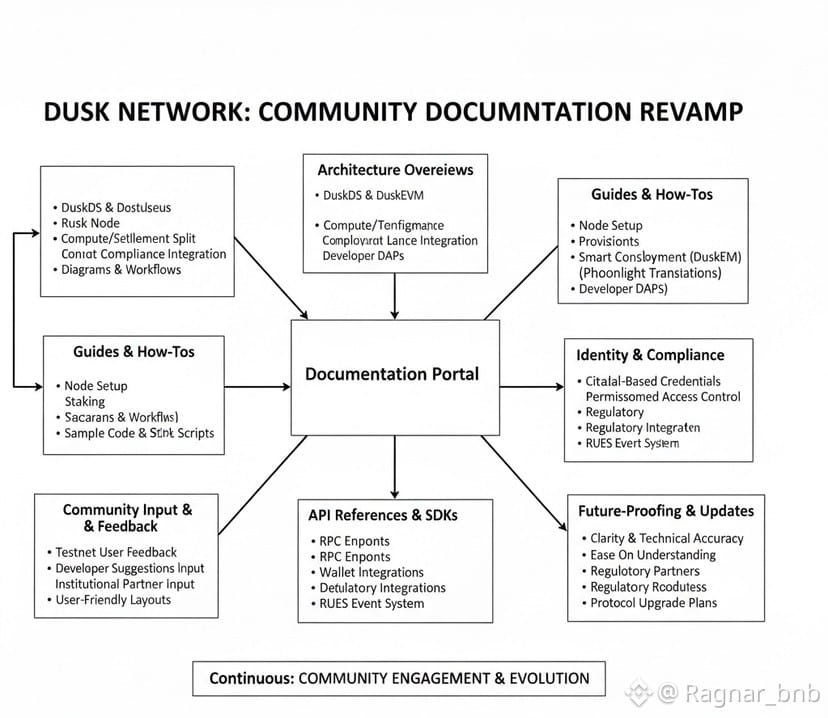
So, what's new?
First, there are easy-to-understand overviews of how the Dusk Network is set up. This covers DuskDS, DuskEVM, the Rusk node, and how compute and settlement are split up. This way, developers and institutions can get how privacy, following the rules, and sure settlement all work together. With diagrams, workflows, and tech talk, folks can quickly pick up on both the big ideas and the small details.
Next, there are guides and how-tos. Think setting up nodes, tweaking provisioners, rolling out smart contracts on DuskEVM, or testing out private transactions using Phoenix and Moonlight. With simple steps, sample code, and scripts, getting hands-on is easier than ever for new developers joining the Dusk world.
Getting identity and compliance right is also covered. There are guides on how Citadel-based credentials do their thing, how to set up permissioned access, and how outside regulatory setups play with on-chain stuff. Breaking down compliance and privacy side-by-side means institutions can tick all the boxes without a bunch of trial and error.
The makeover also sharpens up API references and SDK guides. Developers now have detailed descriptions of RPC endpoints, wallet hook-ups, bridge interactions, and event systems like RUES. These references are set up so you can quickly look stuff up or really get into the tech details, helping developers pull off tricky workflows without sweating it.
Community input was a big deal in all this. The Dusk Foundation asked for thoughts from testnet users, smart contract developers, and institutional partners to spot any missing bits or confusing parts. This back-and-forth led to friendlier layouts, clearer examples, and better ways to find your way around the documentation portal.
Being open and easy to reach is key. The revamp makes sure all info is out in the open, arranged logically, and linked up with official papers, protocol specs, and GitHub repos. Keeping things transparent builds trust in the network and gets the community involved in development, checks, and ideas for improvement.
Lastly, the documentation looks ahead. There’s a plan to document new features, modules coming down the line, and protocol upgrades. By keeping the docs alive and up-to-date, the Dusk Foundation makes sure everyone has trustworthy info as the whole thing grows.
To sum it up, the documentation revamp on the Dusk Network is a clear, well-organized, and easy-to-reach resource for developers, institutions, and community peeps. It mixes architecture overviews, practical guides, identity and compliance workflows, API references, and constant updates. This boosts community involvement, makes getting on board easier, and pushes the network toward its aim of being a rule-following, privacy-focused blockchain for institutional finance.
