
Amnesty International warned on Tuesday that the wave of escapes and releases from online scam complexes in Cambodia has created a humanitarian crisis, leaving thousands stranded on the streets without state support.
“The mass exodus from the scam zones has created a humanitarian crisis on the streets but is being ignored by the Cambodian government,” said Montse Ferrer, Regional Research Director of Amnesty International. She described the situation as chaotic and painful, where “thousands of trauma victims are struggling to cope without any support from the authorities.”
Ms. Ferrer called it a “global crisis occurring on Cambodian territory,” stating that the organization’s researchers have encountered individuals from Asia, Africa, Europe, and the Americas who are “urgently in need of consular assistance to return home safely.”
The organization estimates that in recent weeks, thousands have escaped or been released from at least 17 scam zones across Cambodia. According to a 2024 United Nations report, there are at least 220,000 people believed to be working in scam zones in Cambodia and Myanmar alone, with similar activities occurring in Thailand, Laos, and other countries.
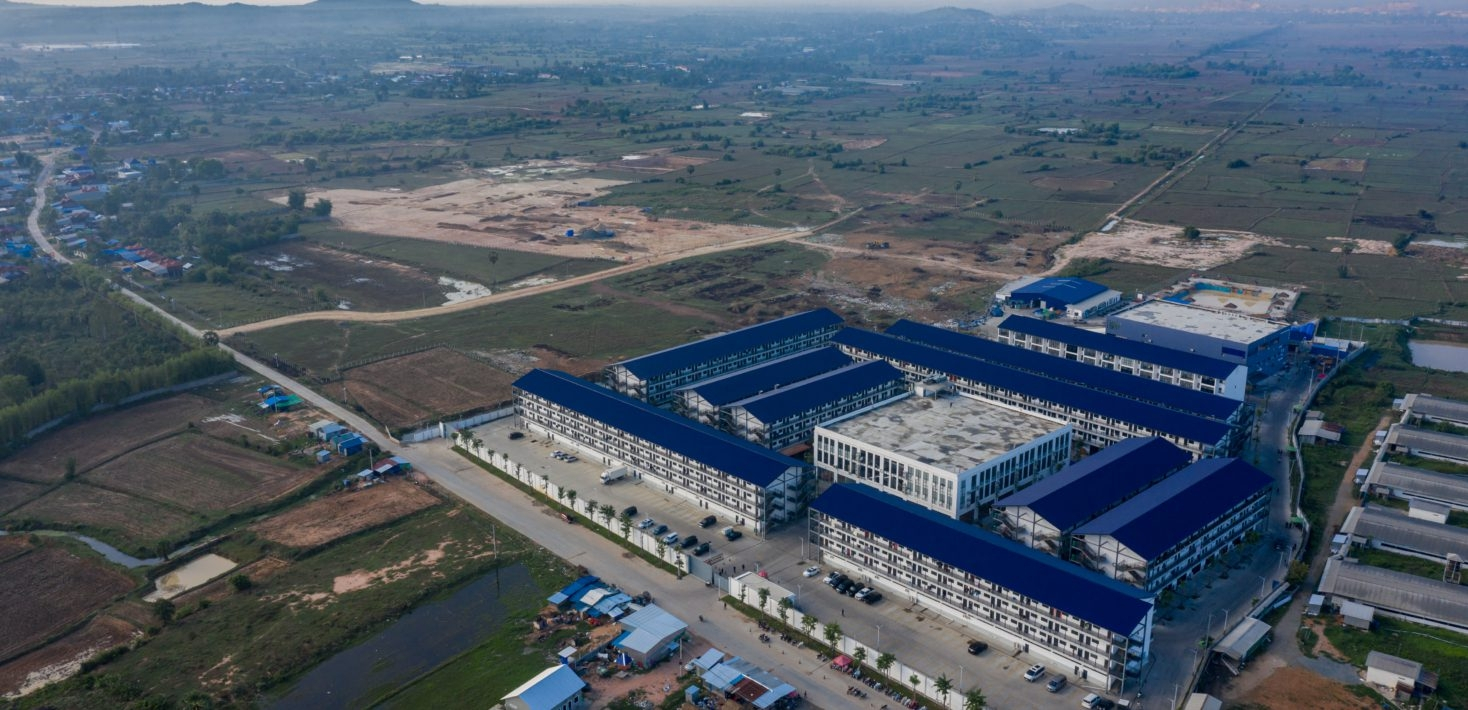 An online scam farm in Cambodia
Crypto scam zones in Cambodia
Cambodia has emerged as a major hub for industrial-scale online scam activities, including 'pig butchering' investment scams, in which crypto is often used as a tool to siphon off victims' money.
Human rights organizations say that workers in these areas are often trafficked from abroad, have their passports confiscated, and are forced to work under the threat of violence for criminal networks, which generate illegal revenues of up to billions of USD.
According to Amnesty International, interviews indicate a chaotic and dangerous situation for those leaving these zones without passports, money, medical care, or a clear safe route. All interviewees had escaped or been released in the past six weeks, including at least 11 people just in the past week.
Survivors describe severe and widespread abuse within the complexes. Some report being sexually abused by supervisors, including two pregnant women. Others recount brutal punishments, including a case where a man had his finger chopped off.
The organization states that the testimonies of the victims match evidence from more than 25 videos that the organization geo-located in the past month, documenting mass departures from the scam zones. Many of them are now stranded in the capital Phnom Penh and urgently need food, shelter, and medical assistance.
Those interviewed came from various countries including Brazil, Indonesia, Myanmar, Nigeria, Sierra Leone, Liberia, Uganda, Kenya, Bangladesh, India, the Philippines, and Madagascar.
Victims reported that there was hardly any presence of police or military during and after their escape, raising concerns about the role of Cambodian authorities. Some said that guards had beaten those trying to leave, while others described management fleeing, allowing detainees to leave freely.
One survivor recounted witnessing a man being killed by a supervisor after attempting to escape. Ten others reported that police frequently visited these areas, even to remove bodies, but no action was taken against the operators. In reality, the Cambodian police seem more like accomplices than guardians of justice.
Another victim, referred to as Delilah, stated that many had died in the area where she was held near Phnom Penh. “People are sick but they don’t help us,” she said. “We had to break the gate to run out because someone was very sick and didn’t want to die.”
Anti-trafficking organizations say that the Cambodian government is failing (or refusing to do anything) to properly identify and protect victims of human trafficking, making them vulnerable to continued exploitation by organized crime groups.
Scam networks in Southeast Asia
Amnesty International's warning comes amid increasing international scrutiny of scam operations in Southeast Asia. Earlier this month, Tran Chi, Chairman of Prince Holding Group, was arrested in Cambodia and extradited to China after being charged by U.S. authorities with conspiracy to commit online fraud and money laundering related to scam zones believed to have siphoned billions of USD from victims.
The U.S. Department of Justice has designated this network as a transnational criminal organization and is seeking to seize over 127,000 BTC, valued at over 11 billion USD at current prices, believed to be connected to the scam operation.
In Myanmar, law enforcement backed by China has also conducted arrests of organized crime figures and raided notorious scam centers, including KK Park. Some leaders and key figures of gangs controlling the area have been sent to China, and some have been sentenced to death.
However, observers and human rights organizations argue that many crackdowns are merely symbolic. Reports indicate that operating subjects were tipped off, leaving the complexes empty at the time of the raid, as was the case in the recent South Korea incident.
Amnesty is calling for urgent action from the Cambodian authorities and foreign governments to provide humanitarian assistance, restore identification documents, and facilitate the repatriation of surviving victims.
“The people we meet are living in extreme fear,” Ms. Ferrer said. “They desperately need their governments to intervene and help.”
https://coinphoton.com/thousands-of-people-fleeing-from-cambodia-scam-hell.html