
Privacy in crypto has always been treated like a switch: either everything is public, or everything is hidden. The problem is… real finance doesn’t work like that. In the real world, institutions need confidentiality and auditability. They need to protect counterparties, positions, and client data—while still proving they followed rules when it matters. That’s the gap #Dusk has been quietly building for: privacy that can be selectively disclosed and enforced, instead of privacy as a blanket “black box.”
 The real unlock isn’t “hiding”—it’s controlled disclosure
What makes @Dusk interesting to me is the idea that privacy isn’t just an add-on; it’s something you can configure at the protocol level depending on what a regulated workflow needs. Dusk’s base layer (DuskDS) is designed with two transaction models—Moonlight for transparent flows and Phoenix for confidential ones—so builders can choose what should be visible vs private rather than forcing one extreme across everything.
That design choice matters for tokenized securities, funds, credit markets, payroll rails, and enterprise settlement—because those systems often require verifiable logic with confidential state. In plain terms: you can keep sensitive details private, while still being able to prove compliance when needed.
What’s shipped and what’s changed since mainnet
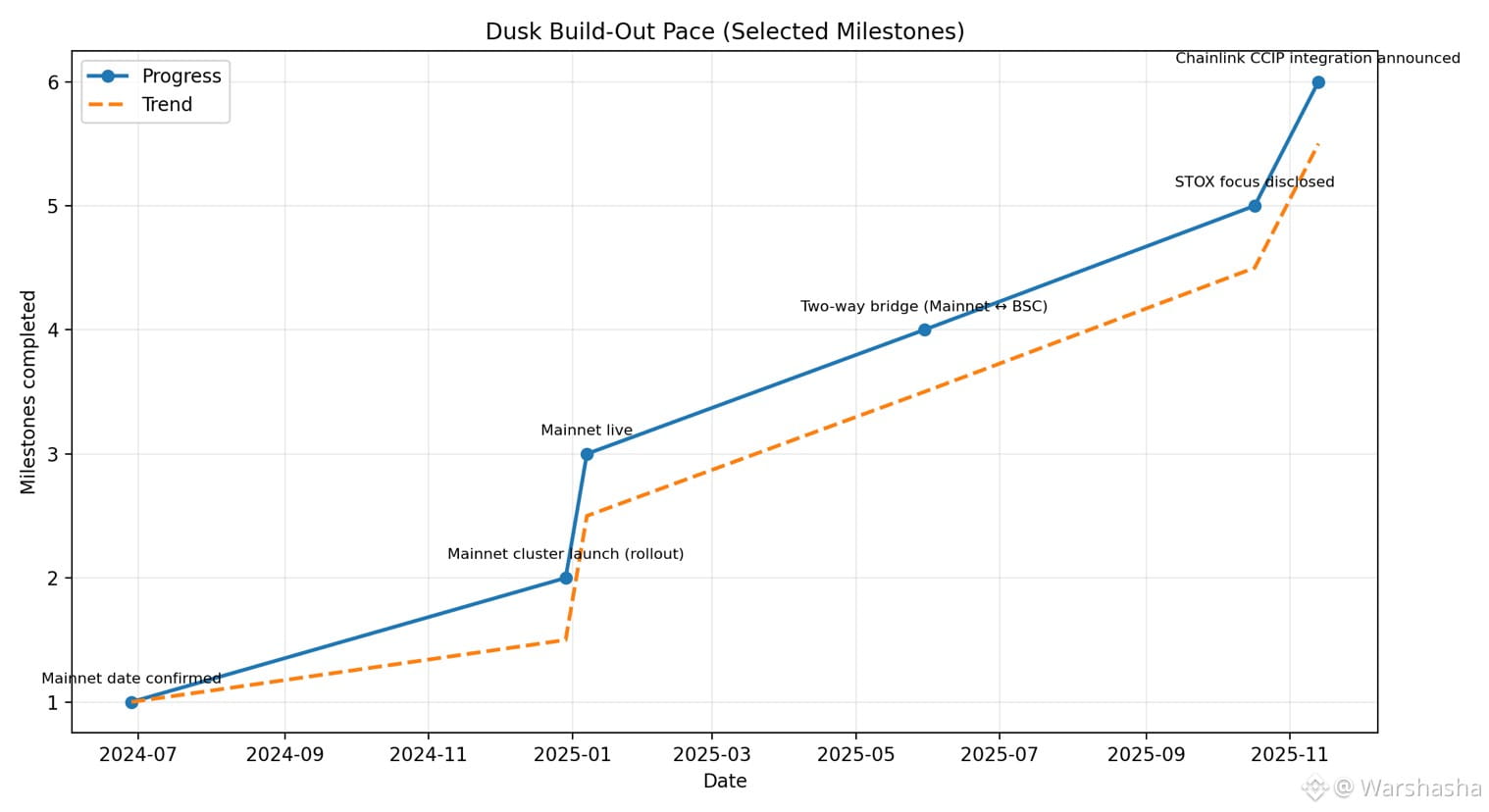
This isn’t just a whitepaper narrative anymore. Dusk’s mainnet rollout culminated with mainnet going live in early January 2025, and the project has been adding “real infrastructure” pieces that make the ecosystem usable beyond the core chain.
A few progress points that stand out:
Mainnet live + execution roadmap: Dusk highlighted mainnet being live and outlined ecosystem components like an EVM-compatible execution environment (discussed as Lightspeed in the mainnet update).
Interoperability that actually matters: In May 2025, Dusk shipped a two-way bridge connecting native DUSK on mainnet with BEP20 DUSK on BSC—practical liquidity + access expansion, not just “coming soon” talk.
Regulated market direction (STOX): In Oct 2025, Dusk published a clear focus on an internal trading platform initiative (“STOX”) aimed at bringing regulated assets on-chain in an iterative rollout.
Chainlink CCIP integration for regulated RWAs: In Nov 2025, Dusk announced a Chainlink partnership centered on CCIP as the canonical interoperability layer—specifically framed around moving tokenized assets across chains while preserving compliance requirements.
To me, this sequence is important: settlement → usability → connectivity → regulated distribution. It reads like a team trying to win “boring adoption,” not just chase short-term hype.
DuskEVM + DuskDS: the “builder comfort” layer without losing the compliance core
One of the hardest problems in crypto is getting developers to build where users aren’t yet. Dusk’s answer is practical: let builders use familiar EVM tooling while settling through the Dusk stack—so privacy/compliance properties are inherited rather than re-invented app-by-app.
In the docs, DuskEVM is described as leveraging DuskDS for settlement and data availability, while still letting devs build with common EVM workflows.
That’s a big deal because regulated apps don’t want “a cool demo.” They want:
predictable settlement,
compliance-friendly privacy primitives,
and developer experience that doesn’t require a total rewrite of the world.
Where I think Dusk is positioned best: Regulated DeFi and tokenized markets
Most “privacy chains” attract a niche audience first, and then struggle when regulation enters the room. Dusk’s identity is flipped: it’s explicitly built for markets where rules exist, and privacy is part of being compliant (protecting client data, trade confidentiality, and sensitive business activity).
That opens a few lanes that feel under-discussed:
1) Regulated DeFi (not “anything goes” DeFi)
Imagine lending, collateral management, or settlement where counterparties can keep details confidential but still prove the system is operating inside enforceable constraints.
2) Tokenized RWAs that can move cross-chain without breaking compliance
If tokenized securities become mainstream, they won’t live on one chain forever. The Chainlink CCIP approach is basically Dusk acknowledging reality: liquidity and distribution are multi-chain—and regulated assets need secure, standardized movement.
3) Enterprise-grade issuance + lifecycle workflows
Enterprises care about confidentiality around issuance, cap tables, allocations, transfers, and reporting. Dusk’s “choose what is public vs private” model is far closer to how real institutions already operate.
The $DUSK token: utility that matches the architecture
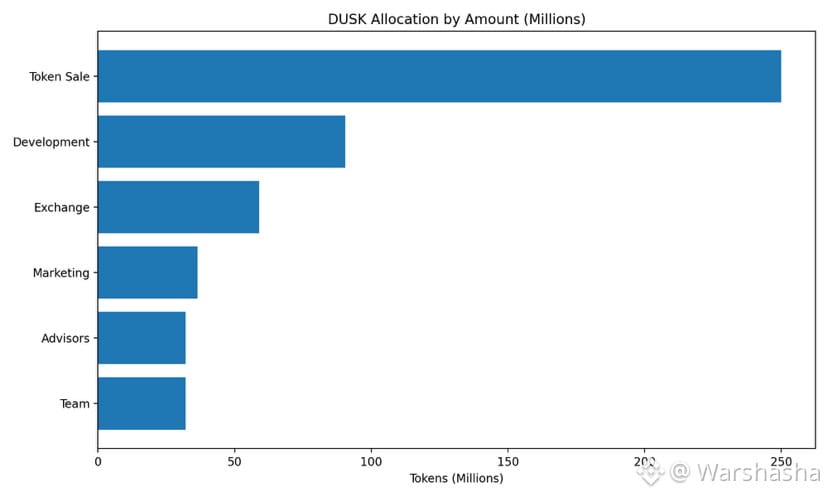
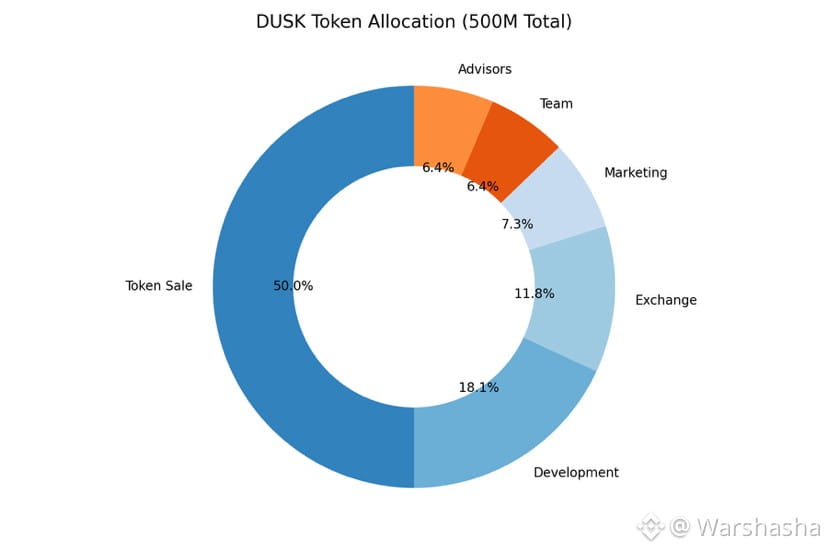
$DUSK isn’t just a “fee token” in the abstract. In Dusk’s design it sits at the center of the network’s incentives: transactions, staking, and governance, aligning validators and participants with long-term security. And the tokenomics are unusually clear in the official docs: 500M total allocated across token sale, development, exchange, marketing, team, and advisors.
What I like about that clarity is it makes the network easier to model: the project is telling you, directly, how supply was structured and vested.
How I personally track progress in a project like this
I don’t just watch headlines. For “infrastructure-first” chains, I watch whether the product stack is becoming easier to use and easier to integrate:
Are bridges and interoperability rails expanding real access? (The two-way bridge was a meaningful step.)
Are regulated integrations becoming concrete rather than theoretical? (CCIP + regulated asset movement is a serious direction.)
Is the builder path getting smoother? (Execution environments + docs are a tell.)
