
Walrus is shaking up decentralized storage. Forget servers—builders can spread data across nodes, and that data stays available, no matter what. You just deploy and go.
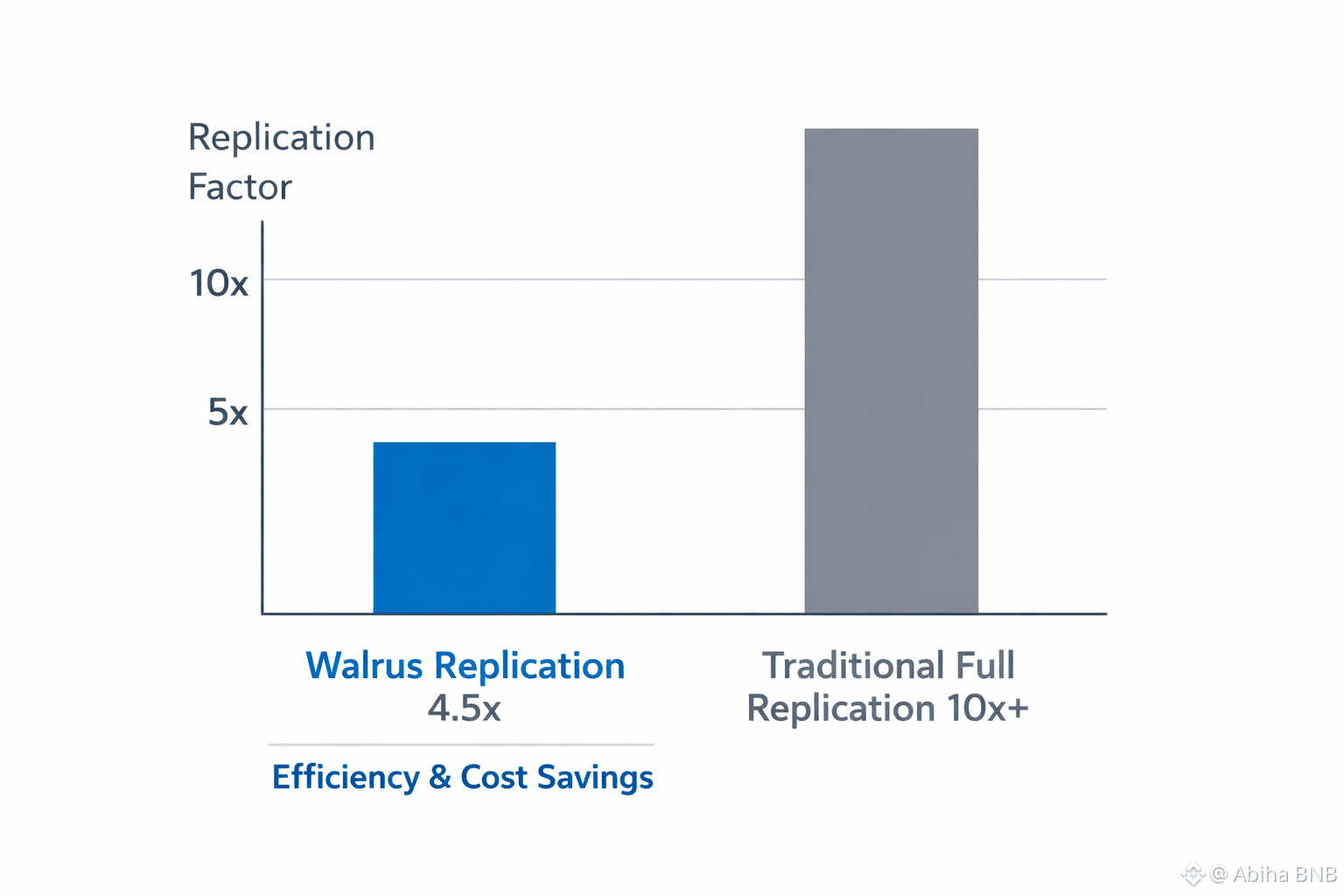
Everything runs on Sui. The control plane takes care of metadata behind the scenes. Erasure coding breaks files (or blobs) into chunks, and the Red Stuff scheme layers on extra protection, two ways. Replication is set at 4.5x, so your data isn’t just scattered, it’s seriously backed up. If something disappears, the system heals itself. It only uses the bandwidth it actually needs to recover, nothing wasted. Even if two-thirds of the nodes go down, the network keeps going. Bad actors? They get slashed. Walrus picks its storage nodes with delegated proof-of-stake, handing out rewards in WAL tokens every epoch.
But here’s where it gets interesting: blobs are programmable. Smart contracts written in Move can publish files, and reading them just works—no weird hoops to jump through. Data isn’t just storage, it’s a real resource. You can transfer ownership right on-chain. This opens the door for marketplaces, on-chain websites, and even AI agents that need their own persistent backends. NFTs with rich media don’t disappear. You can even edit or delete data through contracts. Proof-of-availability is baked in, so anyone can verify storage, and you don’t need some central indexer.
Walrus isn’t tied to one chain. It’s got SDKs for Solana, and Ethereum compatibility is on the way. Developer tools make it easy to plug in. Walrus Sites (via wal.app) let anyone host a decentralized web page. HTML, CSS, JavaScript—they all live on-chain, no backend needed. SuiNS provides domains. DApps go serverless. NFT projects can add pages. AI apps get permanent memory. It costs about the same as Web2, but with way better resilience than other Web3 storage.
Integrations are coming fast. IO.net trains AI on GPU networks using Walrus. Seal adds encryption. Access control lets you gate data. Tusky runs decentralized computation. Unchained fronts storage. Pudgy Penguins attaches Walrus to its NFTs. Zarklab migrates with AI tagging. Team Liquid just moved 250TB of footage. Talus powers AI agents. Itheum tokenizes data and runs markets with licenses and native monetization.
The numbers tell the story. Mainnet launched March 2025. Walrus raised $140 million, backed by names like Standard Crypto, Electric Capital, and Franklin Templeton. Total WAL supply is 5 billion, with 1.25 billion at genesis and 1.57 billion circulating. Market cap sits at $190 million. Daily uploads hit 17.8TB. Petabytes of data are stored. Retrieval takes less than two seconds. There are 4.5 million blobs and over 100 active operators.
Governance gives real power to users. Use WAL to pay storage fees or lock up tokens for long-term storage. Staking keeps the network secure, delegators earn rewards, and voters can tweak parameters or adjust penalty rates. Committee sizes change as needed. Base fees get burned for deflation. More than 60% of the reserve goes to the community. Haedal mints haWAL for liquidity. Over 6 million WAL is already staked.
AI thrives on Walrus. Agents store memory and keep context persistent. Outputs are always verifiable. Health tech locks down records. Device data stays immutable. Users keep control. Games get persistent worlds. NFTs actually last. Social apps don’t lose content. Verifiable media is on the rise. Enterprises can back up globally, and esports teams organize their archives without stress.
Walrus is built for efficiency. Erasure coding cuts down on unnecessary redundancy, so you don’t need full replication. Incremental recovery saves resources. Deletability makes it stand out. Programmability and Sui objects mean builders can focus on their apps, while the infrastructure just works. Data is always verifiable. Trust comes built-in. Autonomous systems can finally run with confidence.
This isn’t just theory—people are using it in production right now. Dozens of dApps have integrated Walrus. Media datasets are stored securely. AI prototypes iterate faster. Retrieval beats the competition. Sui makes settlements quick. There’s no downtime between epochs. Builders are shipping real apps, data economies are forming, health data gets monetized, AdFi verifies transactions out in the open, and permissionless markets are live.
Walrus is built for scale. Unstructured data? Not a problem. Fragmentation makes the system truly decentralized—no single point of failure. It’s tough to censor, privacy is rock solid thanks to Seal, and transactions stay secure. Web3 stacks can finally decentralize from top to bottom. Blobs are searchable. AI embeddings help you find content. Omura indexes everything publicly.
Walrus is all about the long game. This infrastructure will last for decades. It can handle high-throughput, and verification guarantees are non-negotiable. Centralized clouds just can’t keep up. Walrus frees builders from policy risks and outages. You get instant, worldwide access.
Data markets become possible. You can verify who owns what, set sharing prices, and prove usage. The network can handle heavy workloads, and node operators actually make money. Guarantees aren’t just talk—they’re real. Walrus is live and delivering now.
@Walrus 🦭/acc $WAL #Walrus

