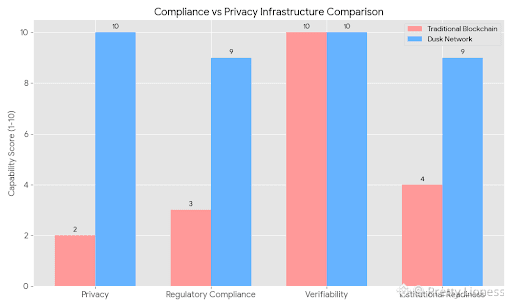
Dusk Network is built to enable smart contracts that protect sensitive data while staying verifiable on a public blockchain. Traditional smart contracts expose transaction details, business logic, and user identities on chain, which limits their use in finance and enterprise applications. DUSK introduces privacy-preserving technology that allows contracts to execute confidentially, making blockchain suitable for regulated markets, tokenized assets, and institutional finance
At the core of DUSK confidential smart contracts are zero-knowledge proofs. These cryptographic proofs let one party prove a statement is true without revealing the underlying data. In Dusk, zero-knowledge circuits hide transaction amounts, participant identities, and contract states, while validators can still verify correctness. This creates a trust-minimized environment where privacy and transparency coexist.
DUSK also uses a confidential smart contract framework called Phoenix and the Succinct Attestation system. Developers can write smart contracts that handle private assets, confidential bids, or restricted data. For example, tokenized securities can be issued with private ownership records, and DeFi protocols can run without exposing trading strategies. The network ensures compliance by allowing selective disclosure when required by regulators or auditors.
The DUSK token plays a key role in powering these confidential smart contracts. It is used for transaction fees, staking, and governance. Validators stake DUSK to secure the network and process private transactions. Developers and users pay fees in DUSK to deploy and interact with confidential contracts. Token holders can also participate in protocol upgrades, ensuring the privacy technology evolves with community and industry needs.
Confidential smart contracts on Dusk are designed for real-world financial use cases. Banks can issue compliant digital securities, enterprises can manage private supply chain logic, and Web3 applications can offer privacy-first DeFi. By combining cryptography, compliance tools, and decentralized consensus, Dusk bridges the gap between traditional finance and blockchain innovation. This approach positions Dusk as a foundational layer for the future of regulated, privacy-preserving decentralized applications.
Another important feature is Dusk’s focus on usability for developers. The network provides software development kits, documentation, and tooling that make building confidential applications more accessible. Developers can integrate privacy without becoming cryptography experts, which accelerates innovation and reduces development barriers. This developer-friendly approach is crucial for growing an ecosystem of enterprise-grade decentralized applications.
Scalability is also addressed through Dusk’s consensus and architecture. The network is designed to handle high transaction throughput while maintaining privacy guarantees. This ensures confidential smart contracts remain practical for large-scale financial systems, trading platforms, and institutional deployments. Efficient performance combined with privacy gives Dusk a competitive edge among next-generation blockchain platforms.

In summary, DUSK powers confidential smart contracts by combining zero-knowledge cryptography, compliant disclosure tools, and a secure proof-of-stake network. The token incentivizes validators, enables transactions, and supports governance, creating a sustainable privacy-focused ecosystem. As demand for private yet compliant blockchain solutions grows, Dusk’s confidential smart contracts offer a practical pathway for enterprises, institutions, and developers to adopt decentralized technology without sacrificing data protection or regulatory alignment. These capabilities make Dusk relevant for tokenized markets, digital identity, and next generation financial infrastructure worldwide today