


Studios don't freeze because deployment is hard.
They freeze because exposure is instant.
A build can be ready for days. Assets approved. Interactions tested. Everything works in isolation. On Vanar, that's not the hard part. The hard part is knowing the first live moment is also the first public one... consumer-grade execution doesn't come with a rehearsal lane. When licensed IP is involved, there's no soft launch. No quiet corner where something can be misread without consequences.
Once it renders, it's already seen and it is already part of the Vanar's Virtua metaverse live experience settlement whether anyone likes that framing or not.
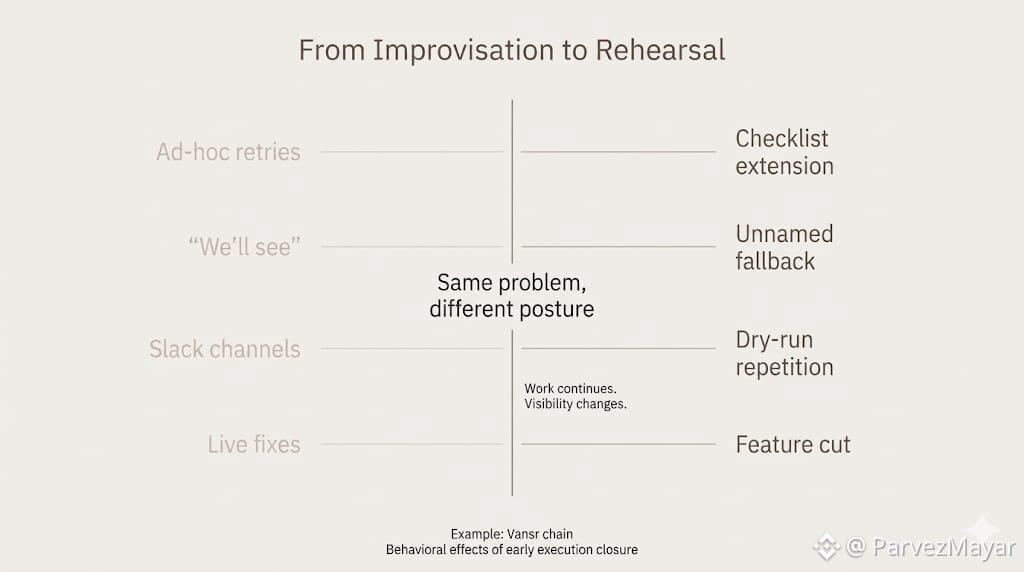
IP-driven game ecosystems behave differently under attention. A character isn't just an asset. A gesture isn't just an interaction. Every state transition reads like implied approval, even when the studio didn't mean to grant it. Vanar doesn't pause to make that safer. It finalizes the moment, clean, and moves on.
That's where hesitation shows up. Not in engineering meetings. In creative ones.
A scene that could ship today waits another week. A mechanic that worked in test gets reworked because it might be interpreted wrong in the first ten seconds. A feature isn't cut because it's broken, but because it creates a moment the studio isn't ready to defend in public.
Nothing is technically wrong. That's the trap.
Vanar's studio-friendly deployment stack removes friction where teams expect it to exist. Builds go out smoothly. State resolves correctly under latency-sensitive execution. Licensed IP deployment doesn't stumble or glitch. And then you realize what that implies... if something lands weird, it lands as intent. Not error. Not "early."
Intent sticks.
There's no rehearsal audience on a chain built for always-on experiences. No separate memory for "early." The first impression is the archive. Clips get saved. Screenshots circulate. A moment that felt harmless in review becomes the thing people point at later and ask, why was that allowed? And someone has to answer without being able to say "it was just a test." Legal wants the exact timestamp. Brand wants the screenshot. The approval thread opens back up like it never closed.
Iteration moves upstream, away from players. Discovery turns into rehearsal. Decisions get heavier earlier, not because teams are afraid of shipping, but because they know correction won't be quiet. A fix won't erase the moment it's fixing.
Studios start filtering ideas through survivability instead of novelty.
Can we stand behind this interaction if it's the only thing people see today?
If this clip circulates without context—because it will?
If the audience reads meaning into something we thought was flavor?
From the outside, everything looks smooth. Games run. Worlds persist. Assets behave. The dashboards don't tell the story anyway. Inside, creative scope narrows, almost without anyone admitting that's what’s happening.
Not dramatically. Subtly. A surprise gets trimmed. An edge case gets flattened. Something playful becomes predictable because predictable is easier to defend when IP is watching.
Vanar doesn't force that discipline. It exposes it. Experience-safe finality makes the work look confident even when the decision behind it was cautious.
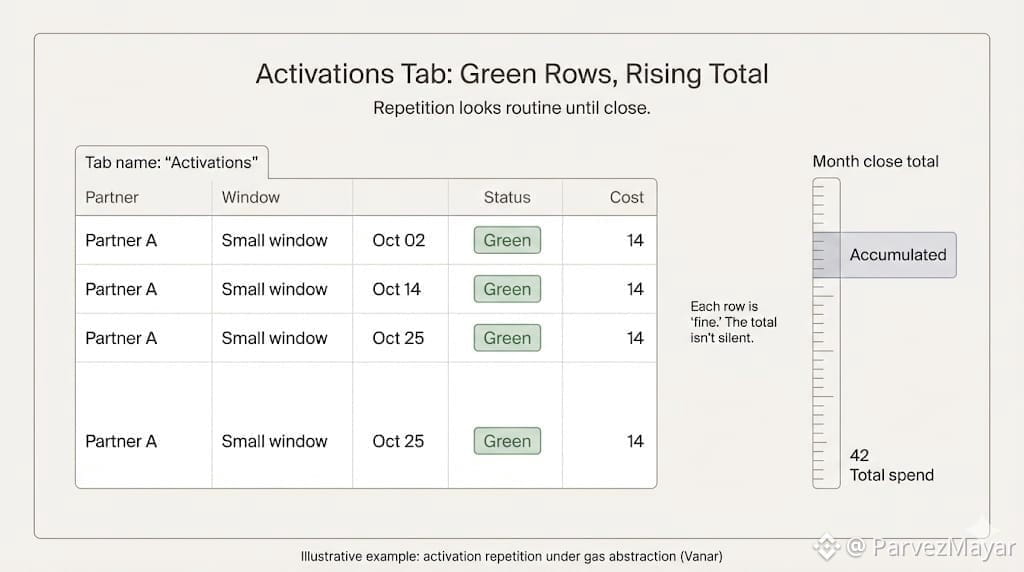
With Vanar chain, Licensed IP doesn't get to learn in public. Neither do studios. So hesitation becomes part of the workflow, not as fear, but as a quiet rule: don't ship a moment you wouldn't want screenshotted.
Nothing breaks.
Fewer risks just make it to the surface.