
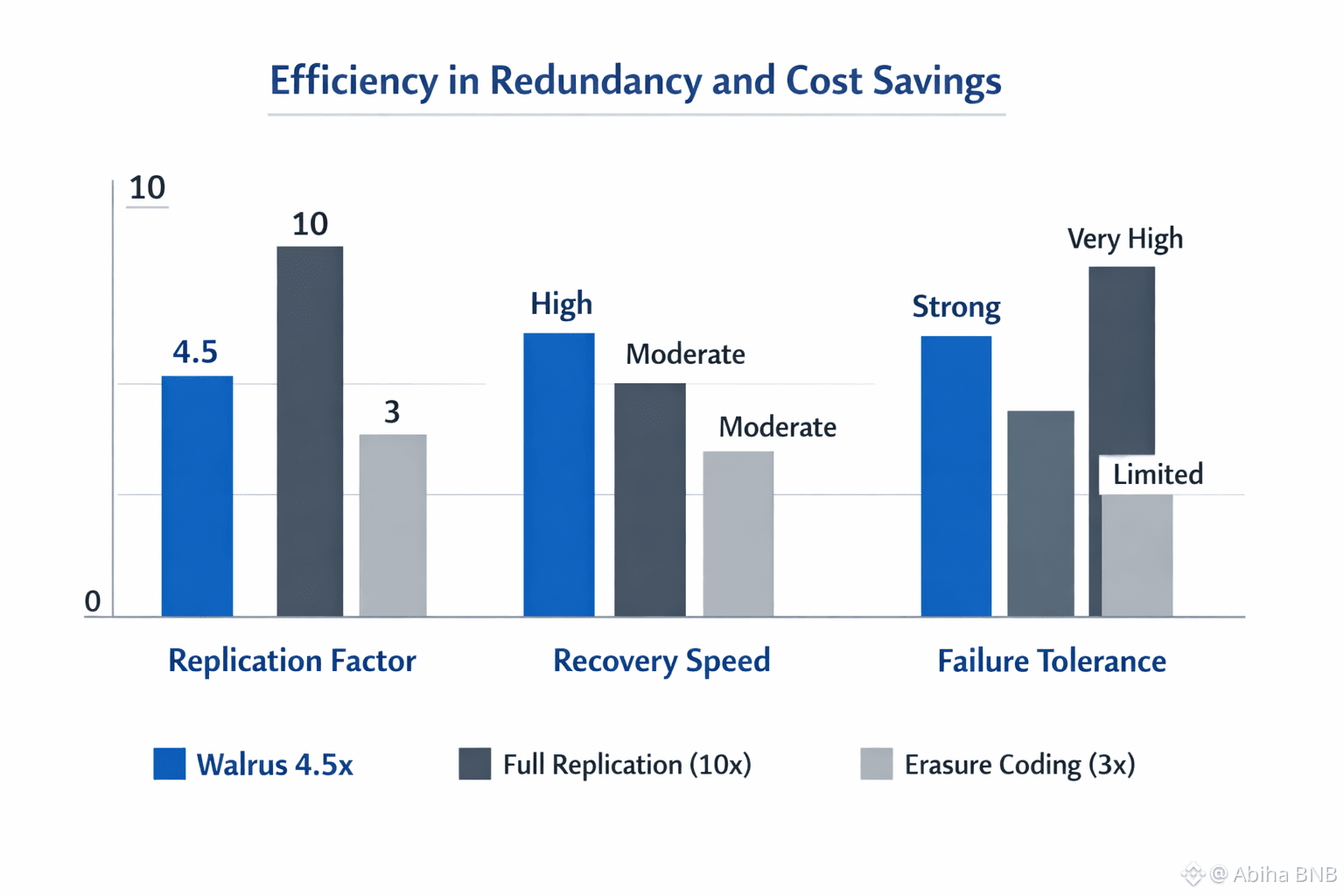
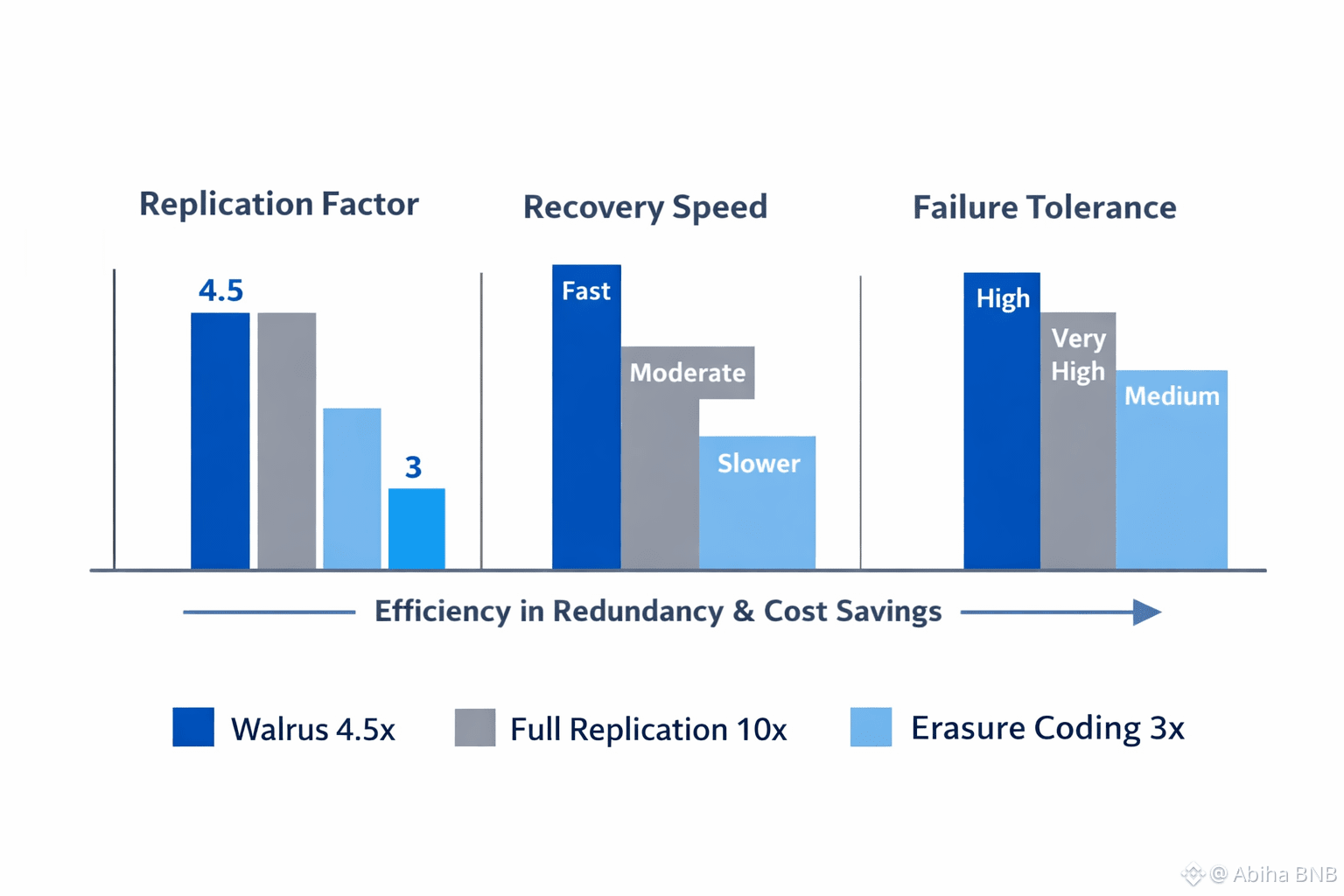
Walrus is shaking up how we think about storage in the AI era. At its core, it’s a programmable, decentralized storage layer running on the Sui blockchain. When you upload something big—an AI dataset, a video, whatever—Walrus chops it up using erasure coding, then spreads those pieces across the network. The replication factor sits at 4.5x, so even if two-thirds of the nodes go down, your data’s still safe and you don’t have to reload everything from scratch.
Their erasure coding system, called Red Stuff, isn’t your typical setup. It works in two dimensions, which means Walrus only needs the bandwidth for the missing chunks when something’s lost. The system heals itself on the fly, so repairs are quick and cheap compared to the old-school “just replicate everything” approach.
Consensus? That’s handled by delegated proof-of-stake, broken up into epochs. Storage nodes compete for delegated WAL, trying to earn a spot in the committees. At the end of each epoch, nodes and stakers get rewarded. Mess up or act shady, and you get slashed—those penalties get burned, which keeps everyone honest.
Because Walrus plugs into Sui, data blobs become programmable objects. You can own them, split them, or transfer them, all on-chain. Proof-of-availability certificates back up access, and smart contracts handle renewals, deletions, or checks—no more “forever storage” headaches you see with rivals.
You’re not stuck on Sui, either. Walrus supports other chains, with SDKs for Solana and Ethereum. Data turns into interactive assets through Move contracts. That opens the door for AI agent backends, on-chain websites, rich-media NFTs—the kind of things that keep evolving.
Governance is fully on-chain, too. WAL holders vote on stuff like penalty rates. Stake delegation spreads across independent nodes, so power isn’t stuck in the hands of a few. Smaller nodes can earn more by staying online, which means the network actually gets more decentralized as it grows.
There’s a hard cap of 5 billion WAL tokens. The initial launch was 1.25 billion, and circulating supply now sits at 1.57 billion. Current market cap? About $190 million. Deflation happens when people shift stakes or get slashed—those tokens are burned. Plus, 10% of the supply is set aside to subsidize early users, so storage starts out cheap.
The network’s growing fast: over 200 nodes, hundreds of new blobs every day, 4.5 million blobs handled in total, and the data stored is well past the petabyte mark—lots of that coming from media and dataset-heavy dApps.
Big names are already using it. Team Liquid moved 250 terabytes of match footage and brand content over. Now their content is more redundant, globally accessible, and fans can even get involved with monetization through programmable storage. It’s a whole new way to handle media in esports.
AI data marketplaces rely on Walrus for solid provenance using proof-of-availability. Web3 content creators get tools to actually edit or delete what they publish, not just pile up forever files. Enterprises are tying in backups with Walrus’s Seal extension for encryption and fine-grained access control.
On the partnership front, Walrus is working with IO.net for AI GPU networks, Seal for privacy, Tusky for decentralized compute, Unchained for storage front-ends, and even Pudgy Penguins for NFTs.
Tech-wise, asynchronous complete data storage means reads and writes work even when the network’s unreliable. Erasure codes and quorum checks keep everything available and correct, without a central point of failure.
You can even build decentralized websites with Walrus Sites through wal.app. All the resources—HTML, CSS, JS, images—are stored as Sui objects and fetched into browsers. Domains use SuiNS for easy names.
Deployment doesn’t need servers at all. DApps can go fully decentralized on Sui, Ethereum, or Solana. You’ve got projects like Flatland, Snowreads, Walrus Staking, and Walrus Docs—each running without a wallet required.
In health tech, platforms anchor research records and device data on Walrus. Integrity checks and tamper-proof audit trails are built in. Sensitive info stays encrypted, verifiable, and always under user control.
And in gaming? Worlds live on Walrus, NFTs become truly durable, and social apps keep content safe from centralized downtime or arbitrary policy changes. It’s a new era for data, and Walrus is right at the center of it.
Itheum’s data tokenization opens the door to programmable markets. Datasets aren’t just sitting around—they gate access, handle licensing, and drive monetization, which keeps demand steady. This setup brings storage right into the world of DeFi, so you get things like pay-per-view access or tokenized rights.
Talus steps in to connect with AI agents. Here, memory, context, and outputs are anchored for the long haul. The execution layers don’t bother with storage—they just focus on compute, while Walrus takes care of making sure everything sticks around.
When it comes to making things verifiable, it all starts with on-chain Points of Availability. Writers gather up node acknowledgments into certificates. After publishing, the system tracks obligations through events you can actually see.
The write path gives every file a unique ID. Space gets reserved on the blockchain. Data is encoded and spread across different nodes. Signed confirmations create proof of availability, so nodes are on the hook for access.
Retrieving big blobs of data happens fast—under two seconds. That’s perfect for AI workflows that need reliable and consistent access. Fragmentation and verification help cut down on crazy costs or surprise slowdowns.
Oracles keep pricing stable by pegging to fiat. Liquid staking with Haedal mints haWAL for extra liquidity. Epoch transitions line up with Sui, so you get smooth availability even when things are in flux.
Opening up to other chains is next—Ethereum and Solana are on the roadmap. Walrus is gearing up to be the backbone for scalable dApps and AI that don’t want to be stuck on a single chain.
For AI, persistent storage beats temporary caches every time. Agents can grab data without relying on central servers. That means you can stack use cases in places where losing data would be a disaster.
The Walrus Foundation pulled in $140 million from investors like Standard Crypto, Electric Capital, and Franklin Templeton. Mainnet went live on March 27, 2025. Now, the focus is on developer support, with ecosystem RFPs leading the way.
Data markets are popping up for the AI era. Verification and monetization turn plain files into assets with real value. Governance makes data both reliable and manageable, which sparks new ideas and innovation.
@Walrus 🦭/acc $WAL #Walrus