

If you were in the market since 2020, you probably still remember the Uniswap airdrop of 400 UNI tokens for using the protocol, or in 2022, just minting an NFT on the Aptos testnet could earn you 3000 USD, or the largest and fairest airdrop in history from Arbitrum.
This could be considered the golden age of airdrops, do less, receive more.
But since then, airdrops have completely changed.
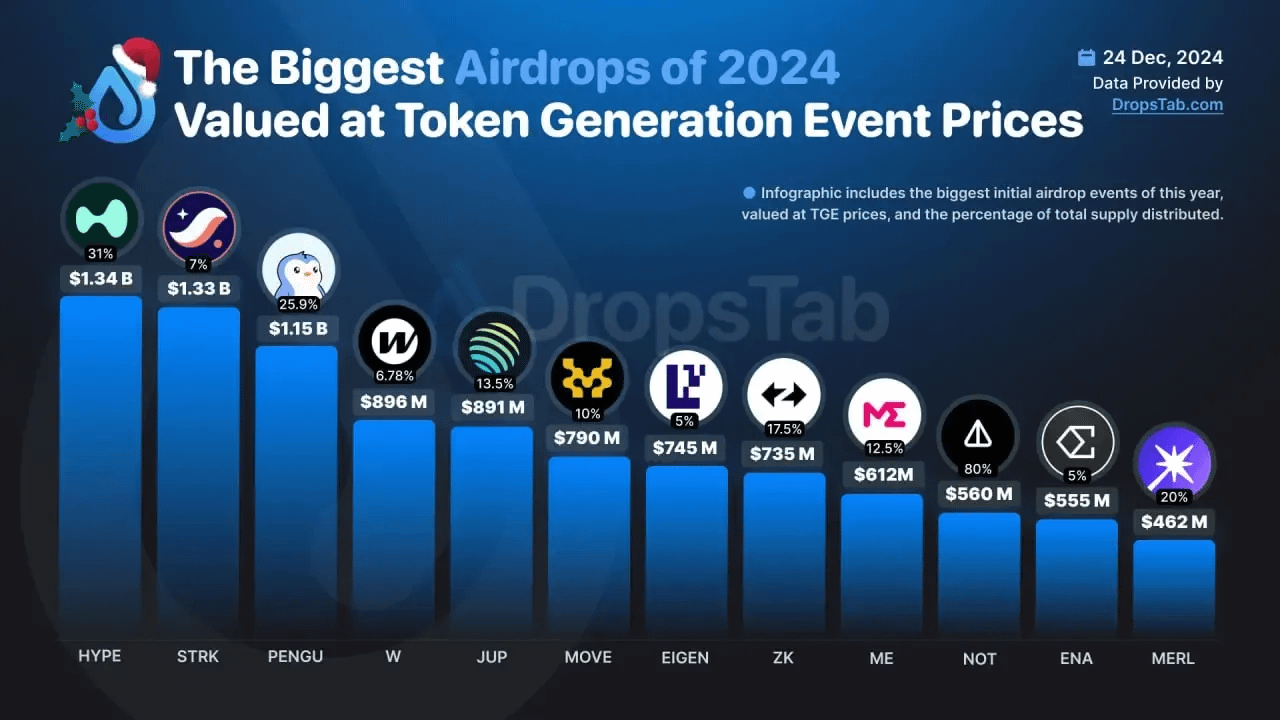
1. The airdrop era for real users.
In the early days of the crypto market, users did not approach protocols with the mindset of farming airdrops. Back then, people used them because the products were genuinely valuable and to understand the market.
Cheap, fast, permissionless swaps. Airdrops are just unexpected rewards, not the goal from the start. To date, after more than 4 years, $UNI still trades at over ~50% compared to the TGE price.
This is a clear sign that airdrops are distributed to the right audience.
2. Allocation by tier and the emergence of airdrop farming
The next turning point comes from tiered allocation models, notably $JTO from Jito on Solana.
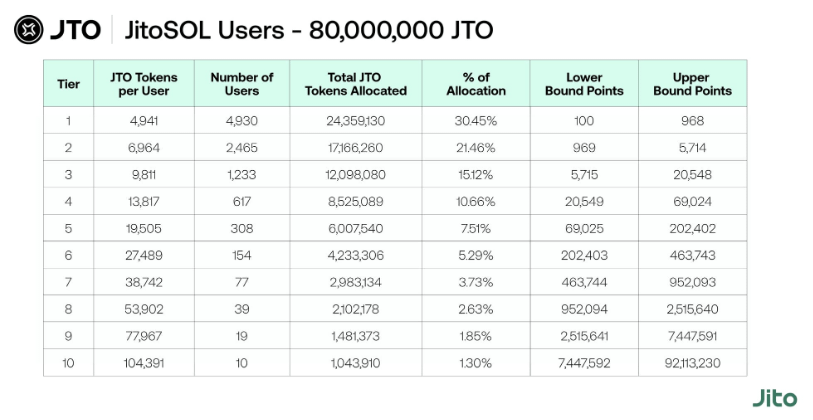
Instead of everyone receiving equally, the allocation system is based on contribution levels, where smaller tiers have a relative advantage.
However, the market is facing new issues; instead of one person using one wallet to receive airdrops, they begin to use multiple wallets to farm airdrops. Airdrop farming has become a popular strategy, sybil farmers benefit greatly, while honest users' rewards are diluted.
In response, projects are shifting to linear allocation and enhancing anti-Sybil measures. Users need not only to interact on-chain but also to prove they are a unique individual. Connecting social networks, minting NFTs, verifying identity, and even KYC are gradually becoming the new standard. Behavioral analysis systems like those of Wormhole are being implemented more and more.
However, this change brings another consequence. When the airdrop budget is fixed, and the number of participants is increasing, the rewards will certainly be divided.
Airdrops no longer help most users change their lives.
Alongside this, points programs have gradually become a familiar marketing tool. Users come for incentives, not for products, and are ready to sell tokens at TGE to move on to the next project.
3. Current meta airdrop
In 2025, InfoFi emerged, opening opportunities for social media influencers. Influential KOLs can also receive airdrop amounts equivalent to those of whales with large sums farming airdrops.
However, InfoFi also brings new issues:
Mindshare focuses on a familiar group of KOLs
AI spam content is rampant on X
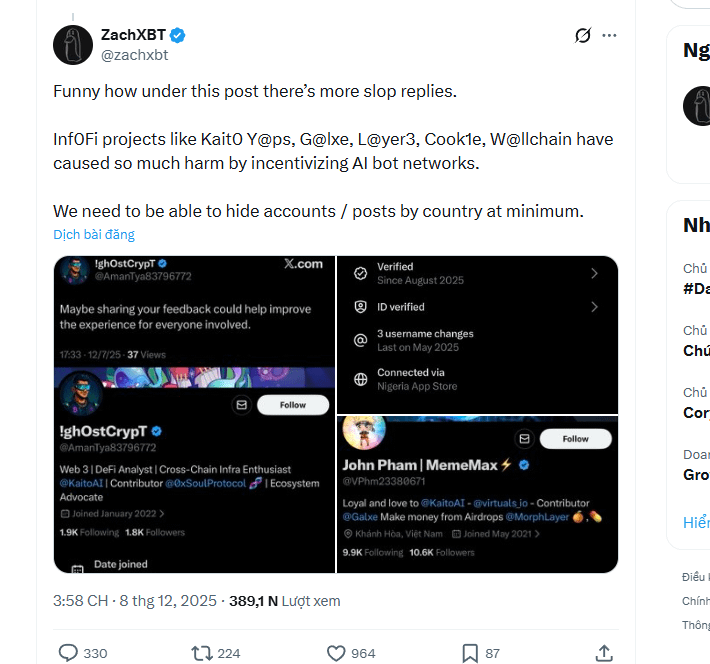
Recently, X has also terminated the inforfi trend; projects like Kaito, Cookie, etc., have seen a sharp decline.
After many cycles of trial and error, the market has begun to show more positive adjustment signals. Some projects no longer use points for linear airdrop distribution but have shifted to models that are more tightly linked to long-term commitments. Ranger Finance, when launching its ICO on MetaDAO, used points to ensure token purchase allocations instead of promising airdrops. This approach forces users to seriously consider whether they truly believe in the project.
4. How should users adapt?
It can be said that the airdrop market still has many opportunities despite the changes. The effective strategy now is to be selective, patient, and committed. When airdrops are no longer a game of interaction quantity but a game of commitment levels, spreading capital and time across too many projects often yields lackluster results. In the context of overfarming, real value comes from choosing the right projects and sticking with them long enough.
Some important principles that those doing airdrops should remember:
Don't try to farm too many projects; you won't have enough capital.
Choose a few projects you trust and commit long-term. Research thoroughly.
Use products for their value, not just for incentives, and lower expectations.
Some advanced strategies:
Go early to receive priority OG, KOLs, multiplier, or special allocation
The trend of the entire market is to prioritize projects with product and market fit
Leverage referrals when doing airdrops; this is something you need to diligently build social connections.
Combine strategies to farm multiple airdrops.
Build a social channel with real content, limit or avoid AI spam


