


In the earliest days of blockchain, the promise was simple: settle digital value without trusted intermediaries. That promise succeeded in finance — Bitcoin’s ledger still logs transactions a decade later — but it falters when the problem shifts from value transfer to value interpretation. What happens when a system needs not only to record data, but to understand it? VanarChain positions itself at that threshold, crafting infrastructure for a world where data isn’t just stored — it is actively reasoned over on-chain.
This shift from static storage to dynamic interpretation reframes how blockchain adoption might unfold over the next decade. Rather than chasing raw scale or memetic attention, VanarChain embeds intelligence into the protocol itself, turning on-chain logic into a first-class citizen of the network — a rarity in the blockchain landscape.
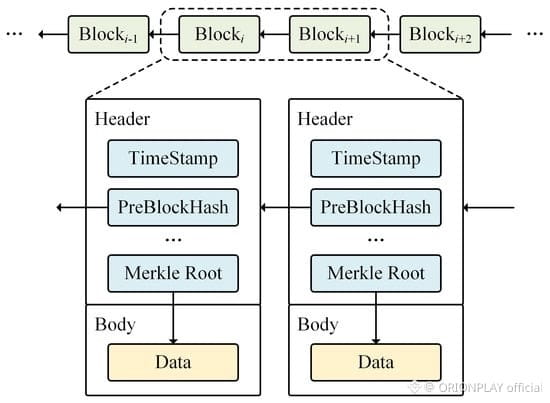
Historically, blockchains have treated data as inert: a history of events to be stored and validated. Applications that wanted to interpret data — whether to power AI agents, run inference, or automate business logic — typically did so off-chain via oracles, API pipelines, or centralized compute layers. This separation created structural friction. The chain could secure the data, but not reason about it, forcing developers into complex workarounds that undermined decentralization.
VanarChain’s strategy is to collapse this gap. Its architecture is intentionally designed to compress, store, and reason over data directly on the blockchain. Instead of storing raw files or unstructured blobs, data is transformed into “seeds” that the chain can index and interpret. A second layer — effectively an on-chain reasoning engine — operates directly on this structured knowledge set, enabling computations that traditionally would have required off-chain infrastructure.
This blurring of the boundary between data storage and data comprehension turns the blockchain into a hybrid system: part ledger, part logical engine.
One simple way to see the impact of this design is by considering search. On most chains, finding a specific piece of information requires third-party indexing services and repeated off-chain queries. VanarChain’s internal semantic structures, however, allow queries to be executed natively. This means developers can build logic that depends on meaningful insights about stored data rather than just raw transactional records.
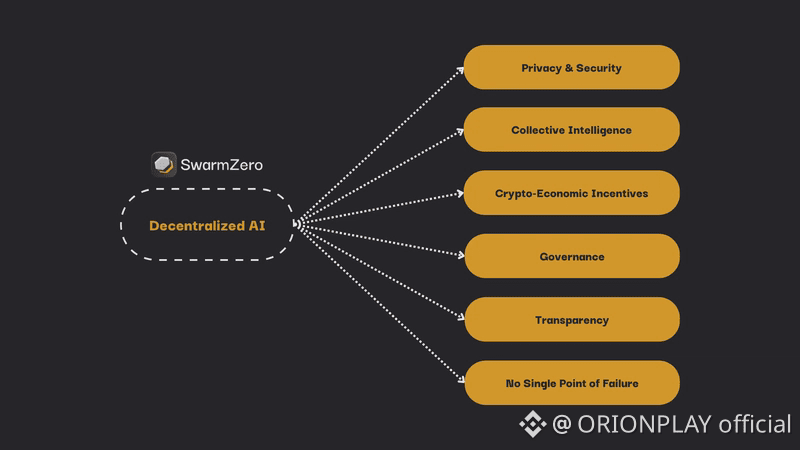
But the changes go deeper than data retrieval. VanarChain’s economic model aligns incentives around interpretive execution rather than transactional throughput. Traditional blockchains reward participants for processing transactions; VanarChain rewards participants for correct and meaningful computation — economic activity that is measurable and tied to utility. Validators and network participants are not simply rewarded for verifying that data existed; they are rewarded for ensuring that the logic applied to that data was executed and secured properly.
This subtle reprioritization can reshape how decentralized applications are built. Teams that once needed to architect hybrid systems — part on-chain, part off-chain — now have the option to consolidate logic. AI agents, compliance logic, risk assessment engines, and business workflows can live and execute within the protocol’s trust boundary. This reduces architectural complexity and surface area for failure.
Take AI-powered applications, for example. In a typical setup, an AI model might be hosted on external cloud infrastructure, consuming data from the chain via bridges or APIs. Decisions made by that model then get written back as transactions. In VanarChain’s model, the same reasoning can happen on the network layer, creating continuous on-chain intelligence.
This matters for use cases beyond pure automation. Regulatory compliance, enterprise reporting, and real-time risk systems all depend on trustable logic that can execute on verifiable data. Instead of interpreting events after the fact, VanarChain allows logic to operate on data as a native part of the network’s state, reducing ambiguity and increasing enforceability.
Yet this approach is not without trade-offs. Building interpretive logic into the core protocol layer increases the complexity of validation and consensus rules. It also raises questions about what should and shouldn’t be standardized on chain, and how flexible that logic should be over time. In mature systems, evolution without fragmentation is a delicate balance — one that VanarChain explicitly confronts rather than avoids.
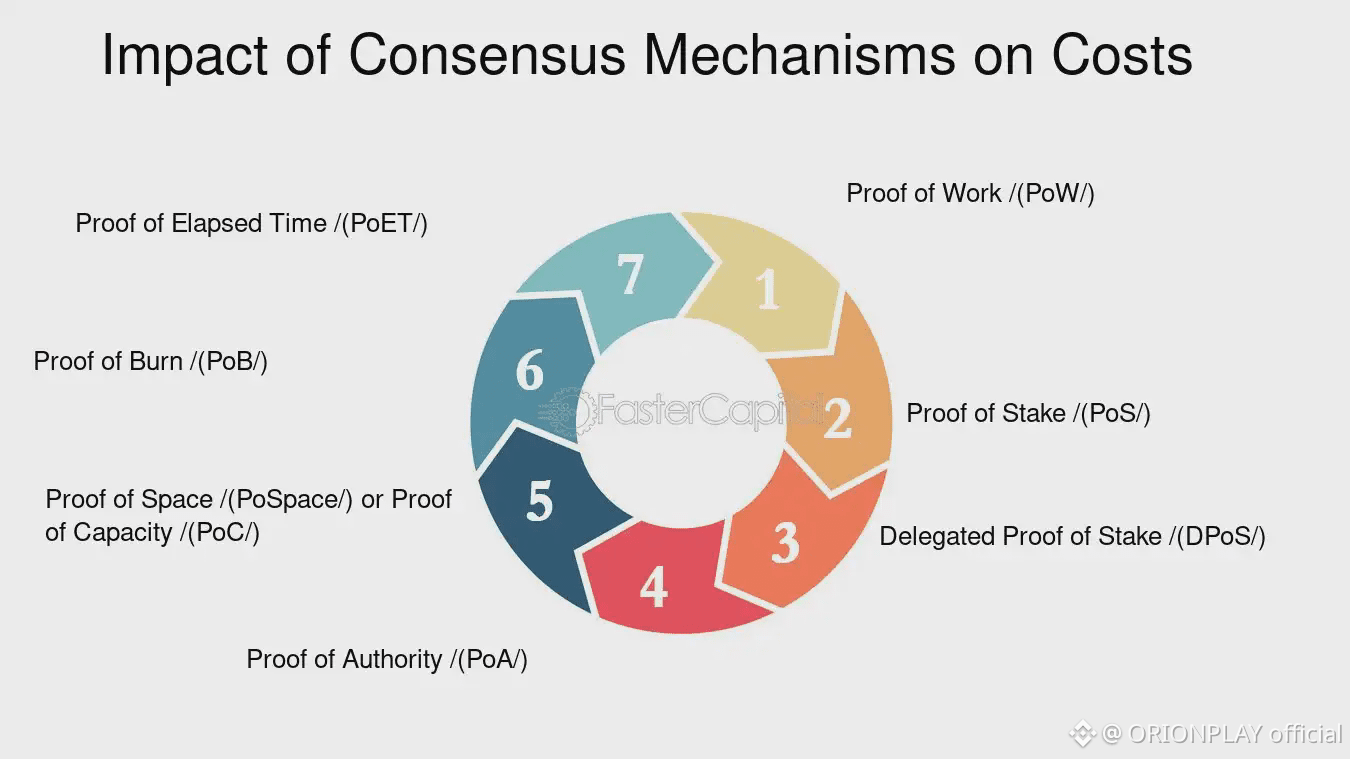
From a market perspective, the token VANRY reflects these functional ambitions. While many networks treat tokens as gas, speculation collateral, or governance markers, VanarChain treats $VANRY as a coordination mechanism for intelligent execution, state integrity, and economic alignment across computational workloads. This is why the token’s utility cannot be reduced to simple transfer value or staking reward — it is foundational to how the network operates as a reasoning system rather than a passive ledger.
What’s also notable is VanarChain’s early commitment to sustainability and predictable user costs. Fixed-fee transactions, green energy focus, and developer-friendly apparatus are not just buzzwords — they lower barriers for participation and reduce unpredictable friction for both developers and users, enabling mass usability. (docs.vanarchain.com)
In the broader ecosystem, VanarChain sits at an interesting crossroads. It inherits architectural strengths from Ethereum’s proven codebase — including security models and developer tooling — while pushing the stack forward into areas that other chains only approach via adjunct layers. This combination yields both familiarity and innovation, which could be vital for real adoption.
✨ What This Means for Web3’s Next Wave
VanarChain’s emergence suggests a shifting frontier in blockchain thinking:
• From passive record-keeping to active comprehension of data.
• From siloed computation to native on-chain intelligent execution.
• From speculative token utility to coordinated economic alignment.
• From off-chain logic dependencies to integrated protocol reasoning.
This is not simply about speed or throughput. It is about how blockchain ecosystems evolve when they stop being just historical ledgers and start being living computational networks.
🧠 Final Reflection
VanarChain’s strategy is not flashy. It doesn’t promise overnight adoption or viral hype. What it quietly builds is a protocol that treats interpretation as first-class infrastructure. In doing so, it anticipates a future where blockchain systems are judged not by how fast they move tokens, but by how smart they can be — and how reliably they can execute logic that drives real-world outcomes.
If the next wave of Web3 is about composable intelligence, decentralized reasoning, and real-time adaptive systems, then VanarChain isn’t just participating — it’s laying the foundational architecture for that transition.