But the wrong question is: Should we buy or sell?
The right question is:
Which phase of the cycle are we in?
Let’s step away for a moment from the daily noise and look at the picture most traders are not talking about:
the 10-year real yield.
What do the data actually say?
If we look back historically, we notice a very important fact:
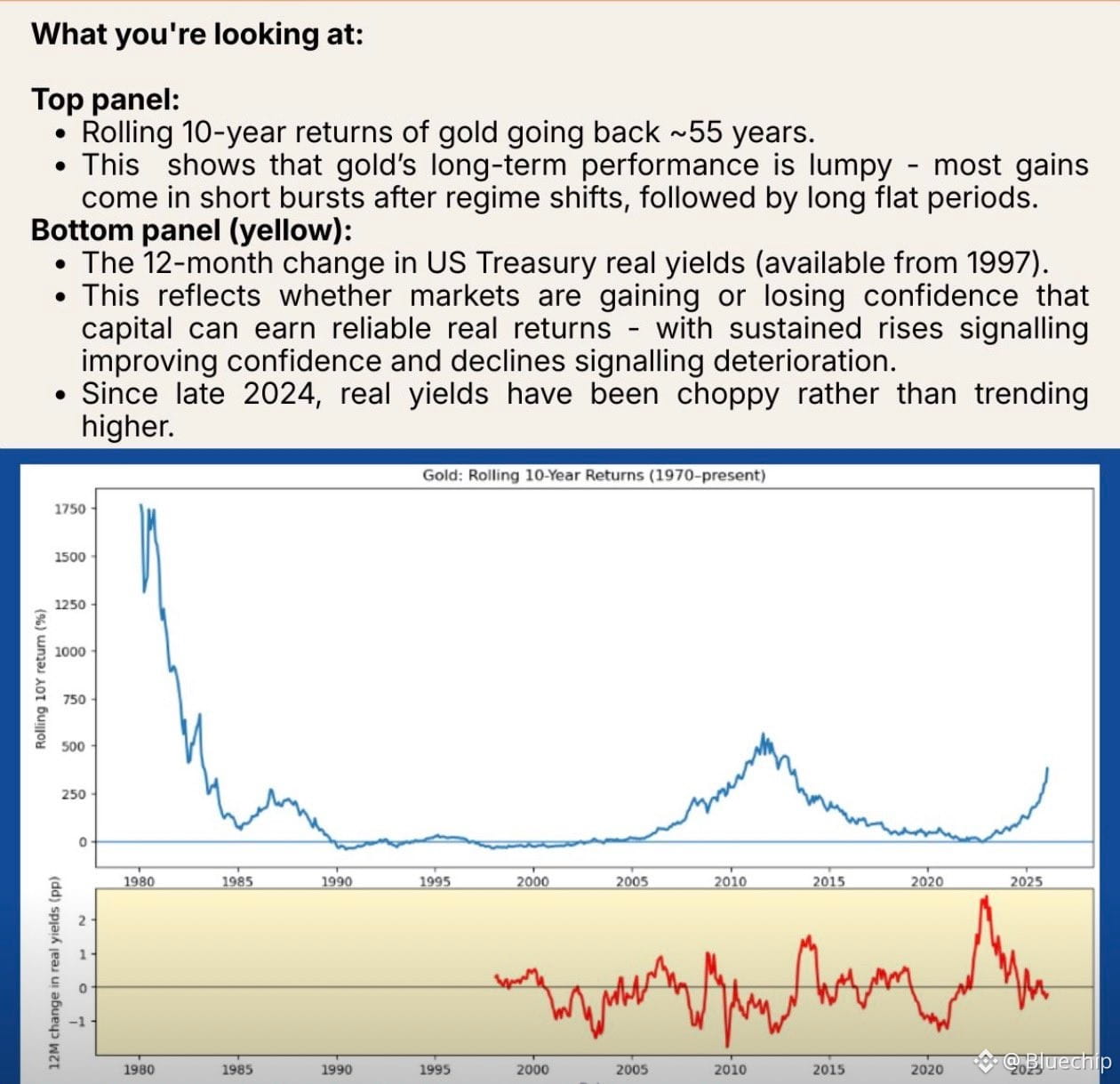
Gold does not move like an asset that grows smoothly.
It is not like stocks that quietly compound returns.
Instead, it moves in the form of:
long periods of stagnation
followed by short, powerful price explosions
then calm again
In other words:
most of gold’s gains come in very limited periods tied to structural changes in the economy.
The key factor: real yields
History is very clear here:
▪ When real yields decline or become unstable → gold thrives
▪ When real yields rise steadily → gold struggles
The reason is simple:
gold does not generate yield,
so the higher real bond yields go, the less attractive holding gold becomes.
What has happened recently?
Since around 2023:
real yields have started to decline
geopolitical risks have increased
confidence in monetary policy has weakened
The result?
A strong upside move in gold.
Therefore, the recent drop does not necessarily mean the end of the move…
It may simply be normal volatility within a larger cycle.
The takeaway many ignore:
gold does not move because of news
nor because of breaking headlines
but because of deep shifts in real yields and liquidity
Those who chase the daily candle lose.
Those who watch the economic cycle understand what is happening.
Final conclusion:
Do not judge gold by a single day or week
Look at the bigger trend
Watch real yields
And leave the noise to others
Data matters more than narratives.