
The price of Bitcoin (BTC) has decreased by 14.5% in the last 16 days, pulling the Crypto Fear & Greed Index down to 16 points (Extreme Fear) — the lowest since the beginning of the year.
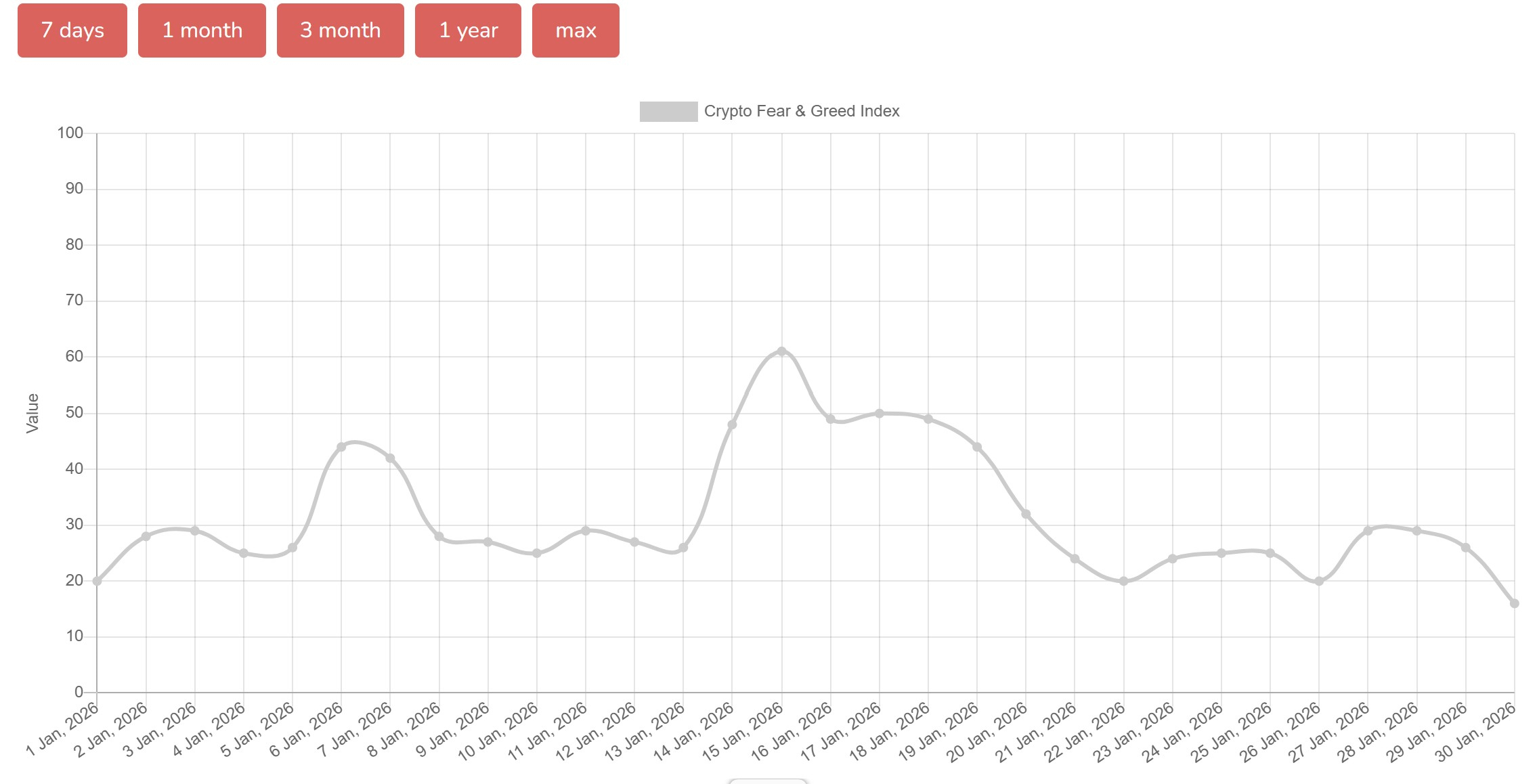 Crypto Fear & Greed Index | Source: alternative.me
Although selling pressure has dominated over the past two weeks, derivatives market data suggests how traders are positioning themselves could set the stage for a recovery. Analysts are currently assessing whether the recent sell-off has been sufficient to create conditions for a 'relief rally'.
The market imbalance opens up opportunities for a slight recovery.
Technically, BTC has swept through the $80,000–$83,000 range, triggering and absorbing a large cluster of long position liquidations. As the liquidity below has been significantly 'withdrawn', the market's focus tends to shift to higher levels.
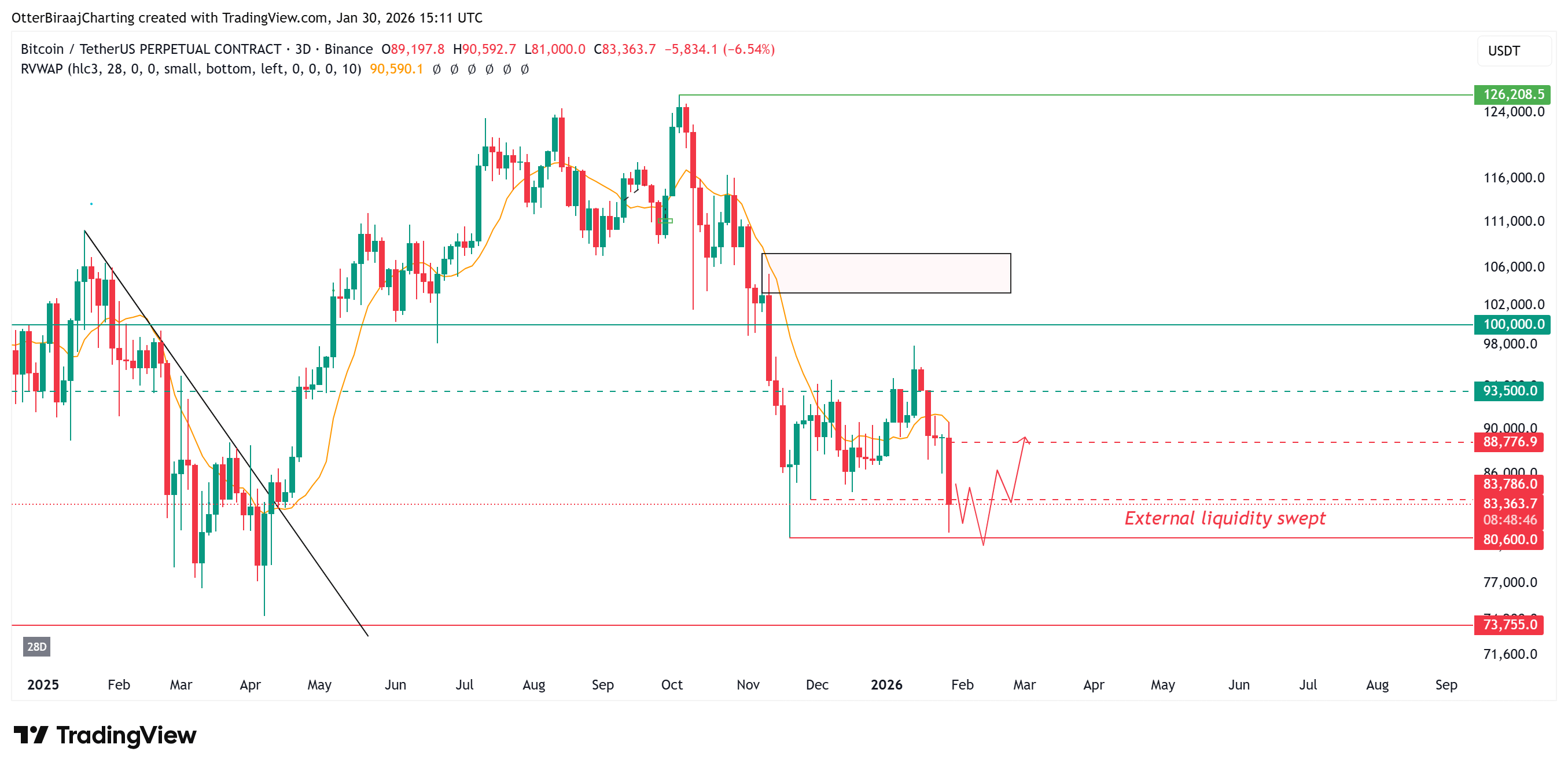 Three-day Bitcoin chart | Source: Cointelegraph/TradingView
According to CoinGlass, if the price approaches $92,000, over $6.5 billion in accumulated short positions could face liquidation risk. Meanwhile, a drop to $72,600 puts about $1.2 billion at risk. This discrepancy suggests that upward momentum could be amplified: as prices rise, shorts are forced to buy to cover, creating a 'short squeeze' effect and accelerating the recovery.
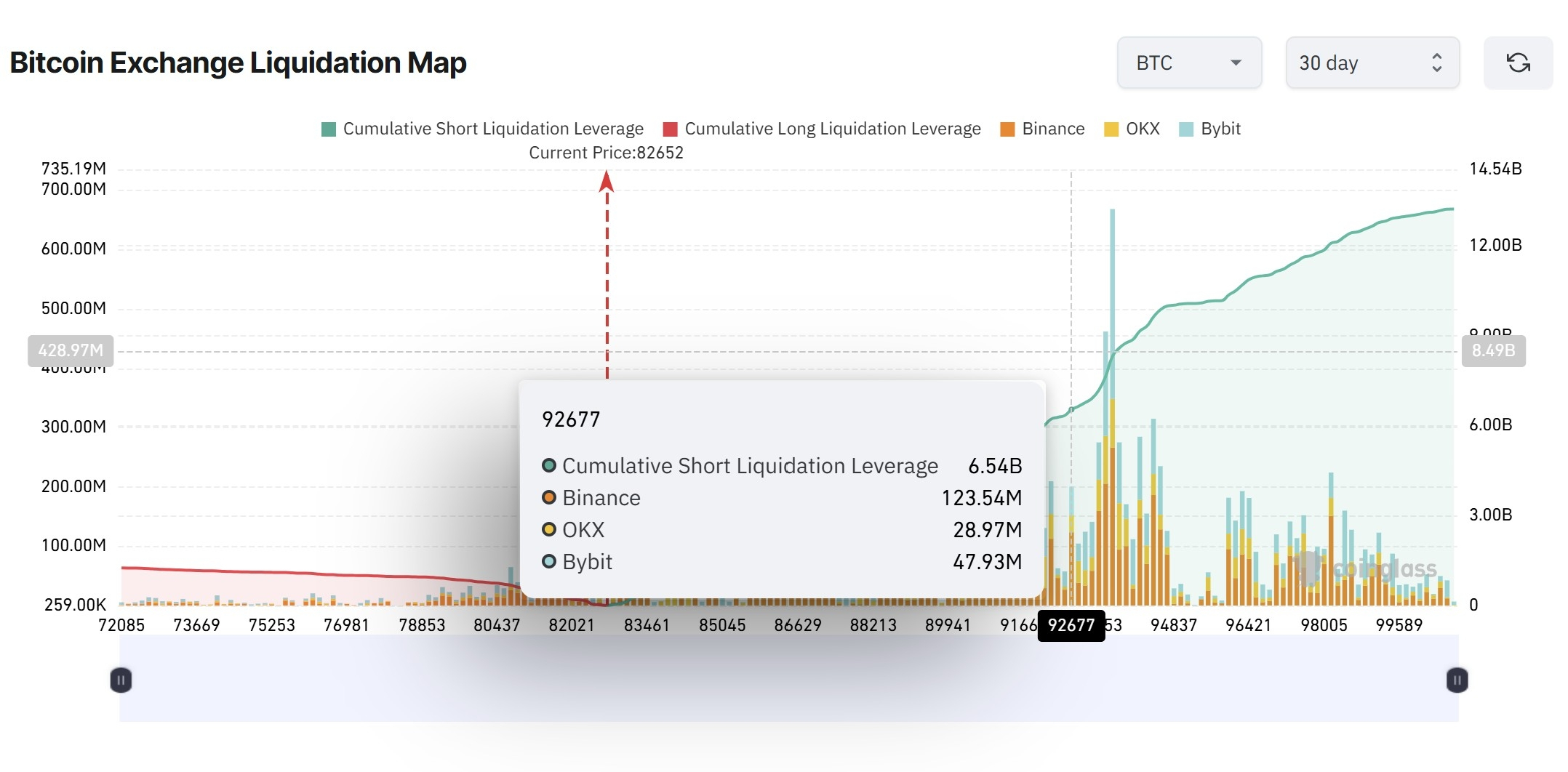 Bitcoin Liquidation Map | Source: CoinGlass
Adding to this argument, commentator MartyParty views the recent developments as similar to the Wyckoff Accumulation 'Spring' model — when prices temporarily breach support levels to eliminate weak-handed investors before reversing.
In this context, a sweep below $83,000 could be seen as a final 'liquidity grab', opening opportunities for major players to accumulate at attractive price levels. If buying pressure remains strong enough, the next phase could be a range expansion, with targets returning close to $100,000. Bitcoin futures positioning: Mixed signals.
The decline of Bitcoin is said to have triggered about $800 billion in liquidations in the past 24 hours — the largest in a day since late November, when BTC was trading around $81,000.
However, according to analyst Darkfost, open interest on Binance has risen to 123,500 BTC, significantly higher than the period before October 10 (when open interest dropped to 93,600 BTC). The increase of approximately 31% since then implies that many traders are re-establishing their market participation levels, instead of withdrawing completely.
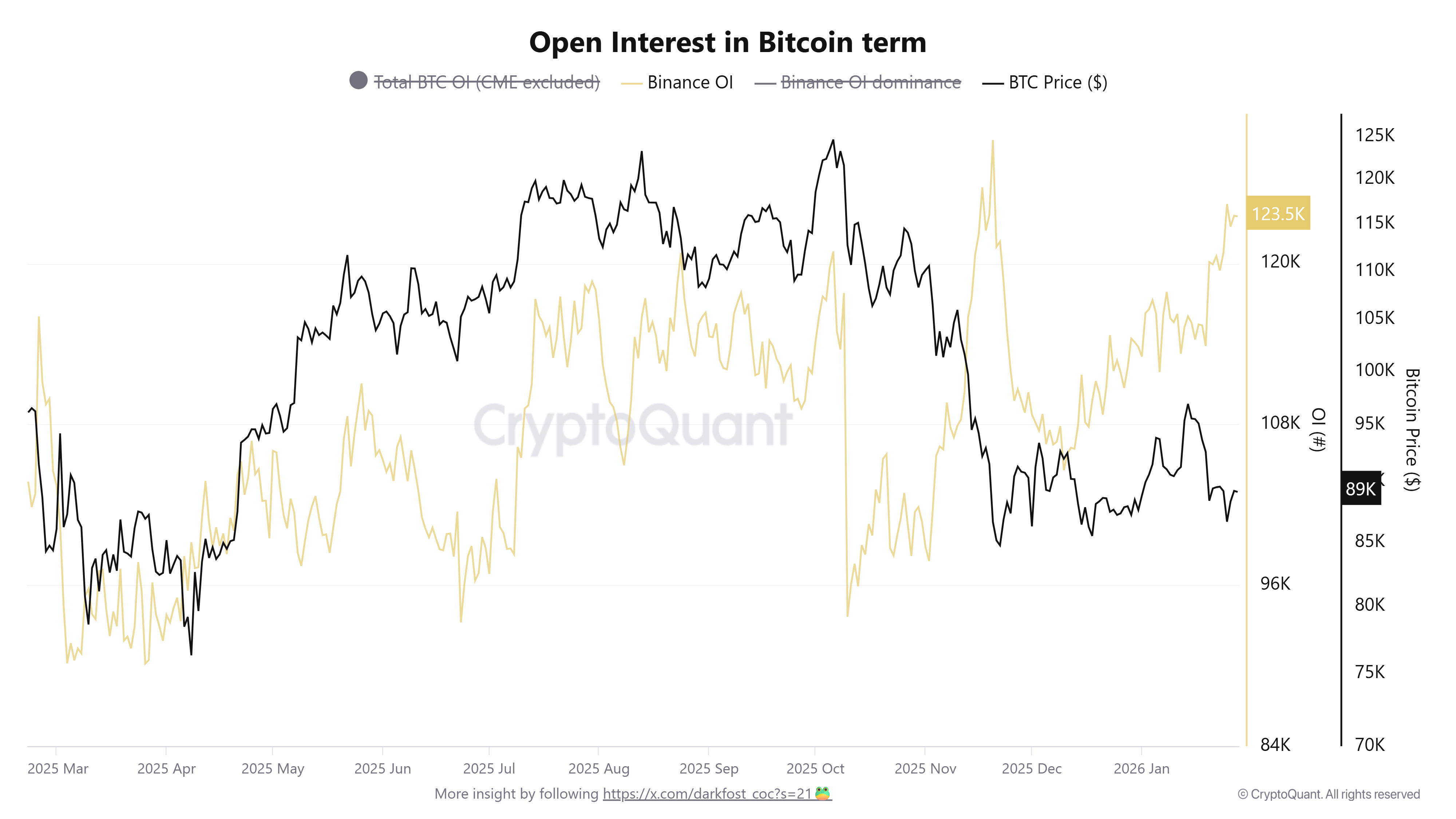 Open Interest measured in Bitcoin | Source: CryptoQuant
In the broader picture, derivatives activity has cooled down. The monthly trading volume of Bitcoin futures across all exchanges reached about $1.09 trillion in January — the lowest since 2024. Liquidity remains concentrated mainly on large exchanges, led by Binance with $378 billion, followed by OKX ($169 billion) and Bybit (around $156 billion).
https://coinphoton.com/viec-mat-can-bang-cua-hop-dong-tuong-lai-bitcoin-co-the-kich-hoat-dot-phuc-hoi-len-90-000-do-la.html