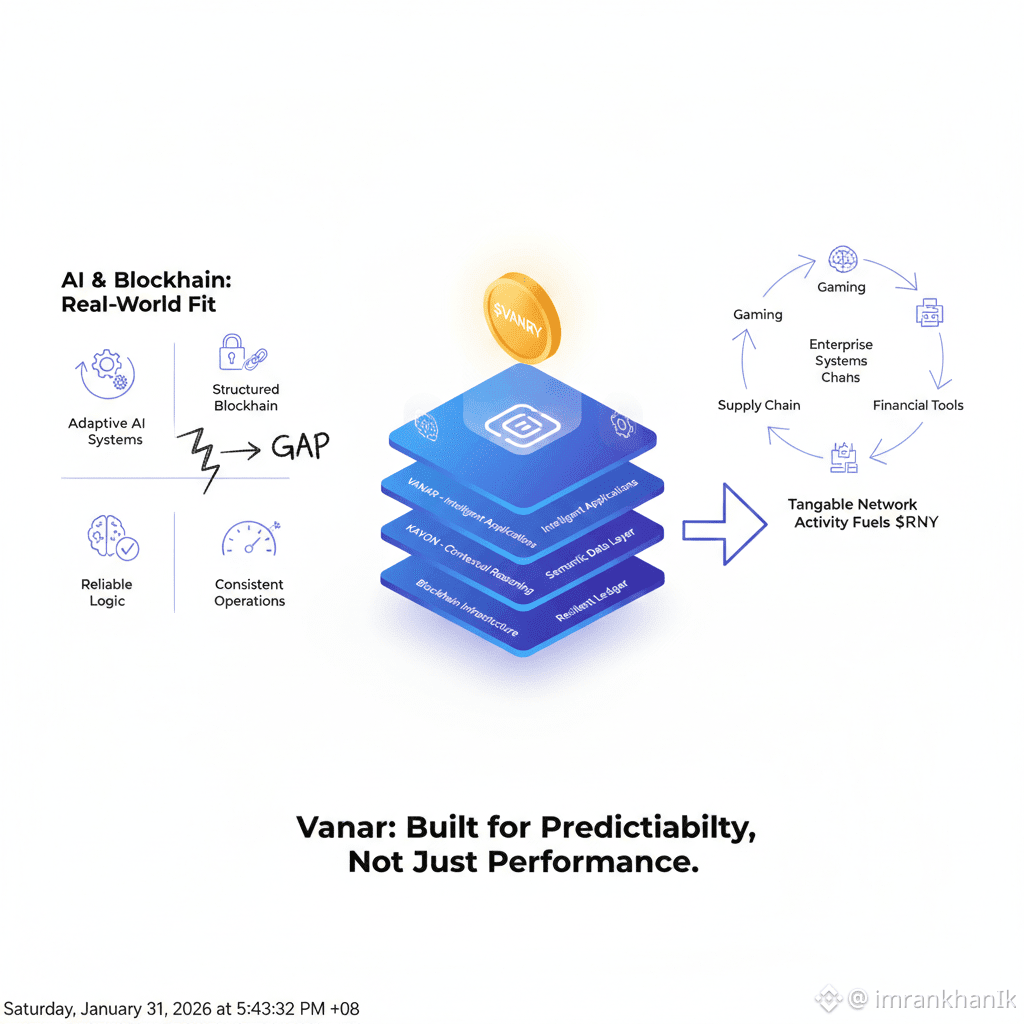
When people first hear about AI and blockchain in the same sentence, it can sound forced like someone’s mixing two big trends just because they can. The mismatch is obvious if you’re new. AI runs fast, adapts constantly, and always wants more data. Old-school blockchains? They’re slow, careful, and want everything double-checked. It’s like revving a sports car down a cobblestone street. You’ll get there eventually, but it’s bumpy and awkward.
Think of a kitchen. AI is the chef, moving fast and juggling ten things at once. Vanar’s blockchain is the logbook: keeping track of ingredients, orders, and who’s doing what. If that log is too slow or too strict, everything grinds to a halt. Too loose, and chaos breaks out mistakes pile up, and nobody knows what happened. Vanar aims for that sweet spot: strict enough to keep everyone honest, flexible enough to let things flow.
Underneath it all, Vanar gives people a place to record transactions, check what actually happened, and anchor data in a way that everyone can check. For software, that’s a big deal. Modern apps don’t just spit out results they need a steady flow of data, constant updates, and clear usage logs. If you hide that stuff or lock it in some black box, trust falls apart. Vanar keeps things open and running, and VANRY isn’t just a trading chip it tracks real activity on the network.
Earlier blockchain projects hit a wall when they tried to do more than just move money around. They weren’t built for ongoing, real-time work. Transactions slowed to a crawl, costs piled up, and storage hit its limits. Developers had to work around the system or move things off-chain, turning blockchains into little more than fancy labels.
Vanar took a different path. Its system is all about steady performance, clean modular design, and transparency where it matters. Only what absolutely needs to get checked is on-chain. Everything else moves fast off-chain. That means developers can build apps that actually scale, without the network tripping them up. By December 2025, this steady approach started to pull in teams that cared more about reliability than flashy numbers.
It’s not just about speed. Apps need to know that updates, logs, and decisions get tracked the same way every time. If your system acts weird under pressure, you’re just asking for trouble. Vanar’s design stays steady, so builders and users can focus on the real work instead of fixing broken pipes.
Investors and traders often miss this. Headlines and charts come and go, but most projects fail because their infrastructure can’t keep up. Vanar lowers that risk. VANRY’s value comes straight from real, ongoing use not just speculation.
Of course, there’s a balance. Not everything should go on-chain. Too much transparency wastes resources or spills sensitive data. The trick is knowing what to record, what to keep off-chain, and how to keep things both efficient and accountable. That’s how Vanar sets itself up for the long haul.
Governance matters, too. Apps change. Models get better, rules get tweaked, upgrades roll out. Vanar’s setup makes it easy to evolve without breaking trust, with clear upgrade paths that anyone can follow. By late 2025, projects that handled governance this way started drawing in better developers and more committed users.
At the end of the day, it’s not about chasing the highest numbers. It’s about systems that act the same way, every day, no matter what. That’s what lets developers focus on building instead of firefighting. And that’s what VANRY reflects real, ongoing action in the network.
If you’re new, just remember this: Don’t get distracted by hype or big promises. Ask what the system actually guarantees. Can it grow and change? Does it support real, long-term use? Vanar’s approach is quiet and steady, built for real-world work. When the hype dies down, networks like this and the VANRY token they run on are the ones still standing.