
When most people hear the word blockchain they imagine complexity. They imagine wallets, fees, charts, and technical language that feels distant from daily life. But when I look at Vanar Chain I do not see a system asking to be understood. I see a system trying to quietly fit into things people already enjoy doing every day inside digital spaces.
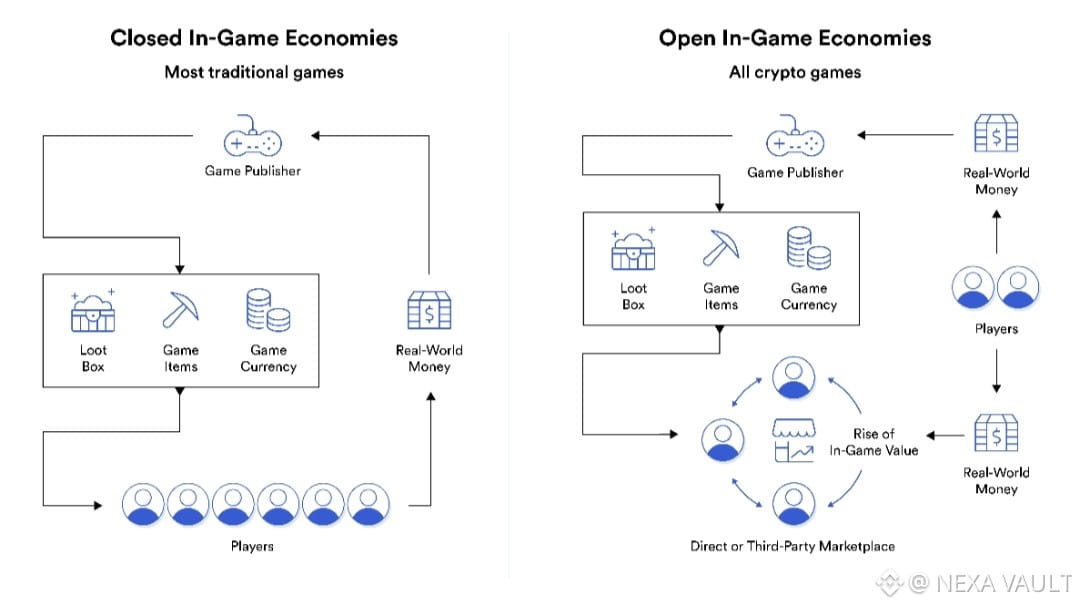
People already spend hours playing games, collecting digital items, exploring virtual environments, and interacting with brands online. These actions already carry emotional value. Sometimes they even carry financial value. The only missing part has been true ownership and a way for these digital experiences to connect across platforms. Vanar starts from this observation. It does not begin with technology and search for use cases. It begins with human behavior and builds technology underneath it.
This is why the focus on platforms such as the Virtua Metaverse and the VGN Games Network matters so much. These are not technical showcases designed to demonstrate blockchain features. They are environments where people can spend time, move around, collect items, interact with others, and feel present. Inside these spaces ownership can exist naturally without forcing users to change how they behave. The blockchain becomes part of the background rather than the main attraction.
Under the surface Vanar operates as a Layer 1 built for a very different type of activity compared to financial chains. Gaming and metaverse interactions are frequent, lightweight, and constant. They involve items, identities, and movements happening at high speed and large scale. The architecture is tuned to handle this flow smoothly so users never feel friction. The VANRY token acts as the value layer that connects actions across games, digital spaces, and brand environments into one unified ecosystem. Users feel continuity while the chain handles the complexity quietly.
Another interesting design choice is how Vanar connects gaming, metaverse, AI, and brands into one direction. These areas may look separate but they share a common factor which is user attention. Gaming keeps people engaged. Metaverse creates a sense of presence. AI allows personalization and memory. Brands bring familiarity and trust. When these are connected through a shared ownership layer the digital experience becomes richer without becoming more complicated. Items can live beyond a single game. Digital spaces can feel personal. Brand assets can be truly owned instead of temporarily accessed.
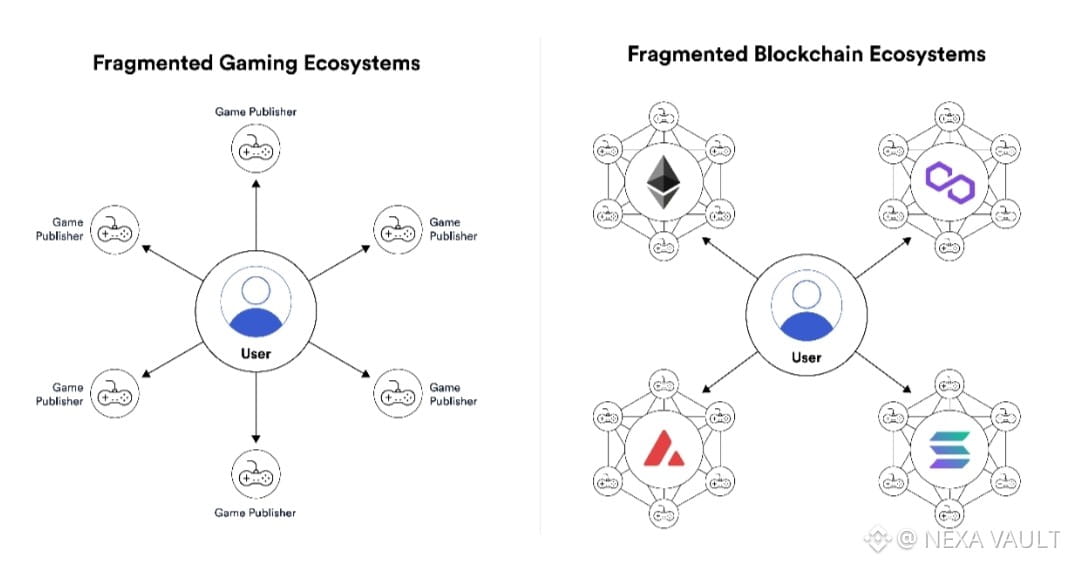
The way to measure the health of Vanar is also different from many other chains. Success here is not defined by how many financial protocols launch or how much value is locked. It is defined by how many users are active daily inside these digital environments. How many items move between platforms. How long users stay engaged. If people are interacting without realizing they are using blockchain then the system is working as intended.
There are real challenges in this path. The biggest risk is not technical failure but experiential failure. If the games are not enjoyable or the digital worlds are not attractive then the chain underneath loses purpose. There is also competition from traditional gaming and digital companies that may attempt similar ownership systems without blockchain transparency. Education must be handled carefully so users benefit without feeling overwhelmed.
Vanar addresses these challenges by leaning on the team experience in gaming, entertainment, and brand engagement. The strategy is not to create crypto users but to support digital users. Partnerships, strong design, and seamless experience reduce the need for people to even think about the blockchain that supports them.
Looking ahead it is possible to imagine users spending years inside digital worlds powered by VANRY without ever discussing gas fees or consensus models. Ownership becomes a normal part of digital life. Digital identity stretches across games, spaces, and brands. AI helps make these environments feel personal and alive. The blockchain remains present but invisible.
Vanar represents an approach where technology does not demand attention but earns its place by fitting naturally into human behavior. It is not trying to change what people do online. It is trying to quietly improve it by adding ownership, connection, and value underneath experiences people already love.