

If you spend enough time around crypto infrastructure, you start noticing that storage is one of those things everyone assumes will “just work,” right up until it doesn’t. This includes AI datasets, NFT metadata, archives, and media files. All of it has to live somewhere. And when it breaks, it breaks quietly, usually at the worst time.
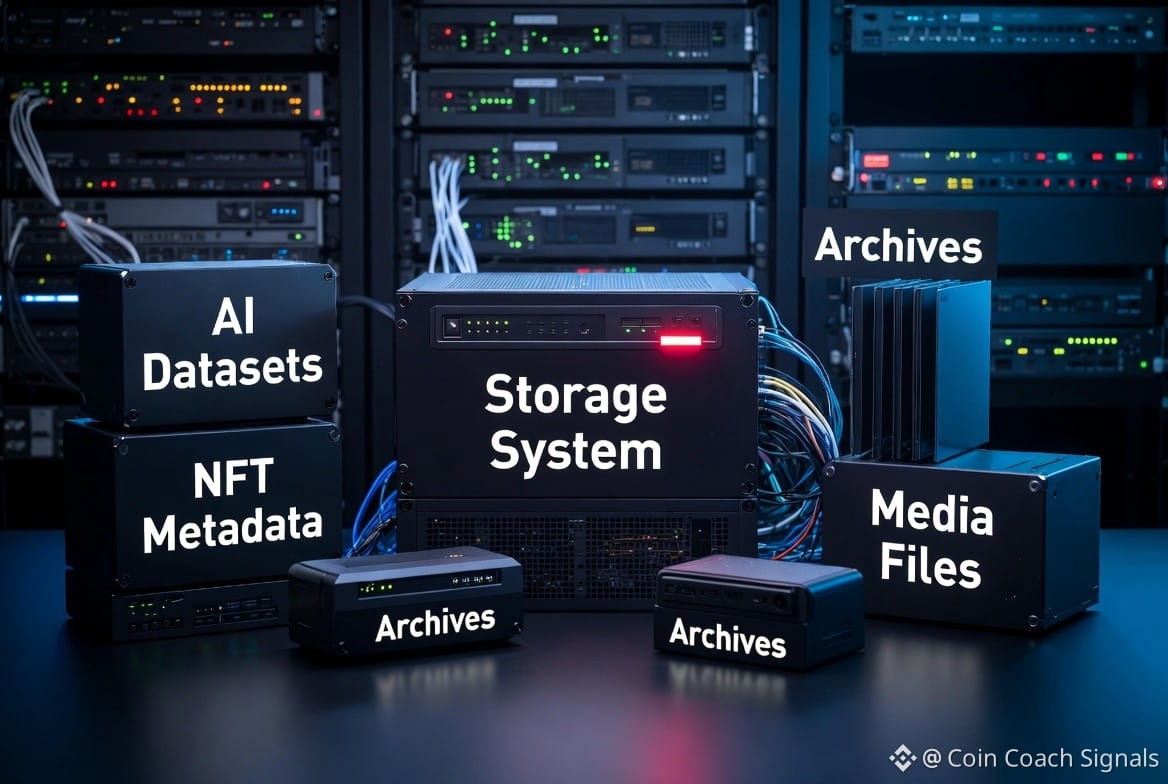
Walrus exists because most blockchains were never built to handle this kind of data. They are good at balances and state changes. They are bad at large files. When projects say they are decentralized but still rely on a single storage provider in the background, that gap becomes obvious fast. Slow loads, missing files, and unpredictable costs are common issues. It shows up more often than people admit.
At a technical level, Walrus takes a different route. Instead of copying entire files across the network, it uses erasure coding. Files are broken into many smaller pieces, often called slivers. You don’t need all of them to recover the original data. You only need enough. That means the network can lose nodes and still function without data loss. Compared to basic replication, this technique cuts down storage overhead and makes costs easier to reason about over time.
The data itself stays off-chain. That part is intentional. What gets anchored on-chain are proofs. Walrus integrates with the Sui blockchain to coordinate this. Storage nodes regularly submit availability proofs through smart contracts. If a node stops holding the data it committed to, it stops earning. Simple idea, but effective. Heavy data stays where it belongs, and accountability stays on-chain.
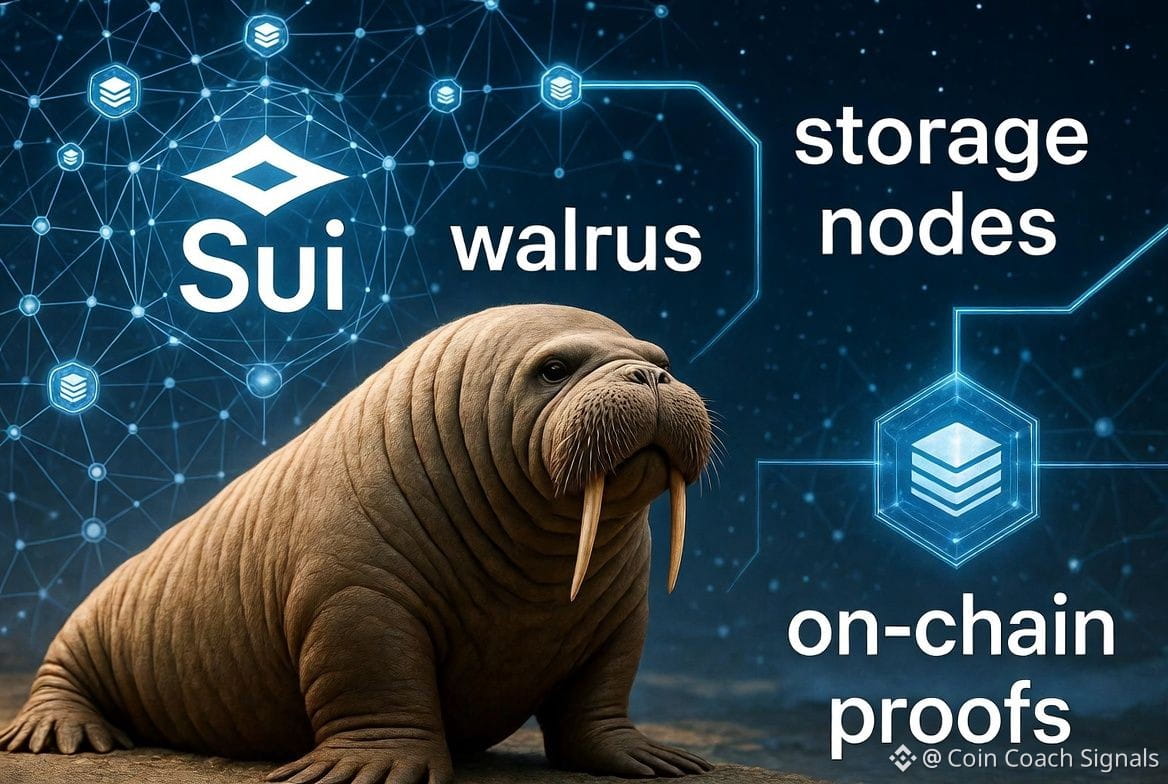
This design matters for AI workloads. Training datasets are large, updated often, and expensive to move around. NFT metadata has a different problem. If it disappears, the NFT loses meaning. Walrus treats both as availability problems first, not just storage problems. That framing shapes everything else.
Performance is not about chasing maximum speed. It is about predictability. Retrieval happens in parallel across slivers. The network can tolerate failures without stalling. Costs scale with size and time, not with how many redundant copies exist. For teams planning long-term usage, that difference adds up quickly.
The WAL token is not abstract here. You pay for storage in WAL. Tokens are locked based on how much data you store and for how long. Nodes stake WAL to participate and risk slashing if they fail availability checks. Delegators can stake too. Rewards flow only if data stays available. Governance also runs through WAL holders, but it is not the headline feature. The token exists to align behavior, not to sell a story.
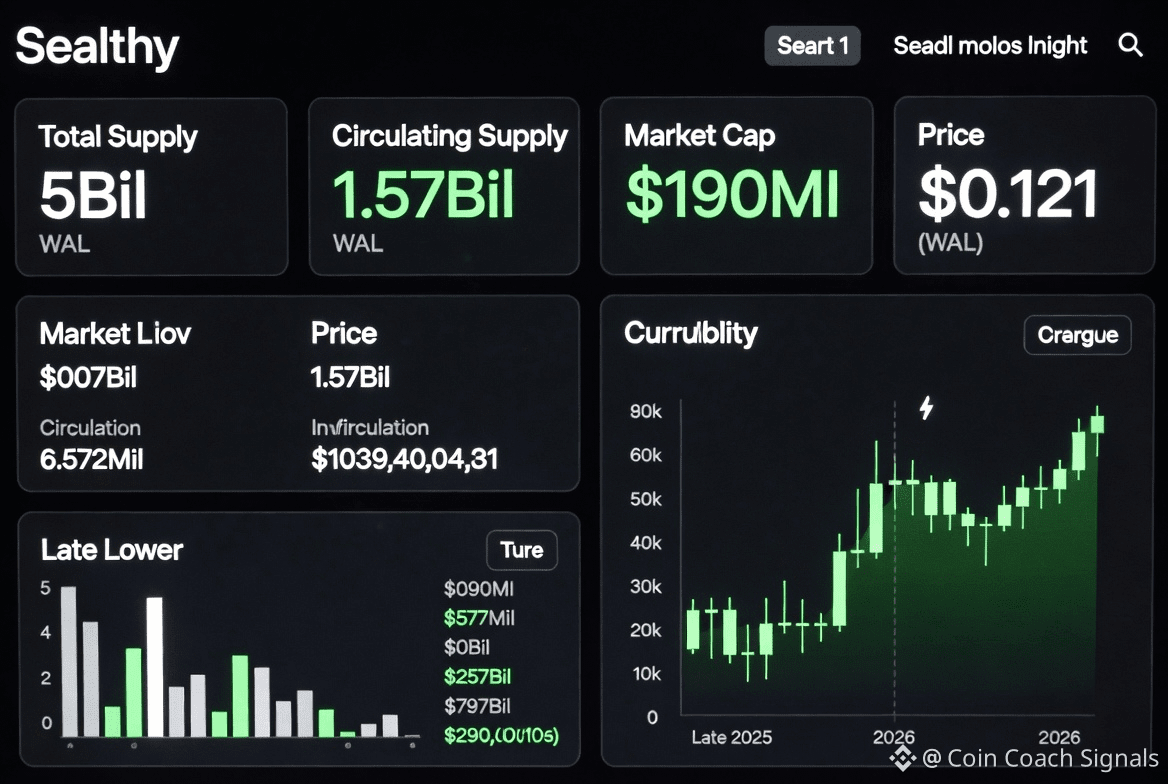
As of early 2026, about 1.57 billion WAL is in circulation, out of a total of 5 billion. Market cap sits around $190 million. Liquidity has been steady, though price still moves with the broader market more than with protocol-level milestones. WAL traded much lower in late 2025 and stabilized in early 2026. That volatility says more about crypto markets than about storage demand.
Adoption is where things get more intriguing. One example is Team Liquid migrating its esports archive to Walrus. That matters because the material is not experimental data. It is production content with real expectations around uptime and access. These kinds of migrations are slow and cautious for a reason. When they happen, they signal confidence in the infrastructure, not just curiosity.
There are real risks. If AI-related uploads spike faster than node capacity grows, congestion becomes a problem. Filecoin and Arweave are not standing still, and they have deeper ecosystems today. Regulation around data access and privacy is still evolving, and storage networks will not be immune to that pressure.
Still, Walrus fits a broader shift in how people think about decentralized storage. The tolerance for slow, unpredictable systems is dropping. Developers want storage that behaves like infrastructure, not an experiment. Predictable costs. Clear guarantees. Less operational glue.
Whether Walrus becomes a long-term standard depends on execution. But as of early 2026, it is one of the clearer attempts to make decentralized storage usable for real AI data and real digital assets, not just demos.
@Walrus 🦭/acc