
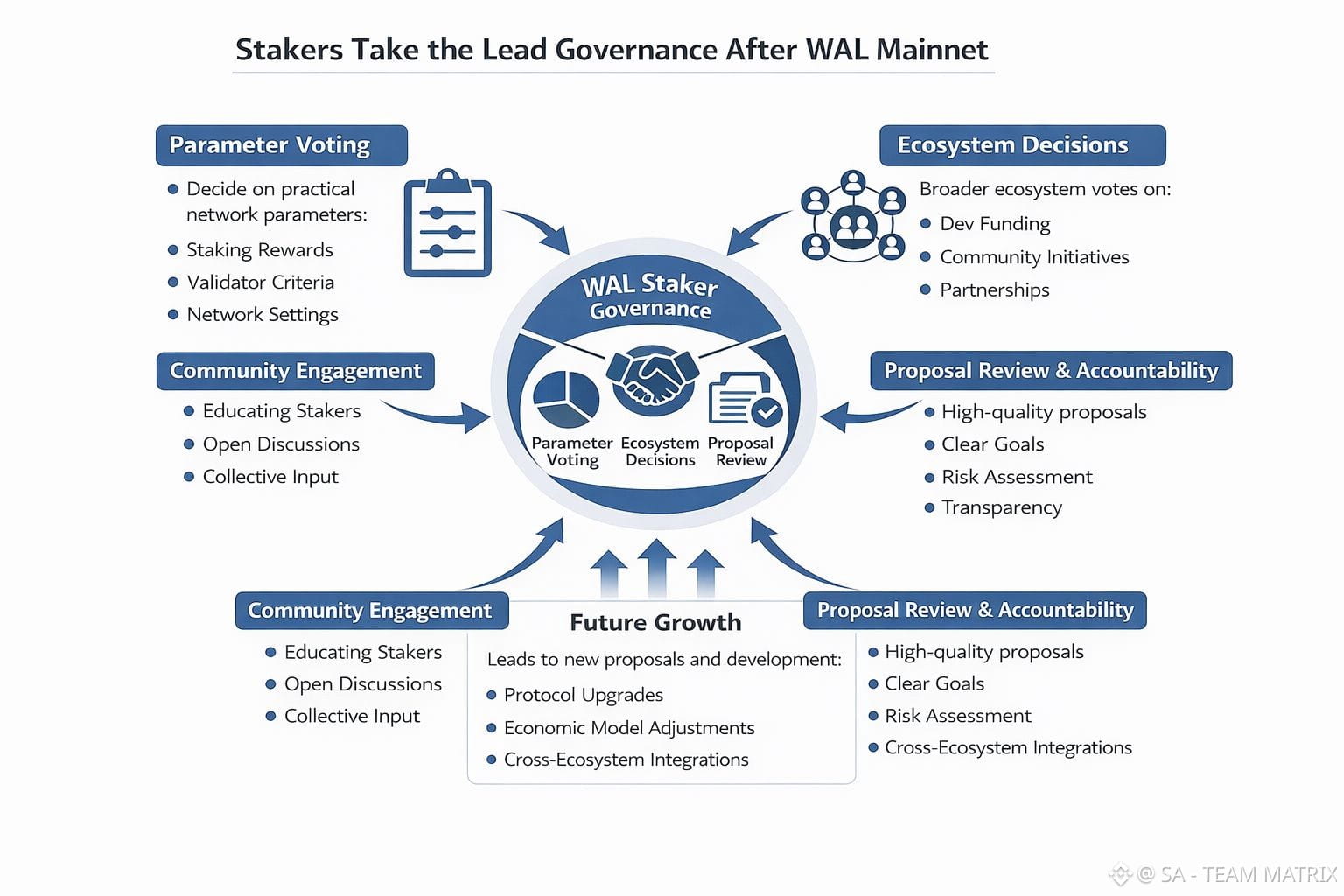
The way WAL is run has changed a lot since it went live on the mainnet. Now that the network is up and running and more people are using it the people who have a stake in WAL get to help decide what happens next. They do not just have to listen to a people in charge. Instead ideas are. Talked about and then approved by the whole group through a process that happens right on the chain. This way the people who care about WAL get to say what is important to them and help the protocol change over time. The people who have a stake in WAL are really, in charge of how WAL evolves.
In the beginning when the mainnet was new people who had WAL and were staking it made proposals that were about things that really matter to the network. They talked about things, like how much WAL you need to stake how the rewards are given out when they are given out and what the people running the network need to do. The people who own WAL tokens got to vote on these things. This meant that the people using the network got to say what they think is best. The network can then change quickly because it is using information from the people who are actually using it. This way the network stays fair and people trust it. The WAL staker proposals really helped with this because they were focused on making the network stable and getting people to participate in the WAL network.
Parameter voting is also a way for the community to learn. People who hold Parameter voting tokens are encouraged to understand how changes affect the security of Parameter voting how decentralized it is and if it will be around for a time. When more people take part in discussions about how Parameter voting should be governed the community as a whole becomes more knowledgeable about the ecosystem of Parameter voting. This helps users of Parameter voting, the people who validate transactions on Parameter voting and the people who build on Parameter voting to all be, on the page and work together to keep the network of Parameter voting healthy.
The WAL staker proposals are not about the technical settings of the WAL system. They are starting to involve decisions that affect the whole ecosystem of the WAL. For example people are voting on how to allocate funds for tools that help developers and for projects that the community wants to support. They are also making rules for how the WAL ecosystem should work with groups. This is a change because now the people who make decisions for the WAL are not just focusing on keeping the system running. They are also trying to guide the growth and adoption of the WAL. The WAL governance is becoming more, about helping the WAL system grow and be used by people rather than just making sure it keeps working.
The post mainnet governance model is really good because it makes people more accountable. People who make proposals have to explain what they want to do and what they think will happen. They also have to talk about what could go. Then people who vote can look at what these proposal authors have done and think about why they are making these proposals. This helps make sure that only good proposals are made and it stops people from making changes that will only help them and might hurt the network. The post mainnet governance model helps the network by making sure that proposal authors make proposals.
WAL governance is really important because it shows that systems that are not controlled by one person can be both efficient and fair to everyone. The time periods for voting and the rules for making proposals are made so that people have time to talk about things without slowing down the process. As the tools, for participating get better it becomes easier for more people to join in and have a say, which means more stakers can contribute to WAL governance in a way. WAL governance is an example of this, where WAL governance helps to make sure that everyones voice is heard.
The WAL staker governance is going to get better and better. We will probably see some complicated suggestions, like changing the protocol adjusting the economic model and working with other ecosystems. The decisions made after the mainnet was first launched were important because they showed that the community can make decisions on its own even when things get tough. The WAL staker governance is going to keep improving because of this.
In this new era WAL stakers are not passive holders. They are active stewards of the network guiding its evolution through informed collective decision making.

