
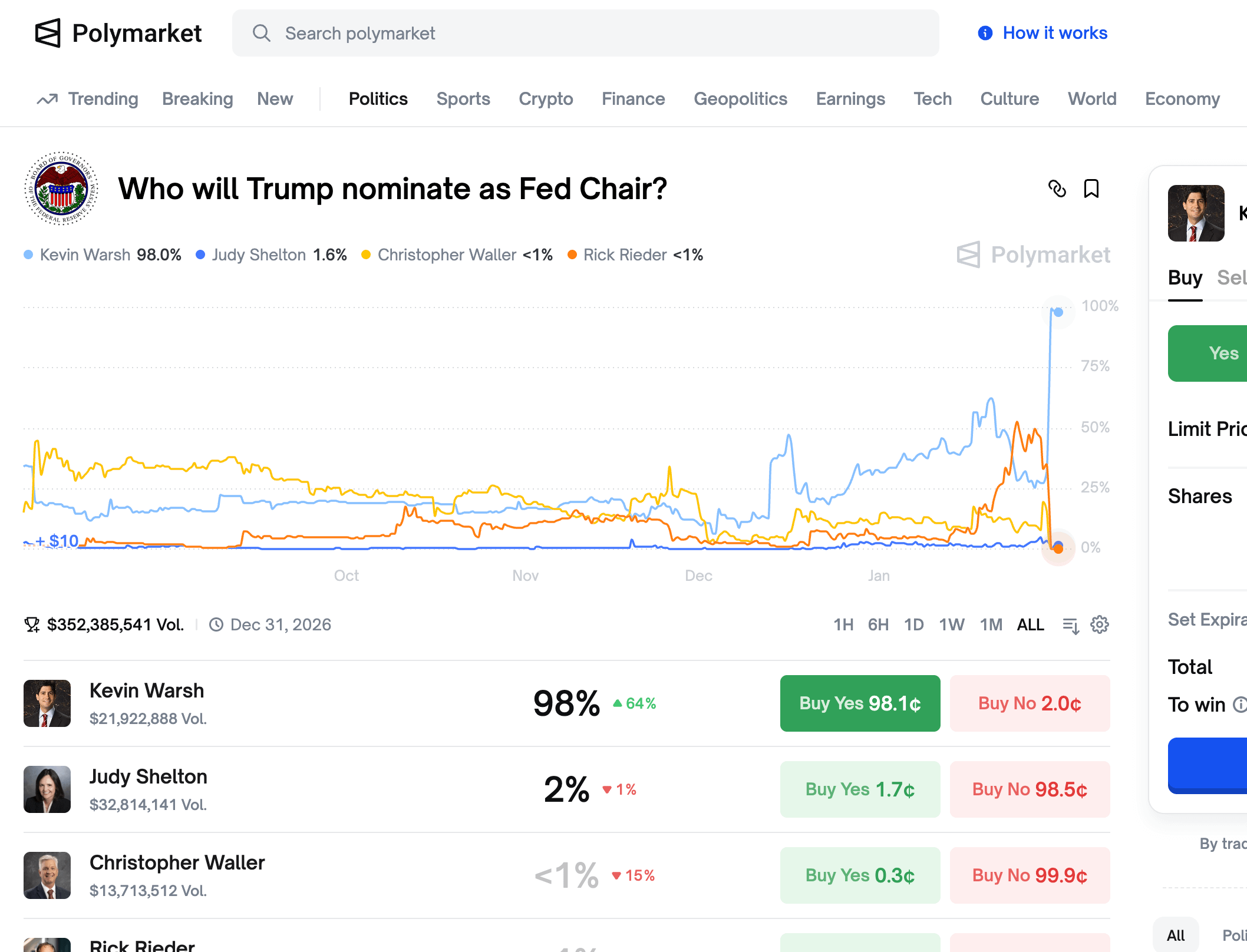
On January 30, 2026, President Trump officially nominated Kevin Warsh as the next chairman of the Federal Reserve, and this news instantly ignited the global financial markets. The odds on Polymarket indicated that Warsh's probability of nomination soared to over 99%, almost locking in the victory.
Here is my in-depth analysis of this significant geopolitical and economic event:
As Jerome Powell's term comes to an end, Trump ultimately chose Kevin Warsh, who was once referred to as the 'youngest governor of the Federal Reserve.' This choice not only signifies a personnel change but also foreshadows a fundamental restructuring of the Federal Reserve's monetary policy logic.
I. Core Background: The Intersection of Wall Street and Power
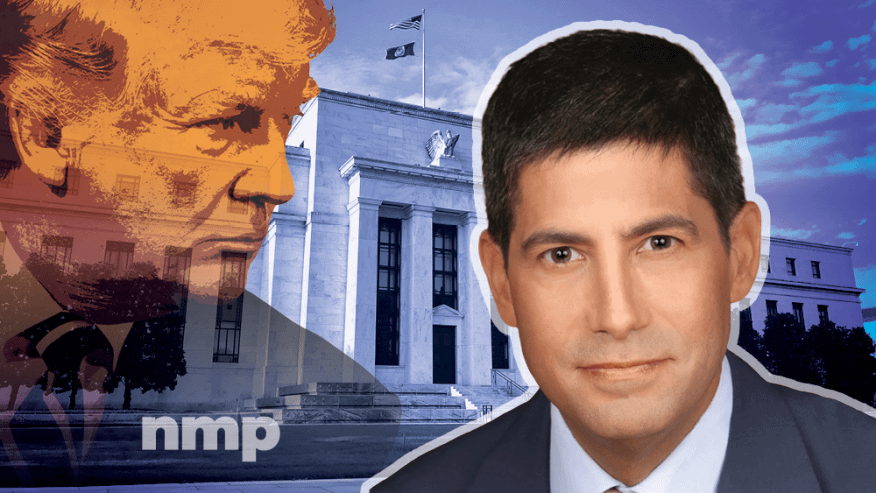
Kevin Walsh has an extraordinarily impressive resume. He came from Morgan Stanley (mergers and acquisitions) and was appointed as a Federal Reserve Governor by President Bush at the age of only 35 in 2006, becoming one of the youngest governors in history.
Crisis Baptism: During the 2008 financial crisis, he was a key bridge between then-Chairman Bernanke and Wall Street, assisting in handling the liquidity rescue following the collapse of Lehman Brothers and was regarded as "the most trusted person on Wall Street."
System Reflection: In 2011, he resigned in protest against the Federal Reserve's second round of quantitative easing (QE2), and has since held a long-term position at Stanford University's Hoover Institution, becoming a sharp critic of the Federal Reserve's "over-interventionism."
II. Economic Proposals: The combination of hawkish undertones and "AI interest rate cut theory"
Walsh's economic thought can be summarized as "disciplined flexibility." He has long been viewed as a hawk in monetary policy, but to align with Trump's interest rate cut demands, he has proposed innovative theoretical support:
"Inflation is a choice": He believes that inflation primarily stems from excessive government spending and excessive money printing by central banks, rather than rapid economic growth.
Balance sheet reduction for interest rate cuts: Walsh advocates for a significant reduction of the Federal Reserve's trillions of dollars in assets (QT), aiming to reshape market discipline by retracting excess liquidity, while sacrificing that to create space for lowering the benchmark interest rate, in order to meet Trump's economic stimulus requirements.
AI Productivity Premium: He has recently strongly advocated that "AI-driven productivity improvements" can offset the inflationary pressures brought about by interest rate cuts. He believes that technological advancements will lower costs, allowing the Federal Reserve to maintain lower interest rates without triggering a surge in prices.
III. Market Reaction: The Precise Hunting of Prediction Markets
The number of bets and probabilities on Polymarket reflects the rapid speed of information transmission:
Probability Game: Before the formal announcement of the nomination, Walsh's probability skyrocketed from 39% to over 93% within just 24 hours, ultimately locking in at 99%. This demonstrates the extreme sensitivity of prediction markets to political personnel changes, ahead of confirmation from traditional media.
Capital Flows: Following the news of Walsh's nomination, the gold and silver markets experienced a dramatic shock (with gold prices plummeting by 5% at one point), and the dollar strengthened. This reflects that the market is pricing in a "more disciplined, not blindly accommodative" hawkish chair, rather than the previously expected purely "dovish" stance.
IV. Deep Impact: Shockwaves on the cryptocurrency and financial markets
I. Impact on Cryptocurrencies (BTC/Crypto): Positive and Negative Intertwined
Positive Outlook: Walsh has an open attitude towards digital assets. He has publicly stated that Bitcoin is "digital gold" and a "sustainable store of value," and has previously invested in cryptocurrency startups. His leadership at the Federal Reserve could mean accelerated regulatory clarity and the loosening of restrictions on banks holding digital assets.
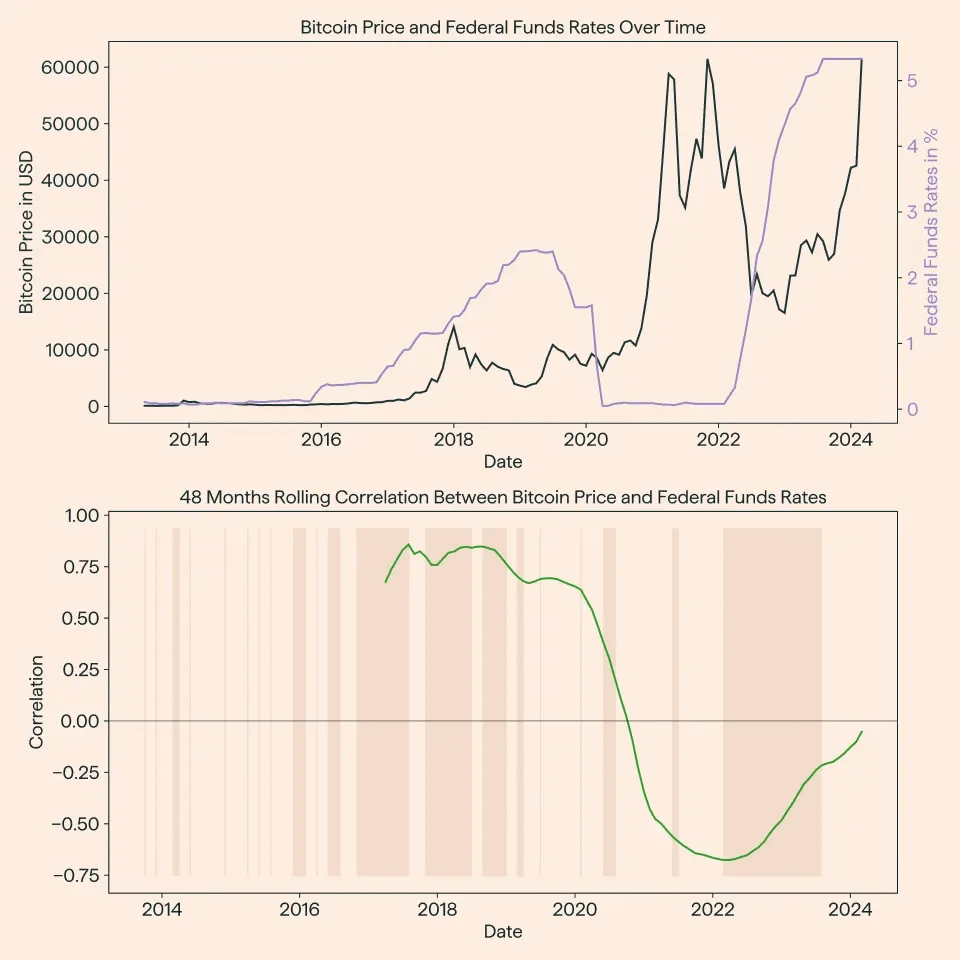
Negative Outlook: Walsh emphasizes "high real interest rates" and "liquidity tightening (balance sheet reduction)." If he aggressively reduces the balance sheet after taking office, global dollar liquidity will tighten, which poses a long-term pressure on risk assets (such as Bitcoin) that heavily rely on liquidity overflow.
2. Impact on US stocks and bond markets:
Stock Market Divergence: The market expects him to cooperate with Trump on interest rate cuts, which may have a stimulating effect on the stock market in the short term; however, his insistence on balance sheet reduction may push long-term US Treasury yields higher, suppressing overvalued tech stocks.
Independence of the Federal Reserve: The market is concerned that Walsh will become an executor of Trump's will. If he overly aligns with the White House, it could undermine the credibility of the Federal Reserve's independence and lead to uncontrolled long-term inflation expectations.
Kevin Walsh's nomination marks the end of the "Powell Era." He is a complex leader who understands Wall Street's language, supports cryptocurrency innovation, but is fundamentally averse to inflation. For investors, the game rules in the coming years will shift from "simply looking at interest rate cuts" to a "complex game of interest rates and balance sheet reduction."
However, things can always turn around, as Powell is not finishing his term that quickly.
The following is the latest intelligence analysis based on the nomination after January 30, 2026:
V. Monitoring Hearing Schedule: The "Final Barrier" to the Chair Position
Currently, Kevin Walsh's formal nomination has been submitted, and the key upcoming time nodes are as follows:
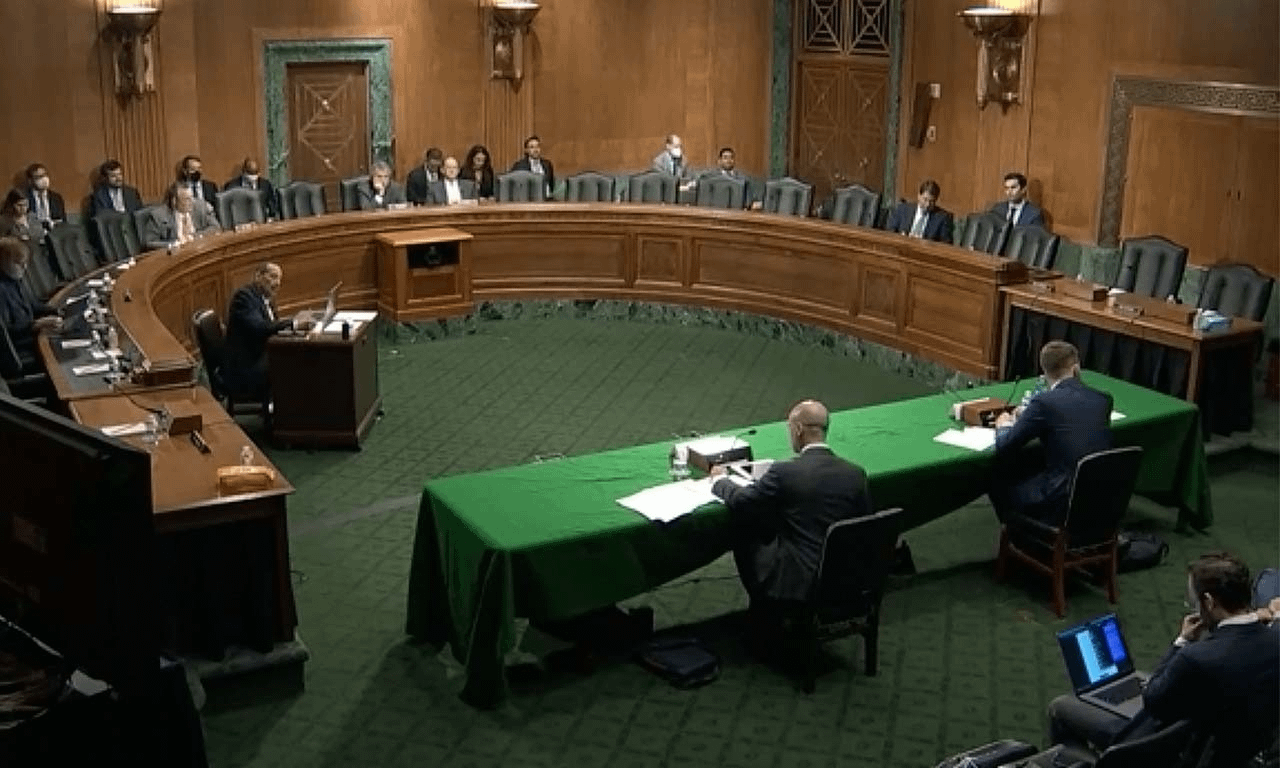
Hearing Time Prediction: The Senate Banking Committee has not yet announced specific hearing dates. However, as the current Chairman Powell's term will end on May 15, 2026, it is expected that the hearings will be held from mid to late February to March, allowing sufficient time for review and full voting.
Key Figures Dynamics:
Supporters: Chairman of the Bank Committee and Republican Senator Tim Scott has explicitly stated his intention to lead a "prudent and timely" confirmation process and has praised Walsh's professional background.
Opposition: Democratic Senator Elizabeth Warren publicly criticized the nomination as an attempt by Trump to "seize control of the Federal Reserve."
Variables: Republican Senator Thom Tillis previously threatened to obstruct all Federal Reserve nominations until the Justice Department concludes its investigation into the renovation of the Federal Reserve building. His stance will be key to whether Walsh can pass smoothly in a "slim majority" Senate.
Debate Focus: The hearings will center on the "independence of the Federal Reserve." Walsh needs to prove that his intention in leading the Federal Reserve is to implement his economic ambitions, rather than merely executing Trump's interest rate cut directives.
VI. In-depth Analysis: Walsh's "Balance Sheet Reduction for Interest Rate Cuts" Specific Plan
Walsh's policy proposals are referred to as "systemic restructuring." Unlike the moderate contraction of the Powell era, Walsh's plan may include the following specific paths:
1. Core Formula: Release Collateral = Lower Interest Rates
Walsh believes that the Federal Reserve's trillions of dollars in assets (primarily US Treasuries and MBS) have locked up too much market liquidity, leading to market "anemia."
Specific Actions: He advocates for a more aggressive reduction of assets (accelerated QT).
Logic: By returning US Treasuries to the market, private capital can reprice risk. He believes that if the Federal Reserve stops being "all-encompassing" in buying long-term debt, it can not only rebuild the central bank's discipline but also reduce the total money supply, allowing for a reduction in the federal funds rate (benchmark interest rate).
2. "Federal Reserve-Treasury" Major Swap (The Swap Plan)
One highly anticipated proposal is: asset swaps between the Federal Reserve and the Treasury.
Walsh may push the Federal Reserve to swap its approximately $2 trillion in mortgage-backed securities (MBS) for short-term Treasury bills (T-bills).
Objective: To completely withdraw the Federal Reserve from intervening in the real estate market. This would allow mortgage rates (MBS spreads) in the real estate market to be more determined by the market, while also making the Federal Reserve's balance sheet "cleaner" and freeing up space for future crisis responses.
3. The "Productivity Anchor" for the Cryptocurrency Sector
Walsh has proposed that as long as productivity can be enhanced through technology (AI) and deregulation, significant interest rate cuts will not lead to inflation.
Impact on the cryptocurrency sector: He may promote the Federal Reserve to be not just a currency issuer, but also a "financial infrastructure supporter." He may support banks in more broadly accessing blockchain settlement to increase the turnover of the dollar.
Risk Points: If his "aggressive balance sheet reduction" leads to bank reserves depleting too quickly (similar to the overnight repo crisis in 2019), it could cause a temporary "liquidity shock" in risk assets like Bitcoin.
VII. Investment Recommendations (based on current analysis):
Short-term Focus: Any comments regarding "accelerated balance sheet reduction" from the February hearings could be favorable for the dollar and suppress gold.
Long-term Focus: If Walsh takes office and implements interest rate cuts, cryptocurrencies may welcome a "regulatory-friendly + interest rate cut stimulus" dual bonus, provided that global liquidity is not exhausted due to rapid balance sheet reduction.
Risk Warning: This article represents personal views and does not constitute investment advice. The market has risks, and investments should be made cautiously.
#下任美联储主席会是谁? $BTC #美国政府停摆