
Trading in crypto is not about quick breakthroughs and 'guessing where the price will go.' Most mistakes happen due to a lack of attention to market structure and risk management. Here’s what you need to know.
1️⃣ Entering moves without confirmation
Mistake: many traders see the price breaking the high or low and immediately enter.
Why this is dangerous: this is often a fake breakout, or 'stop hunting'. The price may spike through the level and return back into the range.
How to do it right:
Wait for the candle to close beyond the key level.
Check the volume: higher volume confirms that the movement is real.
Place the stop beyond the previous high or low to protect against noise.
2️⃣ Trading in a range
Error: entering in the middle of a range when the price moves without a clear structure.
Why this is dangerous: there is no edge in a range — the price fluctuates chaotically, easily taking out stops.
How to do it right:
Wait for a confirmed breakout of support or resistance.
Enter only after the price has settled outside the range.
Place the stop just inside the range, beyond the extreme level.
3️⃣ Place stops by guess
Error: stops are placed without reference to previous structure, just 'somewhere here'.
Why this is dangerous: the market easily takes out such stops due to noise or liquidity.
How to do it right:
Place the stop beyond the last high or low, depending on the direction.
This provides protection against short spikes, but allows trading in trend.
4️⃣ Chasing fast movements
Error: trying to catch every impulsive move, thinking it is a trend.
Why this is dangerous: the market can simply 'take liquidity' and retrace back.
How to do it right:
Choose entry points based on retracements in the trend or liquidity zones.
Do not enter 'on the way up/down' — wait for confirmation.
This reduces stress and the number of losses.
5️⃣ Ignore higher timeframes
Error: trading 5-minute signals without considering the larger context.
Why this is dangerous: short movements are noise within a larger structure, which easily takes out stops.
How to do it right:
Always look at the context of the 4-hour or daily timeframe.
Enter on a low timeframe only when the higher timeframe confirms the direction.
This way you avoid fake movements and beginner mistakes.
Where to enter and where to place stops
Type of movement
Entry
Stop
Long (uptrend)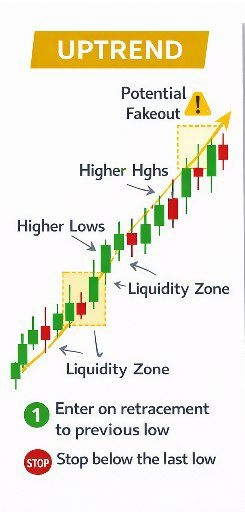
Retracement to previous low
Slightly below the last low
Short (downtrend)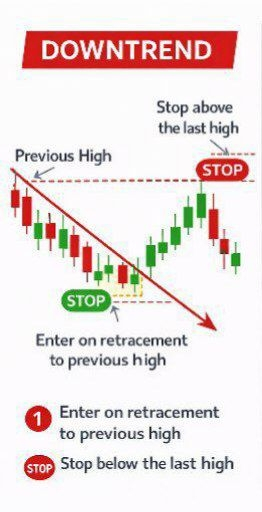
Retracement to previous high
Slightly above the last high
Range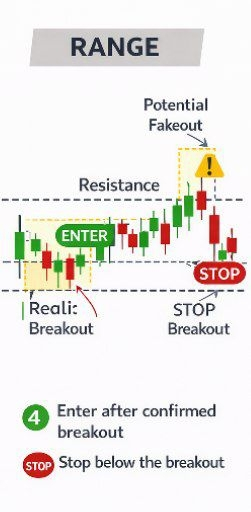
Confirmed breakout support/resistance
Beyond the extreme level of the structure
Trade wisely, not hastily.
Do you often fall for fake breakouts, or do you wait for confirmation before entering?