

When people talk about Web3, they usually focus on what’s easy to spot—blockchains, tokens, smart contracts, flashy apps. That’s the stuff you can measure, trade, or sell. But there’s a whole other layer underneath, almost invisible, that really decides if any of this actually works for the long haul. That’s where Walrus (WAL) comes in. Walrus isn’t about hype or speculation. It’s about the basics—the raw data, making sure it sticks around, making sure it’s real. All the boring stuff that nobody wants to think about but absolutely needs.
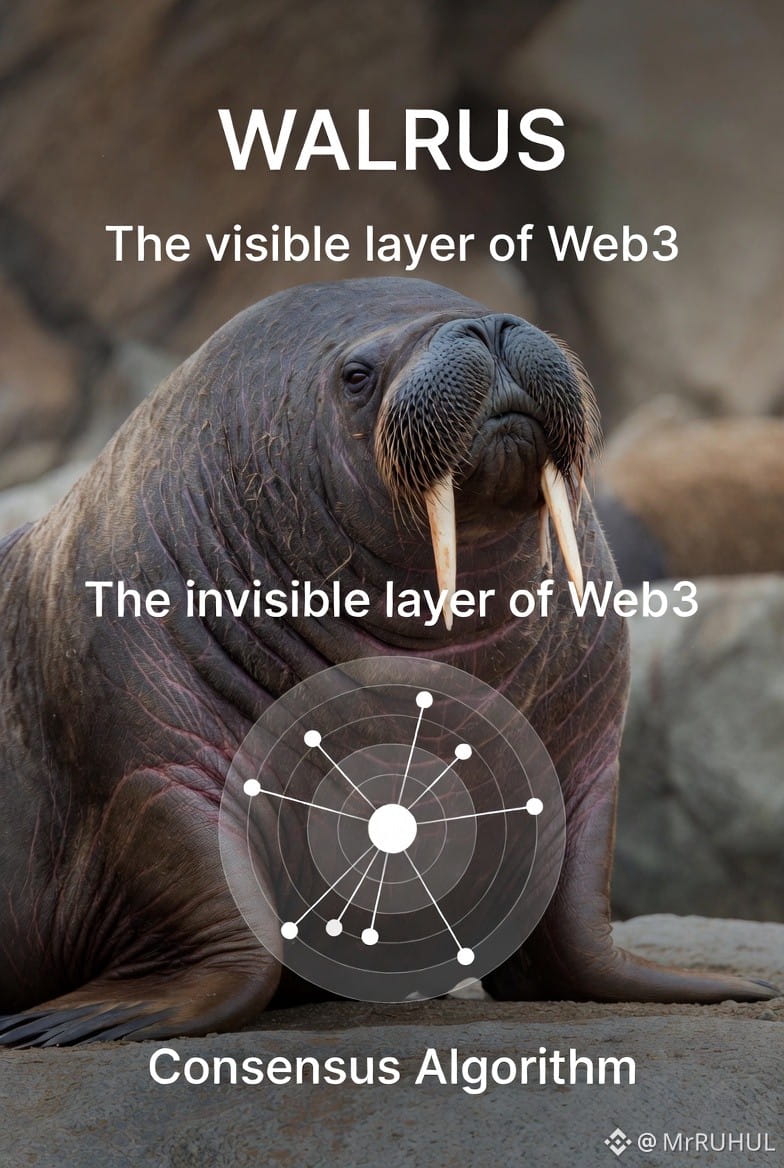
At the end of the day, Web3 isn’t just about moving coins around. It’s about handling data. Smart contracts keep track of everything, NFTs need their metadata to mean anything, AI agents can’t do much without huge piles of training data, and most decentralized apps are always pulling info from somewhere else, not just the blockchain itself. Thing is, most blockchains are terrible at storing anything big or complicated. They’re built to agree on the truth, not to hold onto mountains of information. So what happens? Everyone starts plugging in cloud servers or IPFS gateways, which just brings back all the trust issues blockchains were supposed to solve in the first place. Walrus steps in here. It’s not something users see or mess with, but apps quietly rely on it to keep their data safe and available.
Walrus isn’t trying to be the next big consumer app. It’s infrastructure—plain and simple. Developers don’t “build on” Walrus the way they might with an L1 blockchain. Instead, they hook it in so their apps don’t break or lose data. That’s what makes it invisible. If Walrus does its job, you don’t even notice it. Your NFT shows up with all its art and info, AI models get their data without headaches, and apps can look up old data any time they want—no centralized servers in sight. The proof that it works? Everything just runs smoothly.
This invisibility isn’t an accident, either—it’s on purpose. Real infrastructure that wants to work everywhere can’t start telling apps how to look or what to do. Walrus doesn’t try to control how people use their data or what it should look like. It just promises the basics: the data sticks around, it’s always there when you need it, and you can check that it hasn’t been tampered with. That’s what gives other builders the freedom to create on top, without worrying that the floor will fall out from under them.
Walrus really shines in today’s Web3, where everything’s splitting into specialized blockchains—rollups, app-chains, gaming networks, AI layers, even chains built for compliance. No one’s trying to be the only chain anymore. That means shared infrastructure is suddenly way more important than giant, all-in-one platforms. Walrus acts like common ground. Any chain or app can plug into it and still keep its independence. It’s not a competitor to blockchains; it’s a missing puzzle piece.
That’s especially important for new use cases that push old blockchain limits. Just look at AI. These systems need tons of data, updated all the time, and proof that it’s legit. You can’t shove all that on-chain, but if you store it somewhere else without cryptographic checks, you’re right back to trusting middlemen. Walrus finds a middle ground—decentralized storage with real verification. AI systems can prove their data is solid, without weighing down the whole blockchain.
Same story with NFTs and digital collectibles. The early idea that “metadata can just live somewhere else” already failed—broken links, lost files, and NFTs missing their art. Walrus lets these digital assets last, not just through the latest market cycle, but for decades. That’s what invisible infrastructure is really about: sticking around, not just showing off.
From an economic angle, the invisible layer builds value slowly, almost in the background. Walrus isn’t a quick flip for speculators. Its growth comes from real use—apps that need dependable, decentralized data. As more projects depend on that, Walrus becomes more important. It’s a steadier ride, maybe less wild, but a lot more reliable.
In a way, Walrus shows how Web3 is growing up. At first, everyone wanted to kill banks or middlemen. Now, it’s about ditching the idea that data should be centralized, that storage is just an afterthought, or that infrastructure needs to be flashy to matter. Walrus calls all of that into question.
In the end, Web3’s future won’t be decided by who has the fastest block times or the biggest transaction numbers. It’s about whether these systems can actually last, grow, and work together over time. Walrus is betting on that invisible layer—the part that makes everything else possible.@Walrus 🦭/acc #Walrus $WAL

