In the development process of cryptocurrency payments, Gas fees have always been a core barrier between ordinary users and large-scale applications. Whether it's the transaction costs during peak times on the Ethereum mainnet reaching dozens of dollars or the basic fees that still need to be paid for some Layer 2 solutions, the 'daily payment attribute' of stablecoins has been greatly discounted. The gas-free stablecoin transfer mechanism launched by the Plasma public chain is not a common short-term subsidy strategy in the industry, but a sustainable solution achieved through underlying architecture optimization, providing new possibilities for the popularization of crypto payments.
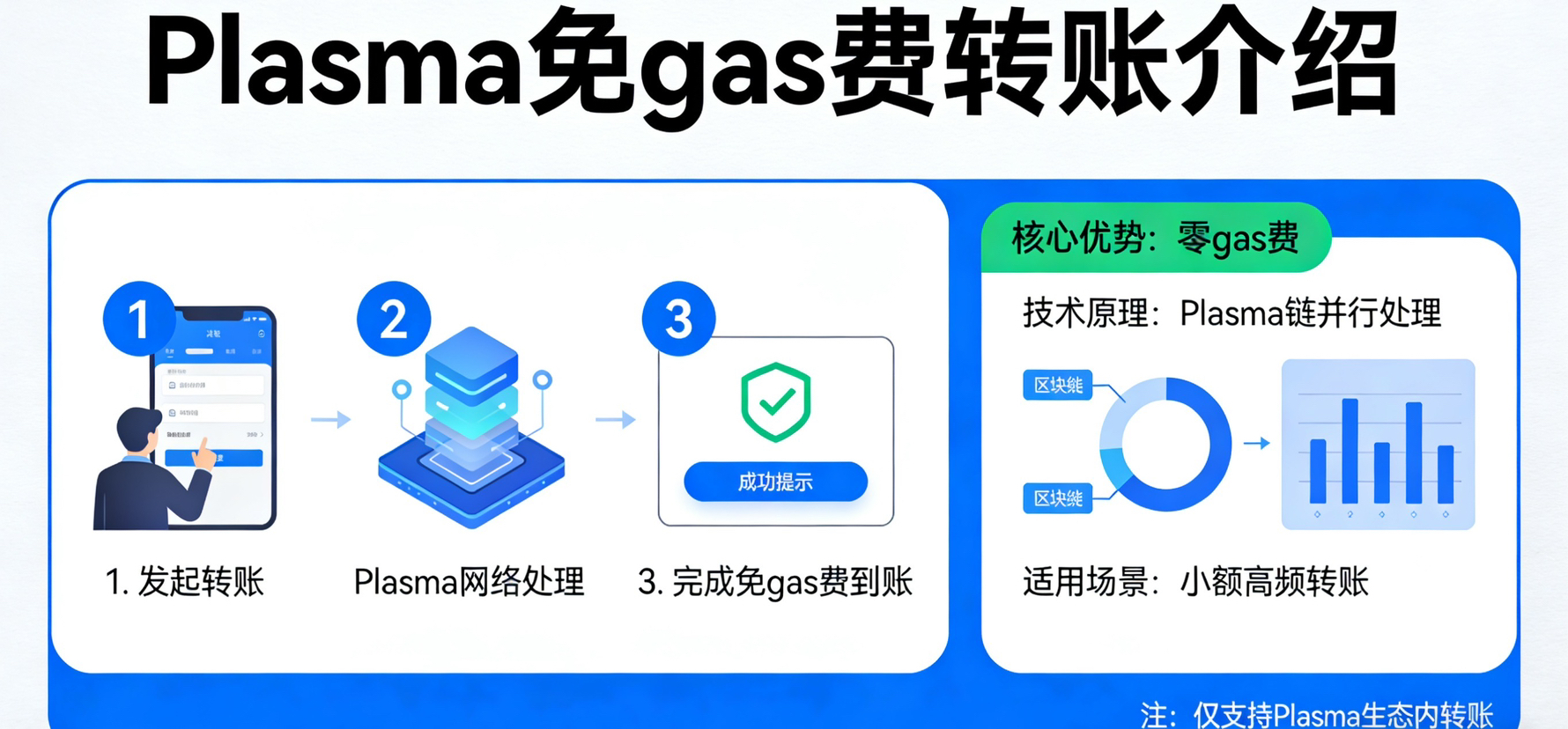
From a technical logic perspective, the gas-free design of @Plasma precisely targets the core demand of stablecoin payments. As a Layer 1 public chain specifically built for stablecoin scenarios, it abandons the traditional model of 'uniform fees for all transactions' seen in general public chains, innovatively introducing the 'protocol-managed payment mainnet' system. When users make direct transfers of mainstream stablecoins like USDT, USDC, DAI, the network automatically pays the gas fees using the natively pre-deposited XPL tokens by the foundation, meaning users do not need to hold any native tokens or pay additional fees. The core advantage of this mechanism is that it completely simplifies the user operation process—no need to purchase gas tokens in advance, no need to calculate transaction fees, and the transfer process is as convenient as traditional mobile payments, truly realizing a frictionless experience of 'input address, confirm transfer.'
The technical foundation supporting this mechanism is the Plasma independently developed PlasmaBFT consensus algorithm. As an optimized version of the HotStuff BFT algorithm, this consensus mechanism supports pipelined parallel processing of multiple blocks, achieving sub-second transaction finality (confirmation speed as low as 3 seconds) and increasing network throughput to over 1000 transactions per second, sufficient to support large-scale daily payment scenarios. More importantly, Plasma maintains full EVM compatibility, which means mainstream crypto wallets like MetaMask and Bitget Wallet can connect directly, allowing developers to migrate existing stablecoin applications to this network without extensive adaptation work, lowering the barrier to ecosystem expansion. Compared to similar public chains, Plasma not only avoids the stability issues caused by frequent outages of high-performance public chains like Solana but also addresses the pain point of Ethereum Layer 2 solutions being 'low-cost but not free,' forming a unique competitive advantage.
From the perspective of industry applications, Plasma's gas-free transfer mechanism has demonstrated clear practical value. In cross-border payment scenarios, traditional wire transfers not only have fees as high as 5%-7%, but the time to receive funds also takes 3-5 working days. In contrast, transfers through Plasma using stablecoins incur zero fees and can achieve real-time settlement, significantly reducing the cross-border capital flow costs for individuals and businesses. In small payment scenarios, previously, due to high fees, cryptocurrencies were almost unusable for daily expenses like coffee or supermarket shopping, but Plasma's zero-fee design makes small transfers of a few cents or a few dollars economically feasible, opening the door for stablecoins to enter everyday life. Additionally, for high-frequency payment scenarios like e-commerce platforms and freelancer settlements, zero fees mean directly increased profit margins, and sub-second confirmations avoid order failure issues caused by transaction congestion, making Plasma highly attractive in both B-end and C-end markets.
It is worth noting that Plasma's gas-free mechanism is not 'indiscriminately free,' but is precisely limited to the core scenario of direct stablecoin transfers. For complex operations like smart contract calls and DeFi transactions, users still need to use XPL tokens to pay fees. This design not only prevents the network from being maliciously abused but also maintains the economic cycle of the network through the staking and governance functions of XPL, ensuring the sustainability of the mechanism. At the same time, Plasma also supports custom gas token functions, allowing users to pay fees for non-core transactions using stablecoins like USDC, further lowering the usage barrier for users and accelerating the migration of Web2 users to the Web3 ecosystem.
Currently, the cryptocurrency payment industry is at a critical stage of transforming from 'speculative attributes' to 'practical attributes,' with users increasingly demanding 'low cost, high convenience, and high reliability.' Plasma's gas-free transfer mechanism is fundamentally a return to the essence of cryptocurrency payments—allowing digital assets to circulate like cash, without barriers and at low costs. With the continuous improvement of its ecosystem and the integration of more payment institutions and e-commerce platforms, Plasma is expected to become the core infrastructure for stablecoin payments, promoting the genuine integration of cryptocurrencies into the daily lives of ordinary people. For the industry, this innovative model of 'scenario customization + technological optimization' also provides a reference for the development of other public chains, potentially driving the entire cryptocurrency payment industry toward a more efficient and inclusive direction.