
used to think pressure bought time. When load increased, systems stretched. Delays appeared. Waiting absorbed stress the way shock absorbers take a hit. It felt natural. Almost polite. Pressure arrived, and time made room for it.
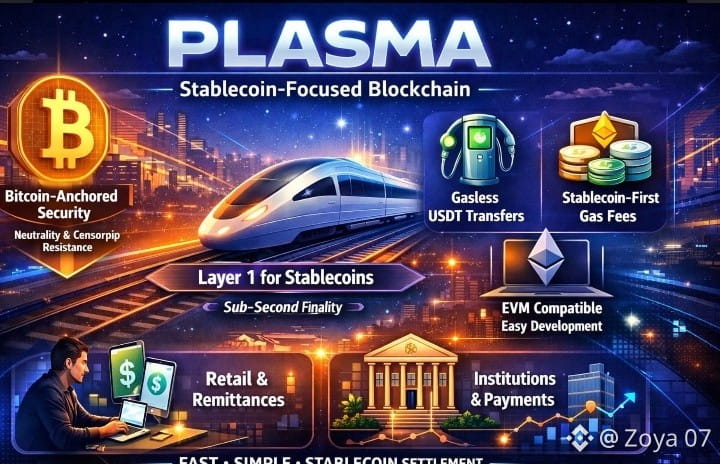
Then pressure arrived and nothing stretched. No failure followed. No slowdown announced itself. No grace period opened to soften the moment. The work simply continued at the same pace, even as more of it arrived, the way flows built around fee abstraction for payments behave on Plasma, hiding everything except the moment that matters.
That absence was unsettling. Activity increased. Coordination thickened. Dependencies stacked quietly. And yet nothing backed up. Nothing retried. Nothing slowed down to signal that the system needed space. Time stayed exactly where it was, indifferent to the extra weight placed on it, even as USDT-native transfers kept moving without ceremony on Plasma. Responsibility didn’t drift downstream. It surfaced immediately.
Two rhythms existed at once. Load rose, visible in the way interactions clustered and handoffs multiplied. Time remained fixed, unresponsive to the increase. One side expected elasticity, the familiar stretch that makes pressure tolerable. The other refused it, closing each step with deterministic finality that did not bend—a kind of settlement that does not elongate even as activity pressed harder against it on Plasma.
This is usually where systems create relief. They pause. They queue. They invite retries. They offer delay as a coping mechanism. But here, nothing like that appeared. Each step closed cleanly, with PlasmaBFT behaving less like a mechanism and more like a posture: completion without extension, closure without extension, finality asserted even under load across Plasma settlement paths.
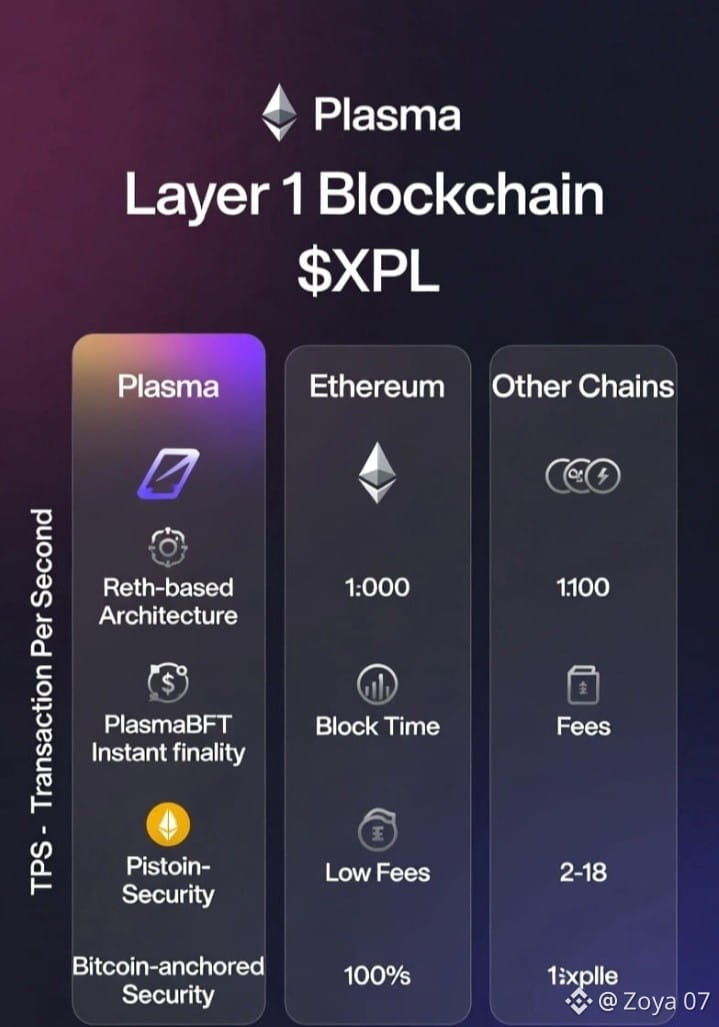
People notice this slowly. Someone expects a buffer that never materializes. Someone reaches for a retry that isn’t offered. Someone hesitates, not because something failed, but because there’s nowhere to place that hesitation. A familiar instinct looks for slack—and finds none, especially in flows shaped by gasless stablecoin transfers on Plasma.
“Is there more time?” someone asks. The question hangs without an answer. There are no alerts in these moments. No warnings suggesting caution. No retry windows to lean on. Responsibility doesn’t wait for confirmation or permission. It advances immediately, carried by reliance without revalidation rather than reassurance, supported by an infrastructure-level confidence that doesn’t perform concern when pressure arrives, the kind reinforced by a stablecoin-centric gas model within Plasma.
What becomes clear is that time is not being used as a release valve. When this repeats, the effect compounds. More load arrives. Timing stays unchanged. The same refusal to bend persists. Coordination continues without accumulating slack. No recovery window forms after the fact. Each interaction closes as decisively as the last, producing workflow continuity that feels almost uncomfortable under strain, even when stablecoin as default gas removes most reasons to pause on Plasma.
Nothing about this feels dramatic. There’s no escalation. No visible stress response. No sense of optimization or efficiency being showcased. The system behaves the same way every time, even as the environment around it grows heavier. That consistency is the pressure.
Eventually, the internal question shifts. It’s no longer, “Why is this slow?” Nothing ever was. It becomes something quieter, harder to phrase. Why isn’t there more time? There’s no response to that question. No explanation surfaces. No compensating behavior appears. The system does not stretch time to absorb load. It does not soften responsibility by delaying it. It simply continues, closing each step with finality that does not bend, allowing no temporal slack to form.
Load keeps arriving. Time remains fixed. Coordination proceeds exactly as before. The refusal doesn’t announce itself. It doesn’t justify its stance. It doesn’t adapt its posture to the pressure placed on it. It just keeps behaving the same way, leaving anyone inside the workflow to adjust their expectations accordingly. There is no extra time coming. And the system never suggested there would be.@Plasma #plasma $XPL