

Privacy coins tend to surge when major crypto narratives are exhausted, making their rallies a recurring late cycle signal rather than a sustainable growth trend.
In recent cycles, privacy rallies have been driven more by regulatory contrast and emotional positioning than by real technological breakthroughs or broad user demand.
The gap between actual privacy needs and the extreme design of many privacy coins limits long term adoption, causing these assets to function as the final rotation before market momentum fades.

PRIVACY RALLIES ARE A RECURRING LATE CYCLE SIGNAL
In every major crypto cycle, certain signals tend to appear near the end. One of the most consistent is the sudden rally of privacy focused tokens. This pattern has repeated for more than a decade, and each time it briefly captures market attention before fading again.
Privacy coins rarely lead a bull market. They almost never define the next long term trend. Yet they reliably show up when the market is running out of ideas. This is not coincidence. It reflects a structural response to late cycle conditions rather than a renewed belief in privacy as a growth sector.
When privacy becomes the focus, it usually means the market has reached a point where there is little left to speculate on.
WHEN NARRATIVES ARE EXHAUSTED CAPITAL LOOKS BACKWARD
Late in a bull market, most dominant narratives have already been priced in. DeFi has peaked, NFTs have fragmented, and new infrastructure stories lack immediate credibility. Even promising themes like AI and on chain integration require time before real adoption appears.
At this stage, the market often turns backward instead of forward. It searches for ideas that feel timeless rather than new. Privacy fits this role perfectly. It has existed since 2014. It is tied to the original ideals of decentralization. And it does not require near term data to support its value.
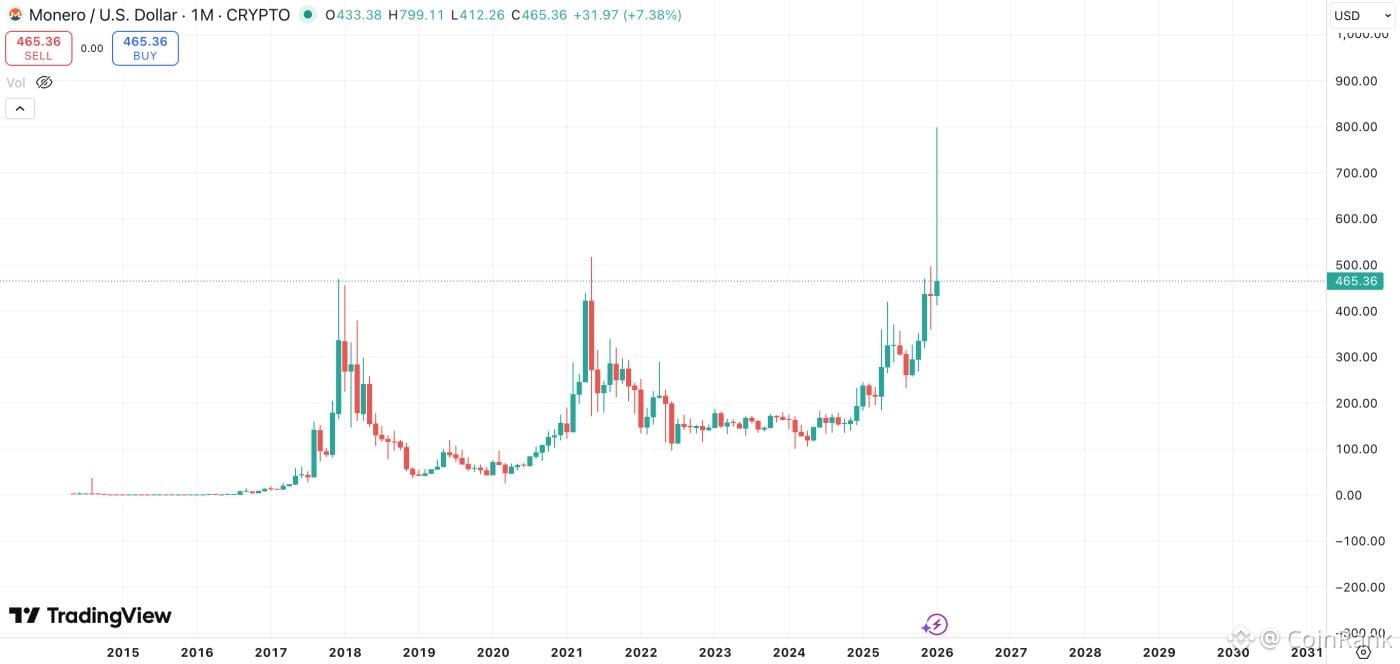
In the transition between bull and bear markets, privacy is often reframed as a return to fundamentals rather than another speculative trade. This reframing gives late stage capital a narrative justification for one last rotation.
2017 SHOWED HOW POWERFUL THE PRIVACY STORY COULD BECOME
The 2017 cycle marked the peak moment for privacy coins. At that time, the crypto industry lacked direction. There were few meaningful applications, and even Bitcoin’s role as the central asset was still debated.
In that environment, privacy tokens moved to the center of attention. Concepts like zero knowledge proofs and ring signatures felt revolutionary. Some projects were openly marketed as better versions of Bitcoin.
Market enthusiasm reached extreme levels. Certain privacy coins briefly attracted more discussion than Bitcoin itself. Prices moved in ways that now seem irrational. This was not because privacy solved a broader problem, but because the market needed something to believe in once growth narratives ran thin.
THE 2021 TO 2022 PHASE TURNED PRIVACY INTO A CAPITAL STORY
The next major return of privacy came at the end of the 2021 cycle. This time, the driver was not technical exploration but capital packaging.
After DeFi, NFTs, and the metaverse, the market needed another funding narrative. Privacy was repositioned as the next infrastructure layer. Large financing rounds and top tier investors created the impression that privacy was finally ready for mass adoption.
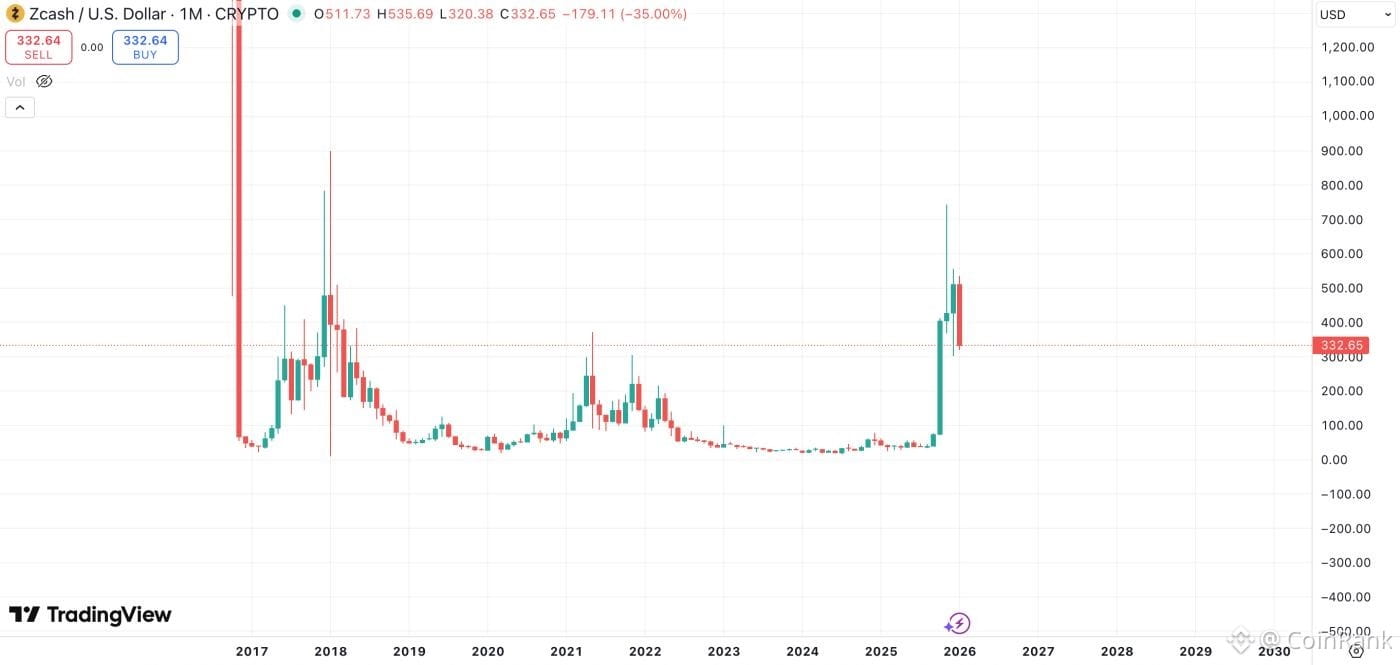
What was missing was demand validation. Very few participants questioned whether everyday users were willing to accept higher costs and complexity purely for privacy. When the market cooled, the answer became clear. Adoption existed, but it was narrow. The gap between narrative and reality was exposed quickly.
THE CURRENT CYCLE IS ABOUT REGULATION NOT TECHNOLOGY
In the current cycle, the timing of privacy coin rallies is especially revealing. Most major moves began in the second half of 2025, well after the broader bull market had matured.
There was no clear technological breakthrough driving these gains. The most plausible explanation was regulatory contrast. As crypto became increasingly regulated, privacy coins stood out precisely because they were less compliant.
By 2025, crypto had largely been absorbed into regulatory frameworks across major jurisdictions. Identity checks and anti money laundering rules became unavoidable. Although crypto assets were no longer treated as securities, they were not treated as anonymous instruments either.
Against this backdrop, privacy coins became a symbolic counter trade. For some investors, they represented resistance rather than opportunity. This made them attractive at a moment when trust in the system felt fragile.
LATE ENDORSEMENTS OF PRIVACY OFTEN SIGNAL DISTRIBUTION
Public support for privacy from influential figures and institutions mostly appeared after price moves had already begun. From a market structure perspective, this timing matters.
Rather than acting as catalysts, these endorsements often coincided with periods of distribution. The narrative helped justify prices, but it did not explain their origin. In past cycles, similar patterns emerged just before sharp reversals.
Even when specific events temporarily extended momentum, the overall structure remained the same. Prices surged quickly and retraced just as fast.
REAL WORLD PRIVACY NEEDS ARE MORE LIMITED THAN THE NARRATIVE SUGGESTS
Privacy has survived for more than ten years because it does serve real use cases. However, these use cases are far narrower than the narrative implies.
Most people do not want complete invisibility. They want discretion. In traditional finance, dark pools exist to reduce market impact, not to remove auditability. Transactions can still be verified if necessary.
In contrast, many privacy coins push privacy to an extreme. When anonymity is the default rather than an option, it creates friction with regulators and institutions. This leads to a paradox where using a privacy coin can itself become a red flag.
For the majority of users, there is little incentive to hold or transact in assets that attract disproportionate scrutiny.
WHY PRIVACY COINS APPEAR AT THE END OF THE CYCLE
Privacy coins tend to rally late because they do not depend on immediate adoption or delivery. They function as emotional assets rather than productive ones.
When the market runs out of future oriented stories, it turns to ideology. Privacy becomes a symbol of dissatisfaction with the current system. This makes it a powerful narrative tool, but a weak foundation for sustained value.
As a result, privacy coins often act as the final rotation before momentum breaks. They are rarely the beginning of something new. More often, they are the market’s last attempt to keep the cycle alive.
〈When Privacy Coins Rally, the Cycle Is Usually Near the End〉這篇文章最早發佈於《CoinRank》。


