

Vanar Chain is one of these projects that the longer you make sitting on it, the more sense it has. Not that it is complex, but because it is anchored on how technology is used in practice by people. It does not assume that the user wants to learn how to use wallets, gas, or block explorers. It presupposes that they desire that things should perform without effort, without heed, and unimpededly. Everything Vanar is constructing is based on that assumption.

Since its inception, Vanar has had a consistent direction focused on developing a Layer 1 capable of supporting mainstream apps and not only crypto-native apps. It has always been about the environments where millions of people already spend time and money, gaming, entertainment, digital worlds, and brand-driven experiences. Vanar reverses the program instead of making users change to follow blockchain mechanisms. The infrastructure goes hand in hand with the user.
It is that consumer-first attitude that distinguishes Vanar as opposed to chains whose development is aimed at developers and traders. On Vanar, on-chain activity is supposed to become out of the spot. Users do not need to have the feeling that they are using blockchain. These are expected to feel like they are operating a fast, responsive application that acts as the modern software is anticipated to act.
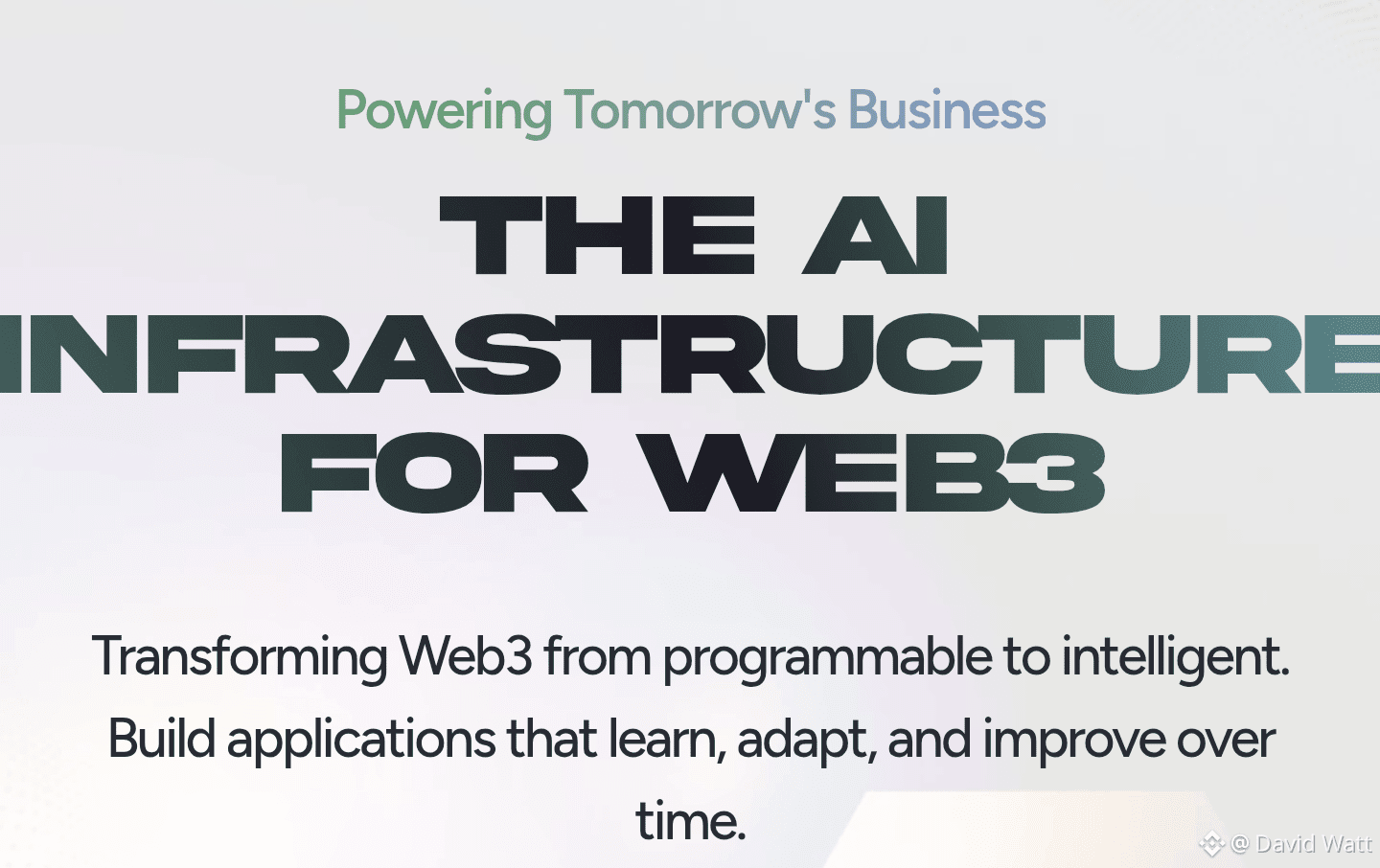
Recently, one thing that has changed is how Vanar has reacted to position itself in architecture. What makes the project particularly intriguing now is how Vanar positioned itself. It is no longer positioned as being a mere chain. It is becoming a full stack platform that is meant to drive smart applications. It is not all about the base chain. Vanar is on top of that constructing layers concerned with memory, reasoning, and automation.
This is where the concept of Vanar as AI-native infrastructure is put into perspective. Vanar is not seeing AI as something that would be external and simply has to be plugged into the smart contracts; instead, the stack is being designed in such a way that makes intelligence a component of the system. It is not merely running logic but applications can maintain context, remember and change.
Memory is the idea that is represented within the concept of Neutron, which Vanar explains as a layer of data that converts files to verifiable and compressed objects of knowledge. Data are stored in a form of structured Seeds that can be queried, re-used and accessed effectively instead of just being stored. This is important since intelligent systems, AI agents, digital worlds, and brand platforms require more than storage. They require memory, which remains and is credible.

Upon that is Kayon the reasoning layer. In case Neutron needed to answer the question of what happened, Kayon needed to answer what should happen next. It is created to integrate on-chain data, AI logic, and even enterprise systems into the workflows capable of making the decisions and taking the actions automatically. This transforms Web3 programmes into responsive systems.
Combined, these layers allude to a future in which publishing on Vanar does not involve publishing one smart contract. It is the implementation of the systems that have the ability to remember, think and to act. It is far unlike a value proposition most Layer 1s have today.
The roadmap by Vanar portrays this aspiration. Some of the layers are active but some are designated as coming soon and there is the actual test. The stack is complete once the automation and industry flow layers have been brought into life. By that time, adoption will not be based on stories or branding. It will depend on the ease that teams can find in Vanar to build real products compared to any other place.
The token model suits against this bigger picture. The rebranding of TVK to VANRY was not simply a rebrand, but repositioning to owning the entire blockchain stack. The 1:1 exchange preserved continuity to the holders though matched the token with the new course. VANRY remains an ERC-20 token in the meantime, with a migration mechanism being the primary path of the mainnet development.
VANRY has a relatively simple functional role. It is utilized as a network operation and staking tool, and it maintains a validator model that focuses on stability and reliability. Selection of validators is with foundation involvement whereas the community is involved by way of delegation. It is a model that emphasizes predictable performance instead of the unconditional permissiveness that suits the objective of Vanar to have consumer grade applications.
There are already indications of life in the ecosystem. The number of token owners is thousands and the activity in the system is steady, and not inert. This is not an activity that is kept as hype but it is seen as an indicator that network is being utilized and an asset is in motion.
The most interesting aspect about Vanar today is how it has consistently positioned itself as AI infrastructure as opposed to a consumer chain. That extends its horizons enormously. Entertainment and gaming may be the gateway, however, AI native infrastructure opens the doors to industries such as brands, enterprise work-flow and autonomous digital systems.
In the end, Vanar ends up being more of a project that is constructed out of practicality. It began with velocity, low price, and usage. It is time now to do the overlay of intelligence on that base. As long as the team ships and these layers appear on actual applications, Vanar will not have to convince anyone with such grandiose claims. The products will be self-sellers.
With a chain of chains that rival each other on paper specifications, Vanar is betting on something more basic, along with something more challenging: the creation of infrastructure that people actually take pleasure in using, though they may never know that it is running on a blockchain.