
Declassified documents from Epstein's case on January 30 revealed his unexpected connections to cryptocurrency creators, investors, and early-stage projects.
These materials feature investment discussions, philosophical musings, and contacts with key members of the Bitcoin community. BeInCrypto's editorial team has compiled a review of the crypto references in Epstein's files.
Saudi Arabia's "Sharia Coin" and Bitcoin's Future
In 2016, Epstein proposed a radical idea to an advisor to a Saudi prince: creating two digital currencies, including a special “Sharia” cryptoasset for Muslim countries.
In the letter, he noted: “I have already spoken with some of the founders of Bitcoin - they are very excited.”
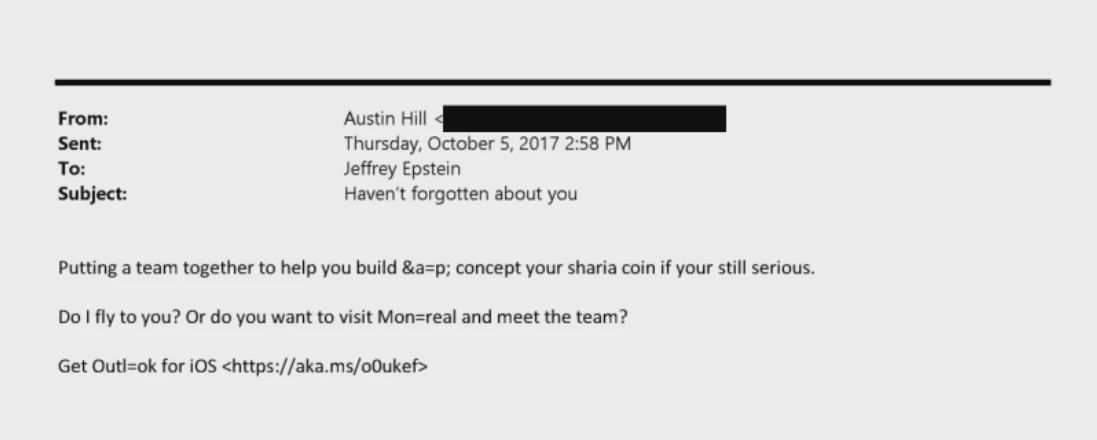
Epstein made similar statements more than once.
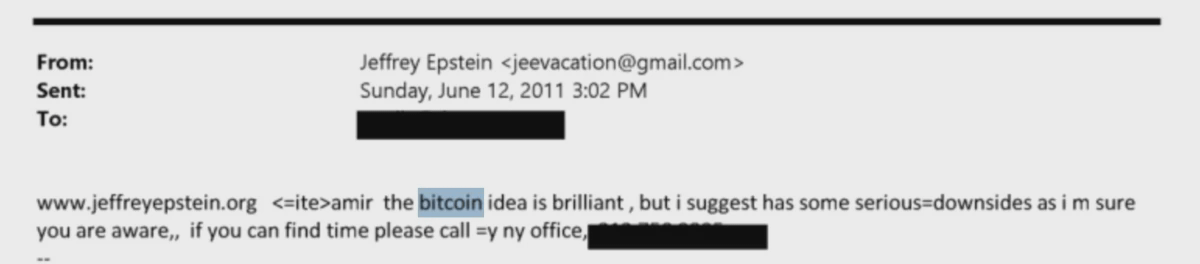
In 2013, he was forwarded an analytical memo on the prospects of Bitcoin as a payment system. Even earlier, in 2011, Epstein called Bitcoin a "brilliant" idea but warned of "serious risks."
These messages show that Epstein had been keeping a close eye on the potential of cryptocurrencies long before their widespread adoption.
Discussion with Peter Thiel
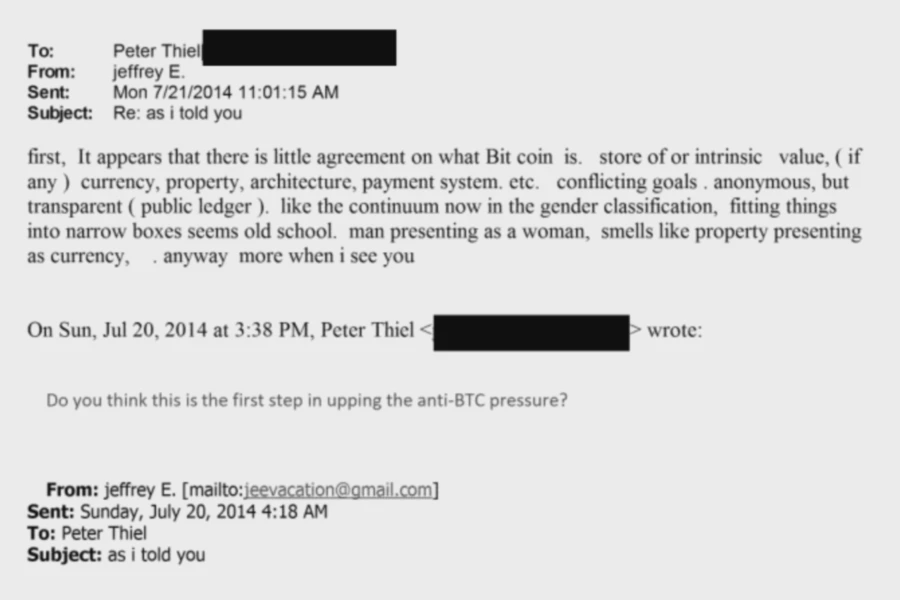
In July 2014, in an exchange with PayPal founder and crypto investor Peter Thiel, Epstein discussed in detail how to define Bitcoin's essence. He wrote:
"There is no consensus on what Bitcoin is... a store of value, a currency, a property... it smells like property, it pretends to be a currency."
At the beginning of the correspondence, Thiel asked: “Do you think this is the first step towards increasing pressure on Bitcoin?”
The conversation between the two shows that Epstein was well-versed in the ideological debate surrounding Bitcoin, and even addressed the topic of gender identity in his explanations.
A Conversation About Bitcoin Investing
In a letter dated August 31, 2017, Epstein was asked, "Is Bitcoin worth buying?"
The answer was short: "No."
He had shown interest in cryptocurrency in previous years. He apparently never recognized Bitcoin's value as an investment at its peak that year.
Epstein participated in the financing of Blockstream
Emails from 2014 confirm that Epstein participated in a seed round of funding for Blockstream, a key Bitcoin infrastructure startup.
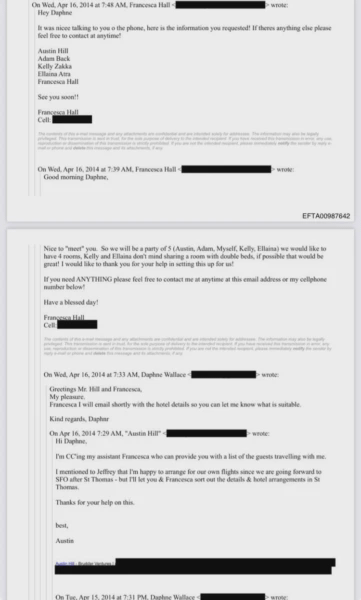
Its co-founder, Austin Hill, wrote to Epstein, Joi Ito (MIT Media Lab), and Adam Back, one of the pioneers of the Bitcoin industry, to agree on shares in the oversubscribed $18 million round:
"We're ten times oversubscribed... increase your stake from $50,000 to $500,000." Epstein had previously confirmed that he would invest through the fund.
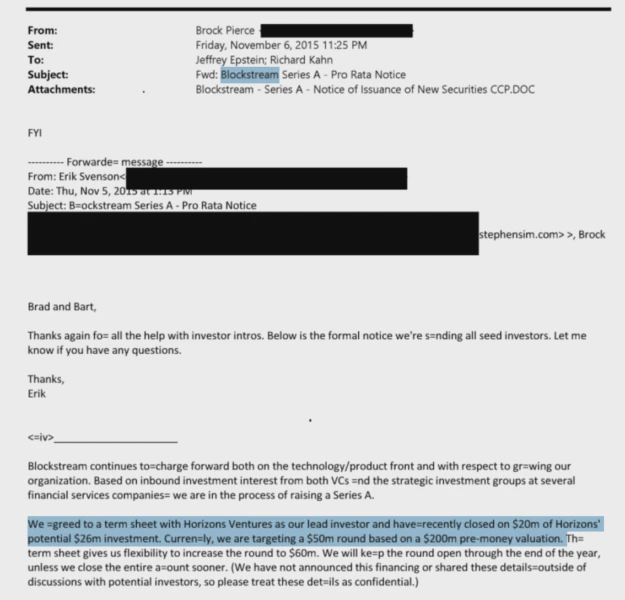
This is direct evidence that Epstein has invested in a major company connected to the crypto industry.
Notably, Hill and Beck also later featured in correspondence about coordinating a trip to St. Thomas, an island Epstein frequently visited.
After Ripple and Stellar
In a separate 2014 letter, Hill warned Epstein, Ito, and Reid Hoffman (co-founder of LinkedIn) about rising tensions in the crypto market. He criticized Ripple's Jed McCaleb for launching Stellar:
"Ripple and the new Stellar project are bad for the ecosystem... investors who support both teams are creating problems for our company."
The messages show that Epstein was not only an investor, but also aware of internal conflicts within the blockchain community.
Michael Saylor was involved.
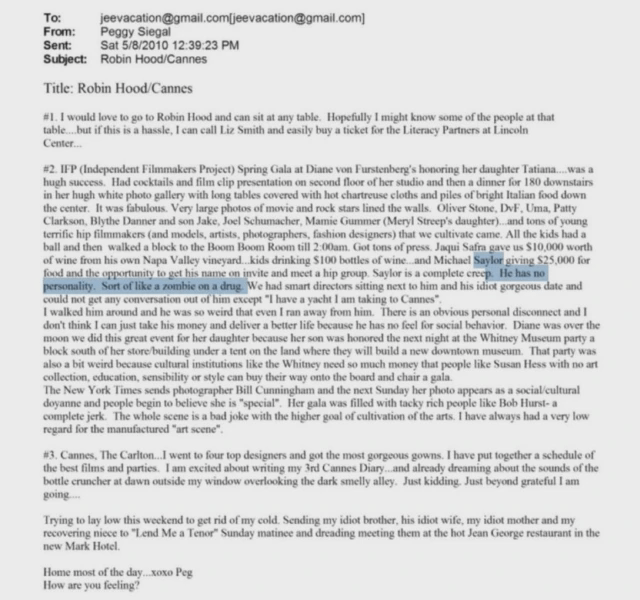
In a 2010 letter, social activist Peggy Segal mentions Michael Saylor, now known as the founder of the largest publicly traded Bitcoin investor.
She writes: "Michael Saylor is donating $25,000... Saylor is a complete and utter asshole. He has no charisma whatsoever. He looks like a zombie on drugs."
The conversation was about a large-scale social event, and bitcoin was not mentioned in the correspondence. However, the letter confirms that Saylor knew Epstein long before his immersion in the crypto community.
New Fed Chairman Kevin Warsh in the files
Donald Trump's recently appointed Federal Reserve Chairman Kevin Warsh also figures in the Epstein-related materials.
His name appeared on the guest list for the 2010 New Year's Eve party in St. Barths, which also included Roman Abramovich and Martha Stewart.
Warsh, a former member of the Federal Reserve Board of Governors, has spoken out in support of Bitcoin and initiatives to reform CBDCs (central bank digital currencies). Trump nominated him just 24 hours before the publication of these documents.
There is no evidence of criminal use of cryptocurrency.
Notably, no cryptocurrency wallets, blockchain transactions, or evidence of crypto-assets fraud were found in the Epstein case files.
The US Department of Justice confirmed that, although some of the information in the new documents has not been officially verified, there is no evidence of Epstein using Bitcoin to launder funds or attempting to evade prosecution.
Epstein's involvement in the crypto industry was limited to occasional investments, high-level connections, and a curiosity about new technologies.
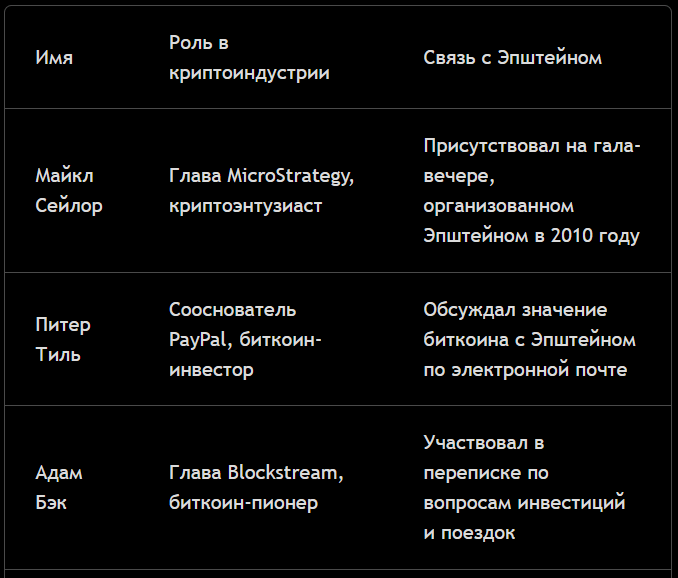
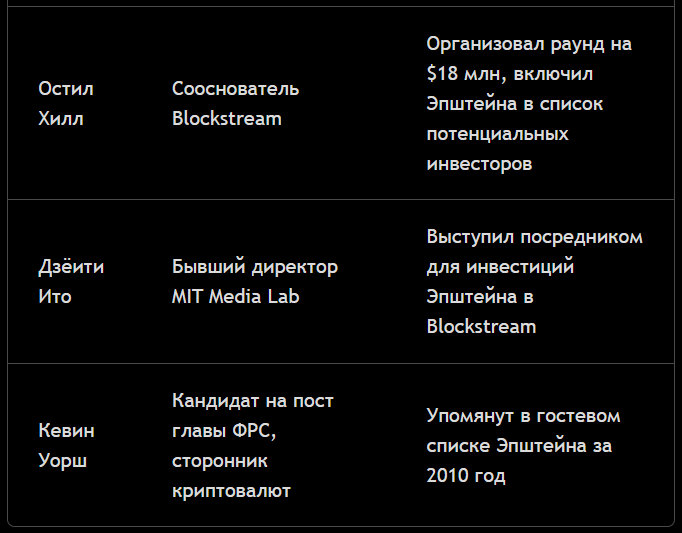
Key crypto industry figures named in Epstein case materials
Indirect but real connections to crypto
Epstein was not a major crypto investor. However, documents show that he was involved in the crypto community from its early days.
He financed infrastructure projects, followed discussions and interacted with people who are now considered the architects of the industry.
In the crypto industry, proximity to key figures often equates to influence. Therefore, published information takes on particular significance.
