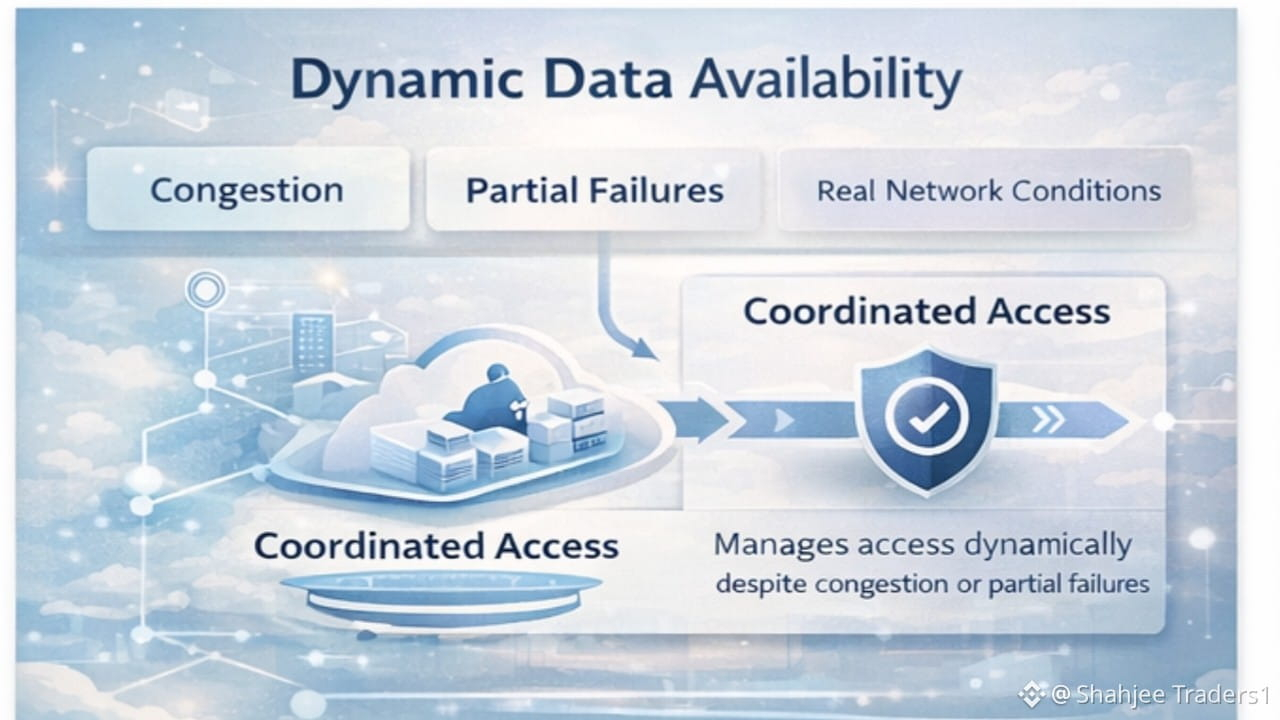
Decentralized storage systems are often idealized. Many believe networks will always stay connected, nodes will participate equally, and data will always be available on demand. Reality is different: networks slow down, nodes go offline, and demand fluctuates. Applications fail not because data doesn’t exist, but because it isn’t accessible when users need it. Walrus was built to solve this problem. By treating availability as a core infrastructure component, it ensures reliable, predictable, and secure access to data - even under real-world conditions. This approach sets a new standard for decentralized applications that need uptime, consistency, and resilience.
1. Rethinking Data Availability
Decentralized storage solutions usually make a lot of copies of the data across nodes. This way the data is safe in case something bad happens to one of the nodes.. Just because the data is safe it does not mean that people can get to it when they need it. Sometimes the system can get really slow. Some nodes are not working properly so even if the data is safe it is hard to get to it.
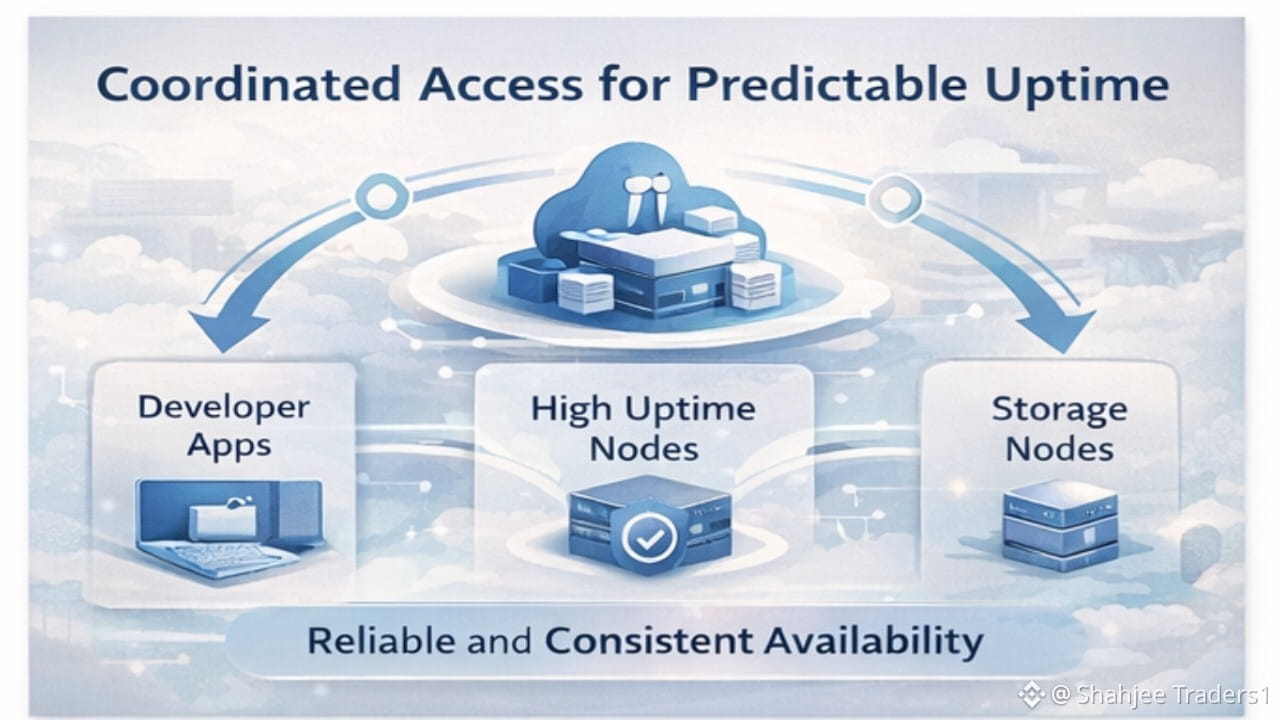
Walrus is trying to solve this problem by making sure that all the nodes work together to store and give out the data. This means that people can get to the data when they need it which is very important for a system, like this. Walrus makes sure that the data is always available which is a part of how the system is designed.
2. Coordinated Access Over Redundancy
The problem of predictability is not fixed by having extra copies. Walrus assigns jobs to each node in a way that makes sure the work of giving out data is spread out fairly. Each node does not have the job when it comes to storing things. Each one has a special role, in making sure people can get to the data. This team work reduces downs makes it faster to get the data and makes sure the data is still available even when the network is really busy. Walrus and the nodes work together to make this happen so the data is always easy to get to.
3. Predictable Performance Under Real Conditions
Walrus is made for the world not just for tests. Sometimes the network is slow some parts are not. People use it in different ways. Walrus is ready, for these things. Can handle them easily. When you use Walrus you do not need to have a lot of code to make it work. It is already reliable. Developers can focus on making things that people want. They can be sure that Walrus will keep working and respond quickly.
4. Security Through Organized Access
Walrus helps to make things more secure by controlling how information is accessed and shared. When things are not organized it can be easy for people to cause trouble and shut down the system. This can happen when someone tries to overwhelm the system or targets parts of it. Walrus helps to stop this from happening by making sure that everything is well organized. This means that even if someone tries to attack the system or some parts of it stop working it will still keep running. The fact that the system is always available and secure makes it a good foundation for things that need to be kept safe. Walrus does this by making sure that information is accessed in a way that's safe and reliable. This is important, for applications that need to be protected.
5. Efficiency and Resource Optimization
Walrus is different, from systems that use too much duplication. Walrus makes the most of the resources it already has. It handles data in a way that makes sure the nodes do not have to do the work over and over.
The system uses what it already has in a way. This means it does not waste bandwidth or storage space. At the time Walrus is still very reliable.
Because Walrus is so efficient it can handle applications without using too many resources. Walrus can scale up to support applications without wasting resources. Walrus is able to do this in a way that's sustainable.
6. Simplifying Development
Developers usually have a time with decentralized networks because they are so unpredictable.
Walrus helps with this by taking care of a lot of the stuff that makes sure everything is available when it needs to be.
This means developers can focus on the parts of the application and what the user experiences, rather than having to come up with their own ways to deal with nodes that are offline or when things are moving slowly.
Walrus makes things simpler for developers, which helps them get things done faster and makes the whole system more reliable.
Decentralized networks like Walrus are really good, at helping developers because Walrus simplifies the development process.
7. Real-World Applications
Walrus is really good for things that need to be working all the time like when people're using them and they need to get information right away. This is important for things like marketplaces where people are buying and selling things and for platforms where people are working together at the same time. It is also important for games and other things that use a lot of data. Walrus makes sure that these types of applications are always available which makes them work better for real people to use. This is a deal because it helps make decentralized applications something that people can actually use, rather than just something that sounds good in theory. Walrus is good, for these types of applications because it makes sure they are always working. That is what people need.
8. Predictability Without Sacrificing Decentralization
The thing about Walrus is that it does a job of staying decentralized. At the time it makes things more predictable. The nodes all work together in a way but Walrus is still a system that does not need permission and it is decentralized. This is a balance because it lets Walrus behave in a more predictable way without giving up on what makes decentralized networks like Walrus so important. Walrus is, about being a decentralized system and it does that while still being predictable.
9. Measurable Reliability
When we think about how something is working we usually look at how much stuff it can hold.. Walrus thinks about it differently. For Walrus success is not about storing a lot of data. It is, about being able to get to that data when you need it. You can have a system that stores an amount of data but if you cannot get to it when you need it then it is not doing its job. Walrus makes sure that you can get to your data when you need it and that you can count on it to be available. Walrus also makes sure that it is working well with the applications you are using.
10. Foundation for Future Systems
As decentralized applications move from experimentation to real-world usage, availability becomes a critical requirement. Walrus provides a protocol-level solution that scales with user demand and network size. By designing availability as infrastructure, it sets a precedent for future protocols, where uptime, predictability, and security are core design principles, not optional features.