
I’ll be honest — I’ve become pretty numb to “AI + blockchain” claims. Most of the time it’s just slides, buzzwords, and a few APIs glued on later. When I started paying attention to Vanar, what caught me wasn’t marketing. It was the fact that the system feels like it was designed with AI in mind from the beginning, even if that meant moving slower and staying quiet.
Vanar doesn’t try to convince you that AI is coming. It assumes AI will be here — and builds around that assumption.
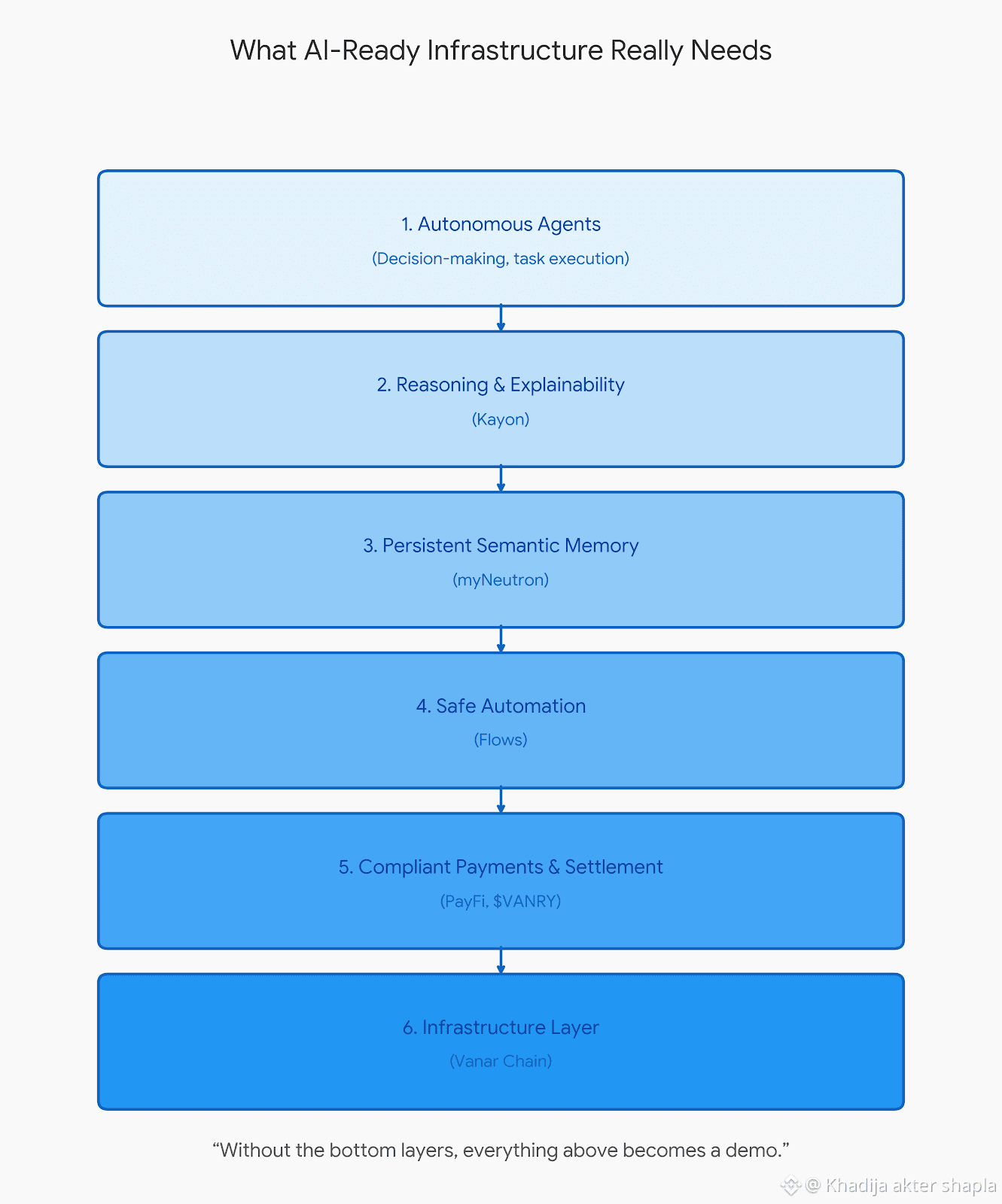
AI as infrastructure, not a feature
What I notice right away is that Vanar treats intelligence like infrastructure, not decoration. Instead of saying “developers will build AI on top,” it already has memory, reasoning, and automation baked into the stack.
myNeutron is a good example. It’s not just data storage — it gives context. That matters if you expect AI to operate over time instead of resetting every transaction. Kayon takes it further by letting reasoning and explainability happen on-chain. That’s a big shift from the usual “dumb contract executes, humans decide” model.
To me, that’s the real difference. Smart contracts stop being blind.
The base layer isn’t flashy, and that’s fine
Vanar Chain itself doesn’t scream for attention. It’s modular, fast enough, and EVM-compatible. That last part matters more than people admit. Developers don’t want to relearn everything just to experiment with intelligence.
Performance here feels like a tool, not a selling point. It exists so the upper layers can function reliably, not so someone can tweet benchmark numbers.
Why the recent upgrades actually matter
After the V23 upgrade, things became more concrete. More nodes, stronger consensus, better resilience. These aren’t exciting announcements, but they’re the kind of changes you need if autonomous systems are supposed to run without constant babysitting.
The deeper contract integration also makes a difference. Apps can now hold memory and logic more naturally instead of forcing everything into simple state changes. It’s subtle, but important.
Payments and RWAs: boring, until they’re not
I didn’t think payments would be the part that interested me, but here we are. AI agents don’t use wallets like humans do. They need settlement that’s compliant, fast, and reliable.
That’s where PayFi starts making sense. Once AI can interpret intent, check rules, and settle value automatically, the system stops being a demo. RWAs in this setup also behave differently. They’re no longer static tokens — they can respond to conditions, risks, and rules in real time.
Some of this is already being tested, which is more than most projects can say.
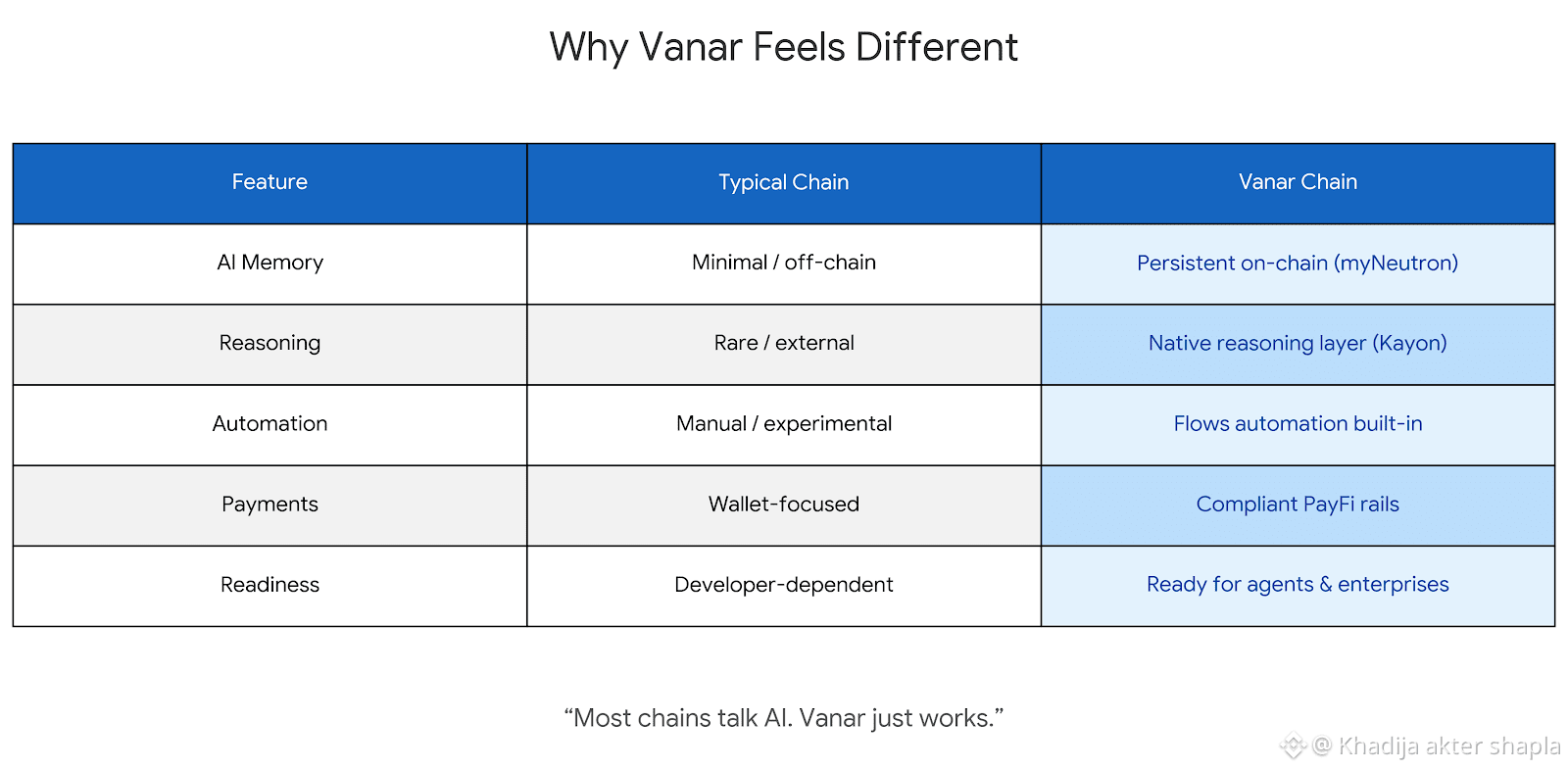
Why this feels like a long-term build
Vanar doesn’t seem designed for quick attention. It feels like infrastructure meant to sit underneath agents, businesses, and automated systems for a long time. In that setup, $VANRY isn’t just gas — it’s what enables access, execution, and value flow across the intelligence layers.
Watching this evolve, it feels less like speculation and more like groundwork. Not replacing humans, but giving on-chain systems the ability to understand context and make informed decisions.
That’s not exciting in one night.
But across cycles, it’s usually the stuff that lasts.
@Vanarchain #Vanar #vanar $VANRY
