
1. When Execution Was Enough And Why That Era Is Ending
Execution worked when humans were users. That fact shaped nearly every blockchain design over the last decade. Networks were built so a person would click, sign a transaction, and wait. Speed, fees, and throughput all mattered. Reliable value transfer from one address to another is a key to system success.
For a long time, this was enough. Human-driven activity is intermittent. People make decisions slowly, act intentionally, and tolerate friction. A fast execution layer solved most problems that early Web3 users faced. That is why so many ecosystems focus on optimizing block times and transaction costs as their primary value proposition.
But this assumption is fading. Users are changing. Autonomous agents now drive Web3 systems. Agents do not resemble humans. They act continuously, react instantly, and decide over time. When agents dominate, execution no longer suffices.
This shift is where @Vanarchain enters the conversation.
2. The Agent Shift And The Collapse of Stateless Systems
Autonomous agents do not operate in isolated moments. They operate in flows. An agent observes data, reasons about it, acts, learns from the outcome, and then repeats the cycle. This loop depends on memory, context, and continuity. A system that only executes transactions without understanding why those transactions occur becomes a bottleneck.
Most blockchains today are stateless by design. They validate and execute instructions but do not preserve meaning. They cannot explain decisions, reconstruct intent, or enforce constraints across time. This limitation was invisible when humans were the primary users because humans carry context in their own minds.
Agents do not. If context is not native to the network, it is pushed off-chain into centralized databases, external services, or opaque middleware. That creates fragile systems with hidden trust assumptions. It also introduces risk for applications that require accountability, auditability, or compliance.
Vanary recognizes this structural break. Instead of competing in the execution race, it focuses on what execution based systems cannot provide when agents become dominant users.
3. Vanary Token And The Intelligence First Architecture
Vanary is designed around a simple but powerful premise. If agents are going to be first-class users, intelligence must be native to the protocol. This means that memory, reasoning, and policy enforcement cannot be optional layers added later. They must exist at the foundatioThe Vanary token plays a central role in coordinating this intelligence-first architecture.ure. Rather than only paying for transactions, the token aligns incentives around persistent context, validated reasoning, and autonomous workflows. This shifts the value of the network away from raw speed and toward decision quality.
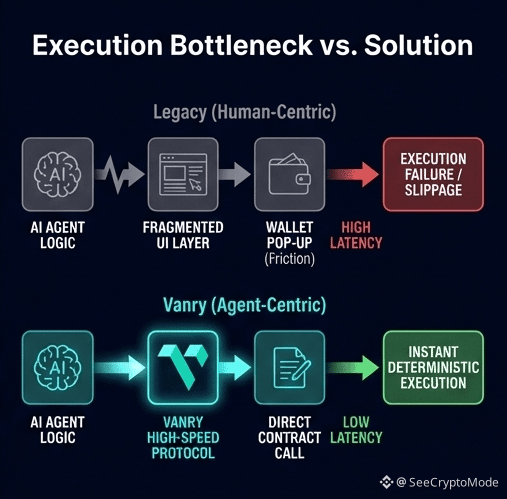
In practice, this means #vanar supports systems that can remember past actions, understand evolving objectives, and adapt behavior over time. The network becomes more than a pipeline for instructions. It becomes an environment where agents can operate responsibly and transparently.
This approach is harder to build and slower to market, but it addresses the real constraint emerging in Web3.
4. Why Execution Optimized Chains Struggle With Agents
Execution optimized chains excel at one thing. They move value quickly. What they struggle with is continuity. Agents need to justify actions after they occur. They need to demonstrate compliance with rules that persist beyond a single transactiThey need to coordinate with other agents without relying on brittle off-chain logic.gic.
When intelligence lives outside the protocol, the blockchain becomes a settlement layer with limited visibility into the decision proceThis breaks down under scale, regulation, and real-world integration.ion. It also limits the sophistication of agent behavior.
Vanary approaches this problem differentBy embedding intelligence primitives directly into the network, it allows agents to operate with a durable context.ext. Decisions are not just executed. They are understood, traceable, and enforceable.
This distinction will define which networks remain relevant as agent activity grows.
5. The Role of Vanary Token in Agent EconomiIn an agent-driven economy, value is created through coordination.ion. Agents negotiate, optimize, and collaborate continuously. The Vanary token acts as the medium that aligns these interactions with network health.
Token utility extends beyond simple fee paymeIt supports access to intelligence resources, prioritization of agent workflows, and governance over protocol-level constraints.nts. As agent activity increases, demand for these capabilities grows organically.
This creates a feedback loop. More agents require more intelligence infrastructure. More infrastructure usage increases token utiliThis dynamic is fundamentally different from speculation-driven demand cycles.les.
Vanary is positioning itself at the intersection of autonomy and accountability. Long-Term Implications For Web3 InfrastructuThe rise of agents necessitates a reevaluation of what blockchain infrastructure is intended to accomplish. do. Speed and cost remain important, but they are no longer sufficient differentiators. Intelligence becomes the new moat.
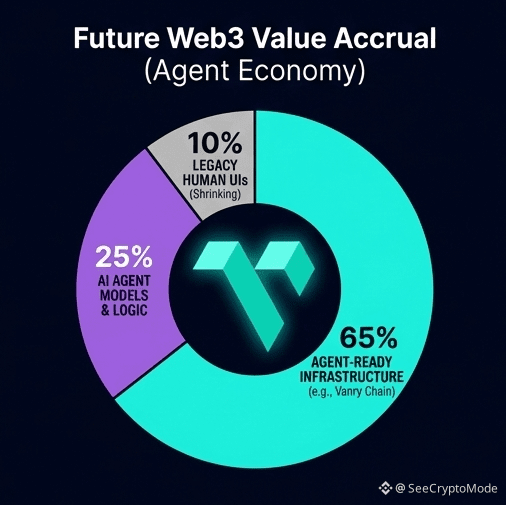
Networks that fail to adapt will remain execution engines. They will be useful but interchangeable. Networks that support intelligent behavior will become coordination layers for complex systems.
Vanary is built for this future. It does not attempt to replace every chain. It complements them by providing what they lack. A shared intelligence layer that gives meaning to executioThis modular future allows specialized networks to coexist while relying on intelligence-focused protocols to handle context and reasoning.ing.
7. Final Thoughts On Vanary And The Agent Era
Execution worked when humans were the users. It breaks once agents take over. This is not a theoretical statement. It is an architectural reality that is already becoming visible across Web3.

represents a deliberate response to this shift. By prioritizing intelligence over raw execution, it aligns with how autonomous systems actually behave. The Vanary token reflects this philosophy by anchoring value in long-lived utility rather than short-lived hype.ype.
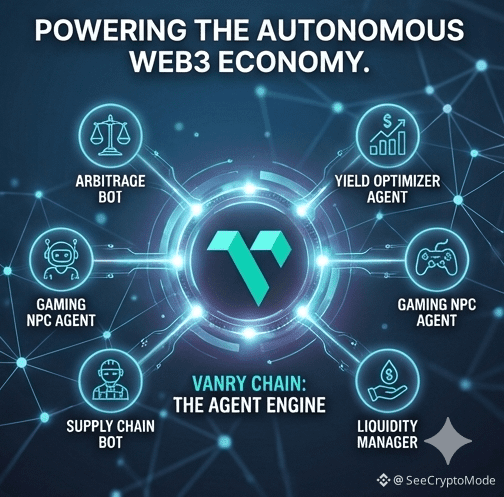
As agents become more prevalent, infrastructure that understands them will outperform infrastructure that merely executes their commands. Vanary is building for that world, quietly and intentionally.
The next chapter of Web3 will not be defined by faster blocks. It will be defined by smarter systems.