
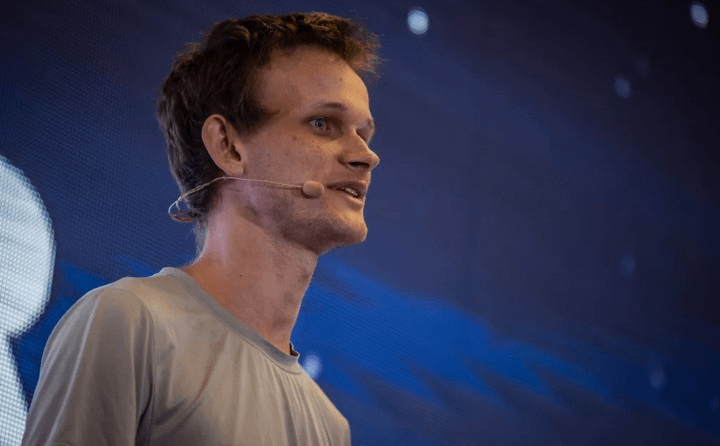
In a recent prose, Vitalik Buterin, one of the heads of Ethereum, talked about how he engages with Polymarket, a prediction market.
Buterin told the people from Foresight News that he likes to enter markets that are in what he calls 'crazy mode' and bets that 'these crazy things won't happen.'
'Like this: there is a market asking if Trump will win the Nobel Peace Prize,' he explained. 'Or some that say the dollar will drop to zero next year, in a time of great despair.'
According to him, by 2025 he had already made about 70 thousand dollars in profit after betting 440 thousand — a gain of around 16%. The guy also reinforced that betting against market excess and madness 'almost always yields returns.' And he advised bettors to look for those corners where people get stuck in nonsensical predictions, because that's where it's easier to make money.
Loxley Fernandes, who is the CEO of Myriad, another prediction market, commented that Buterin's way of betting against absurd things is 'the best example of the utility of these markets.'
'When too much emotion and irrationality come in, those who think calmly not only profit but also help bring prices back to reality,' he said. 'That's exactly what these markets were made for: to separate the signal from the noise.'
Oracles and the struggles
Buterin also talked about the problems that are affecting betting platforms, especially those oracles — which are services that link real-world information with the blockchain.
He recalled a case in the war between Russia and Ukraine, in a market that bet on whether the Russians would take control of a city called Myrnohrad. The oracle used a map from the Institute for the Study of War (ISW), from the United States, which showed who controlled the train station.
However, the institute's account on X was hacked, and the maps appeared stating that the Russians had taken the station. The next day, the institute apologized and corrected it. But in the meantime, there were people who received gigantic payments, over 33,000%, with a trading volume close to 1.3 million dollars.
Buterin pointed out this case as proof that the oracles still have 'very weak' security.
'They never thought that a single message would decide who got 1 million dollars on the blockchain,' he said.
To solve this, he suggested some paths: a more centralized model, relying on a solid news source like Bloomberg; or voting systems with tokens, similar to those of UMA.
'A reliable oracle is essential, because almost every DeFi project needs one,' he concluded. 'If you want to do practical things — register property on the blockchain or predict elections — you need to have an oracle.'