
Last night I was running ComfyUI to train LoRA locally. Halfway through, my computer suddenly popped up a message: “Insufficient disk space.” I looked down at my C drive, which was alarmingly full, and casually checked the prices of hard drives on an e-commerce platform. The result made me wide awake—4TB mechanical drives have started to rise in price, and reliable SSDs are even more outrageous. At that moment, I really considered placing an order, but after a few minutes of calmness while staring at the progress bar that was almost complete but had to be interrupted, I suddenly realized an issue: we should not be entangled in whether hard drive prices have risen, but rather seriously think about why, in the AI era, continuing to stuff hardware locally is a dead end.
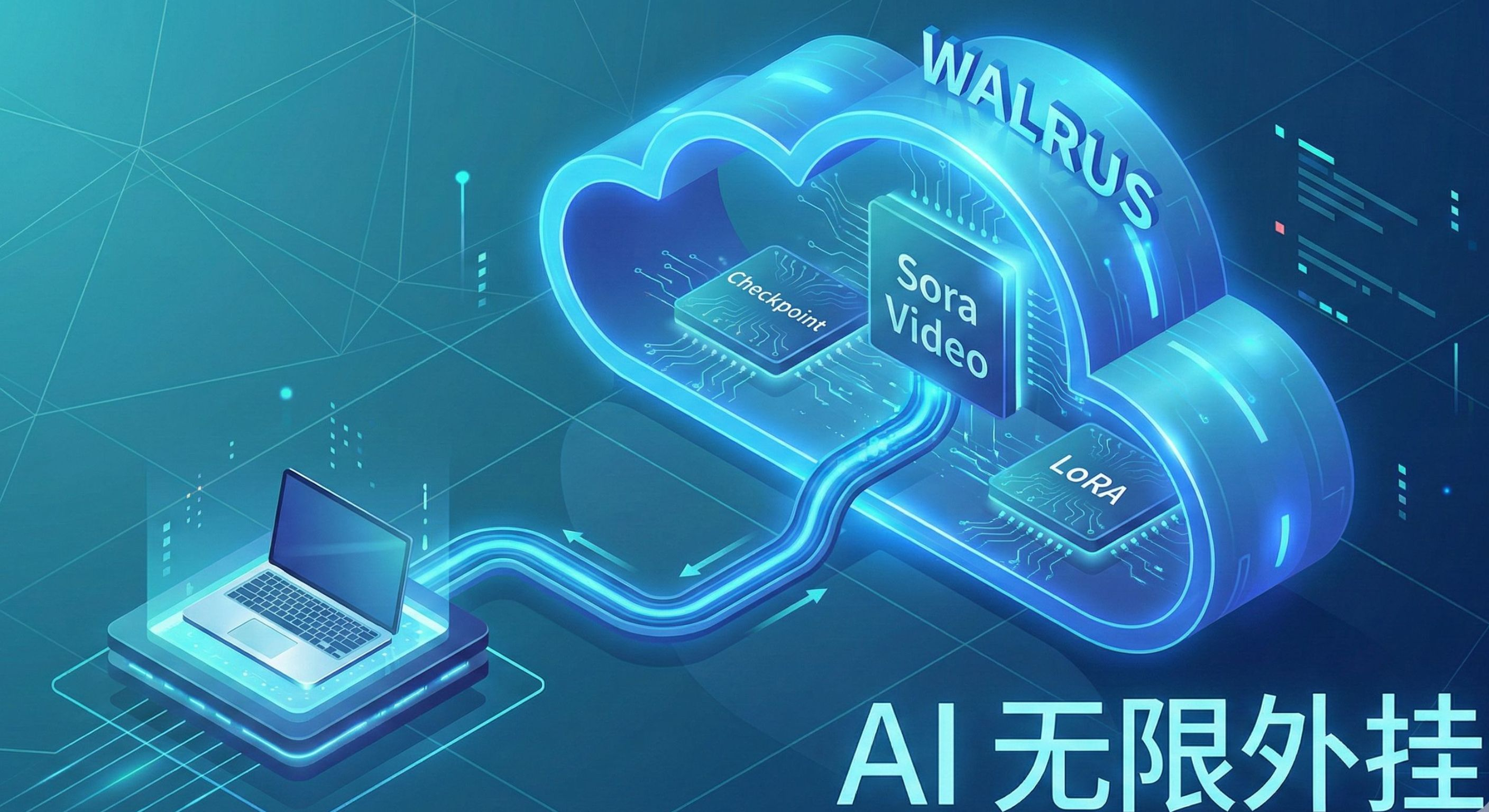
If you are really into AI, whether running ComfyUI locally or favoring video generation directions like Sora, you will inevitably hit the same wall—storage is insufficient. Right now, everyone is talking about computing power, about graphics cards, about NVIDIA, but few acknowledge a harsher reality: computing power is just the engine; storage is the fuel tank. Video models at the level of Sora generate high-definition videos of one minute, often reaching several hundred megabytes or even over a gigabyte; meanwhile, on the local player side, a basic SDXL model is already six or seven gigabytes, and with LoRA, ControlNet, reference materials, and historical output images, a 1TB hard drive is simply not enough for you to tinker with for long. The rising prices of hard drives are just a surface issue; the essence is that the scale of data has already spiraled out of control.
Even more critically, local storage has several inherent flaws. First, it requires a one-time heavy asset investment; you have to pay upfront. Second, it can fail, get lost, or be accidentally deleted. Third, it lacks elasticity. If you buy 4TB today and tomorrow the model gets bigger, you'll need to keep buying. What you think is expansion is actually just adding burden to yourself.

At this time, the value of Walrus's decentralized storage truly manifests. It is not a 'cloud disk' in the traditional sense, but more like a distributed NAS mounted for AI, serving as an external library in the model era. Let's skip the technical details and talk about results: annually, the storage cost of Walrus is far lower than if you were to buy high-quality hard drives, build a NAS, pay for electricity, and account for depreciation. More importantly, it doesn't require you to invest a large sum of money upfront. You are not buying equipment; you are using storage capacity as needed.
What really makes me feel it is meaningful for AI players is the change in usage. Imagine that your ComfyUI no longer needs to download tens of gigabytes of models to your local machine, but instead stores models and materials on Walrus, retrieving them during tasks via high-speed reading or local caching. Architectures like RedStuff are inherently designed for high concurrent reading, meaning that even if you're using an ordinary laptop with only two or three hundred gigabytes of hard drive, you can still access T-level models and material libraries behind the scenes. This is no longer about 'saving space'; it's a complete transformation of AI's working mode from 'local burden' to 'cloud invocation'.
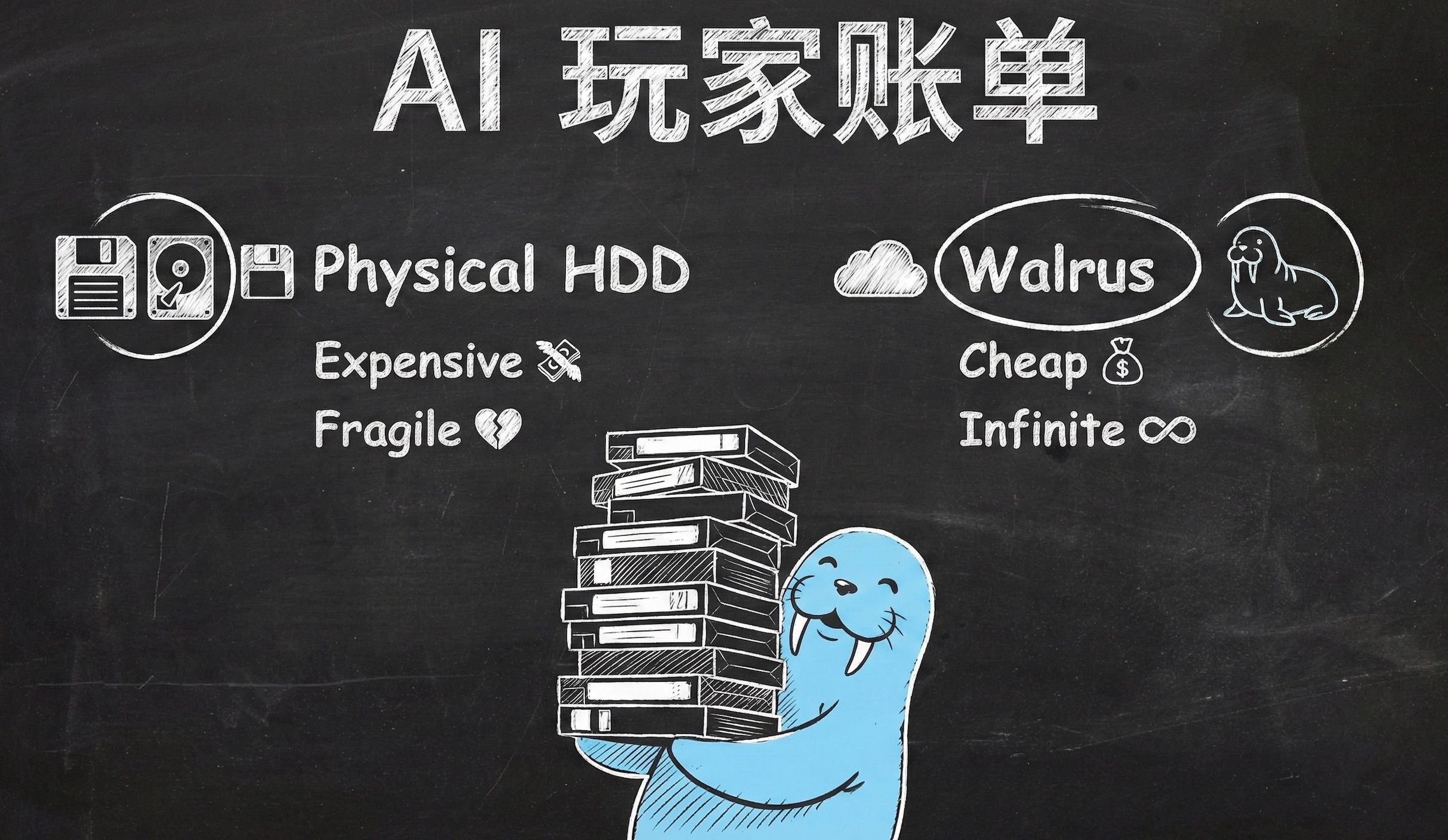
When you step back from the player's perspective and look at this from an investment angle, the logic becomes clearer. Once Sora is fully released, AI video generation will surely see an explosion, and data volume will grow exponentially. By that time, while most people are still scrambling for hard drives, NAS, and graphics cards, the truly smart ones will have already positioned themselves on the side of storage infrastructure. Resources in the physical world are limited, and prices will only get more expensive; whereas in the code world, efficiency can be improved through algorithms, which can continuously dilute costs. Essentially, what Walrus does is transform 'storage' from a personal hardware burden into public infrastructure.

So my current thought is simple: rather than worrying about rising hard drive prices, it's better to accept a reality early on—local storage is no longer suitable for the AI era. Hard drives bought are consumables, aging and becoming obsolete after a few years; they are dead assets. In contrast, $WAL represents the storage entry point of the entire AI data explosion era, an asset that can grow alongside demand. When everyone is driven mad by storage costs, you'll find that what really holds value has never been those few disks under your desk, but who is providing 'unlimited refills' for this era.