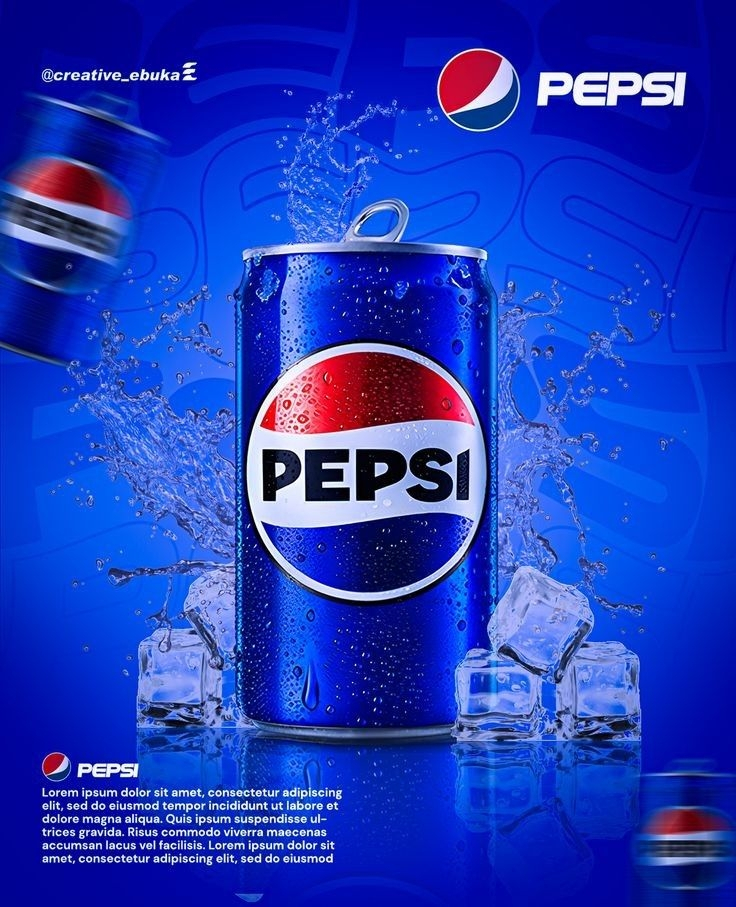
PepsiCo — one of the largest corporations in the world in the field of food and beverages, whose history began more than 125 years ago and has become an example of a scalable global business.
The birth of the brand (1893–1902)
The history of Pepsi begins in 1893 in the USA, when pharmacist Caleb Bradham created a carbonated drink called Brad’s Drink. It was sold in a pharmacy in the city of New Bern (North Carolina) and was positioned as a means to improve digestion.
In 1898, the drink was renamed Pepsi-Cola — the name came from the enzyme pepsin and the word cola. By 1902, Bradham officially registered the Pepsi-Cola Company.
The first crises and relaunch (1920–1930s)
Despite early success, the company faced financial difficulties. After World War I, rising sugar prices led Pepsi-Cola to bankruptcy in 1923.
However, the brand did not disappear. In the 1930s, Pepsi relaunched with a new strategy: a 12-ounce bottle was sold for the same price as a 6-ounce one from competitors. This made Pepsi a symbol of 'value choice' during the Great Depression.
Confrontation with Coca-Cola and rising popularity (1940–1960s)
In the mid-20th century, Pepsi actively competed with Coca-Cola, betting on youth and modern values. Advertising campaigns emphasized a dynamic lifestyle and societal changes.
In 1965, a key event occurred: the merger of Pepsi-Cola with Frito-Lay. This led to the creation of PepsiCo, which combined beverages and snacks into a single business model.
Global expansion and diversification (1970–1990s)
PepsiCo began active international expansion, entering the markets of Europe, Asia, and Latin America. The brand portfolio rapidly grew:
Lay’s, Doritos, Cheetos, Mountain Dew became globally recognized products.
The company invested in marketing, sports sponsorships, and collaborations with pop culture, which strengthened the emotional connection with consumers.
21st century: sustainable development and innovation
In the 2000s to 2020s, PepsiCo focused on:
reducing sugar and salt content;
development of functional and beneficial products;
environmental sustainability and ESG strategy;
digitalization of supply chains and data analytics.
PepsiCo is gradually transforming from a classic FMCG company into a technology-oriented corporation with a global infrastructure.
PepsiCo today
Today, PepsiCo operates in over 200 countries, integrating beverages, snacks, and food into a single ecosystem. The company remains one of the symbols of American business and an example of how a brand can survive crises, adapt to the market, and maintain relevance for centuries.