

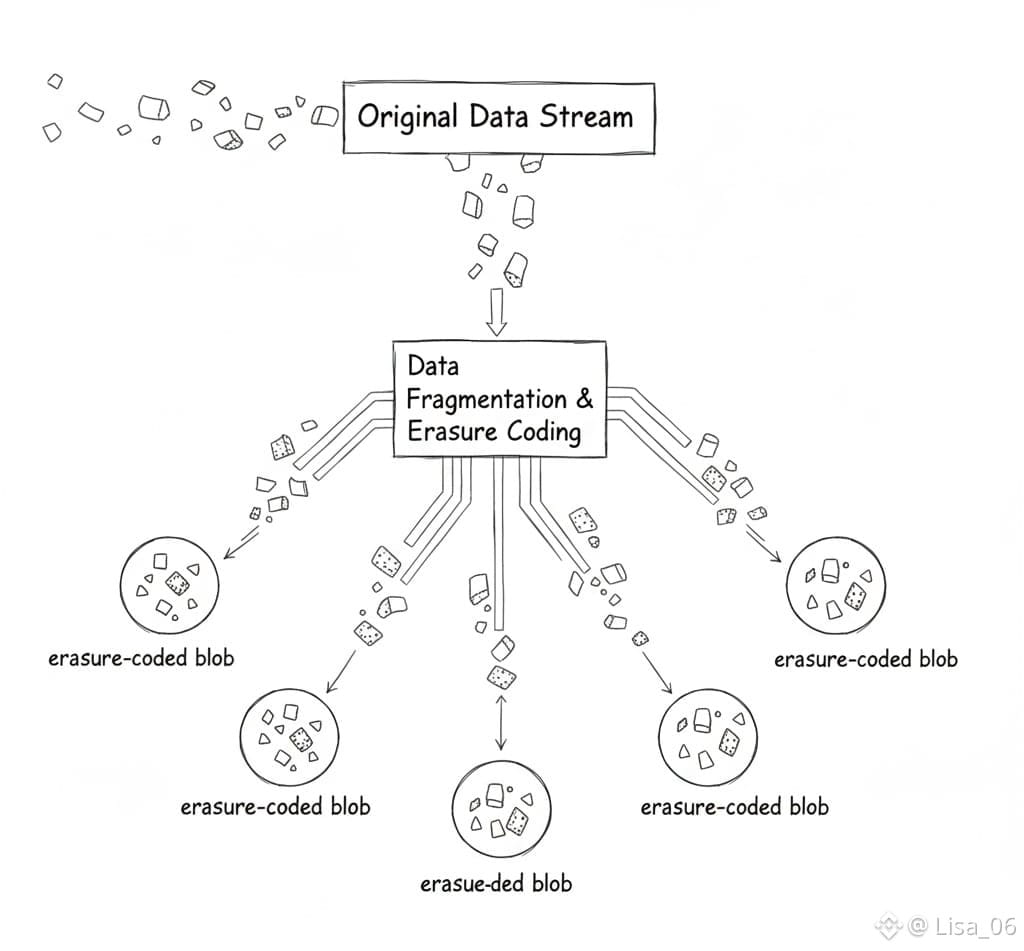
 Most privacy systems in DeFi fail because they sit too close to the application layer. They try to hide transactions after decisions are already exposed. Walrus inverts that logic. By pushing privacy into how data is stored, sliced, and retrieved, it alters coordination itself. When interaction data is fragmented through erasure coding and distributed blobs, patterns become harder to reconstruct, even without explicit encryption tricks. What disappears is not just user identity, but behavioral signal.
This has subtle consequences. Governance participation becomes less gameable when voting intent cannot be inferred early. Staking strategies leak fewer timing cues. Even dApp composability shifts, because developers interact with data objects rather than raw histories. Walrus feels less like a ledger and more like an internal transport system where packets move without revealing their full route.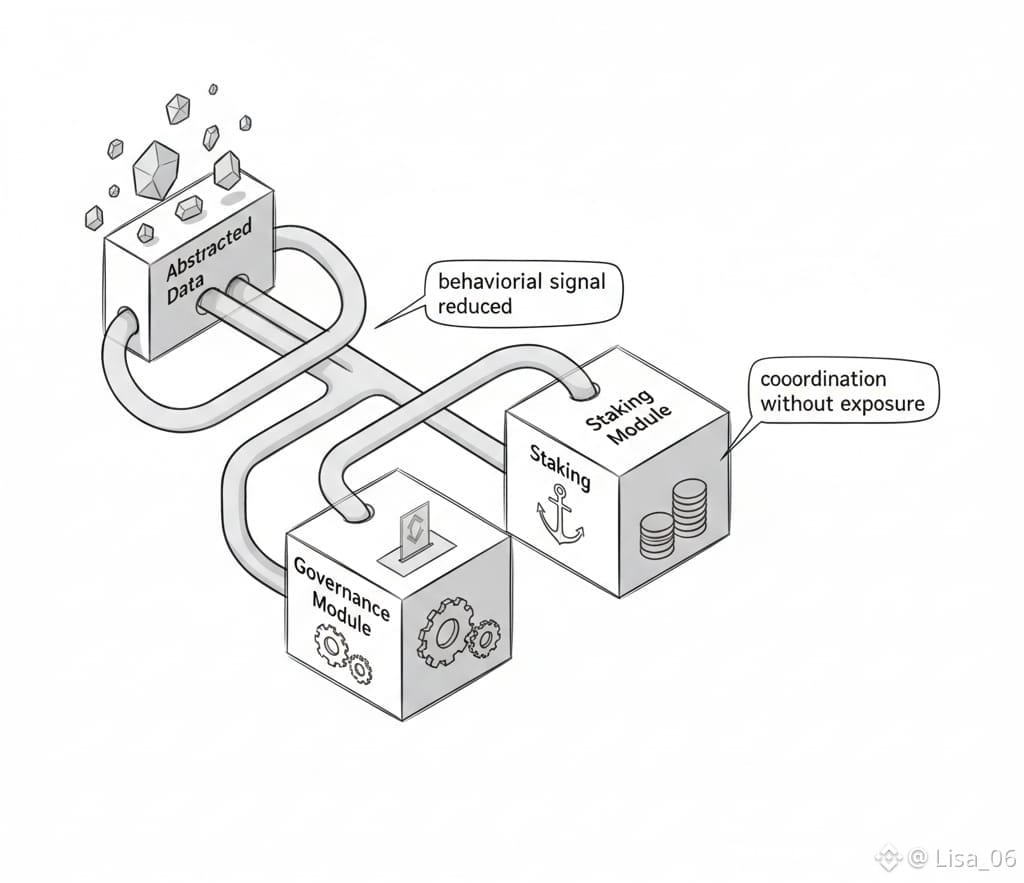
The choice to build this on Sui matters. Object-centric execution pairs naturally with blob-based storage, allowing large private states to exist without constant global exposure. This is not anonymity theater; it is structural opacity. Like plumbing hidden behind walls, it does not promise invisibility, only reduced surface area for inference.
If DeFi matures into a coordination layer for real institutions and communities, the winning systems will not shout privacy. They will quietly remove incentives to spy at all.

