
On this day in 2026, as we look back at the fluctuations of the blockchain industry over the past few years, we find an interesting phenomenon: what was once regarded as the core of the crypto spirit, "complete transparency," is quietly transforming into a ceiling that hinders the industry from reaching the next level. Every time I stare at the flow of on-chain data late at night, that sense of exposure always lingers. On the Ethereum explorer, every asset transfer feels like running naked in a public square, marked and tracked by countless eyes. This environment may just present privacy concerns for retail investors, but for traditional financial institutions holding vast amounts of capital, it is an absolute no-go zone. No Wall Street giant is willing to expose their holding strategies and client privacy under such an unfiltered spotlight. It is this reflection on the "transparency paradox" that has caused me to reassess the situation.@Dusk I saw on it a third way to break the binary opposition of 'privacy' and 'compliance'—auditable privacy.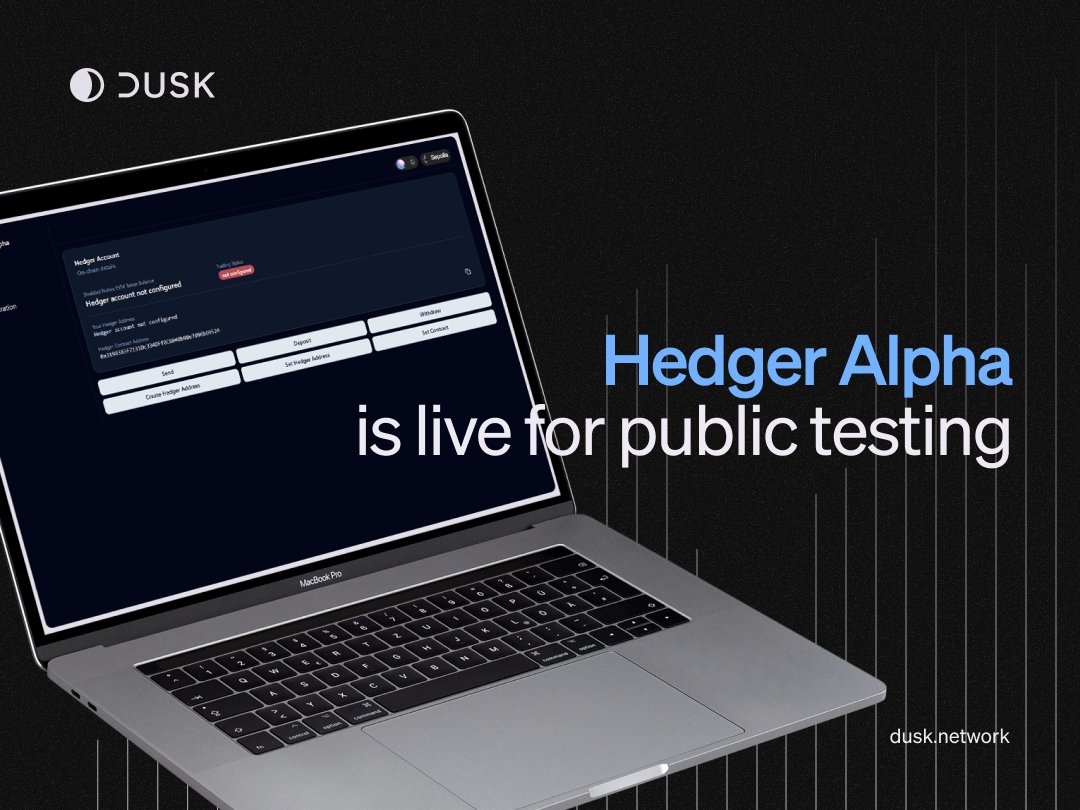
Many years ago, when I first encountered Dusk, it seemed out of place in a market filled with 'TPS competitions' and narratives of public chain killers. It was not loud; in fact, it seemed somewhat dull due to its focus on underlying cryptographic engineering. But this dullness was precisely the process of building its core barriers. Dusk has not treated privacy as a black cloth to cover illegal transactions; instead, it has redefined it as a natural attribute of business activities. The 'auditable privacy' it proposes essentially constructs a sophisticated balance at the cryptographic level: on one hand, it uses zero-knowledge proofs (ZKP) to protect transaction details from being publicly scrutinized, while on the other hand, it reserves a mathematical channel for regulatory bodies to verify compliance. This design accurately hits the biggest pain point when traditional finance (TradFi) enters decentralized finance (DeFi).
Delving into its technical architecture, one discovers that the Dusk team has a strong engineering perfectionism. They did not use off-the-shelf virtual machine solutions but developed Piecrust VM. This was not for show but to solve the extremely costly performance loss problem in privacy computing. Through a zero-copy architecture, Piecrust avoids a lot of redundant operations during read and write states in traditional smart contracts, making it possible to run complex financial logic on-chain. At the same time, its unique SBA consensus mechanism cleverly uses verifiable random functions (VRF) to solve common centralization and long-range attack problems in PoS networks. For financial applications, the 'instant settlement' and 'deterministic finality' brought by SBA are the real killer features—after all, in the fast-paced capital market, uncertainty is the biggest risk.
On the compliance front, Dusk's Citadel protocol demonstrates an insight that transcends the times. It fully integrates the KYC/AML (Anti-Money Laundering/Know Your Customer) process into the zero-knowledge proof system. In Dusk's network, users do not need to upload ID photos like in the Web2 era; instead, they generate an on-chain credential to prove they are 'qualified.' Verification nodes only confirm the validity of this credential and cannot know the specific identity behind it. This practice of embedding compliance checks into the Layer 1 protocol directly cuts off the possibility of illegal funds entering from the source while also completely eliminating the risk of data misuse. This is not only a victory for technology but also a realization of the concept of digital sovereignty.
With the maturity of the mainnet and the explosion of RWA (real-world assets), my investment logic has undergone a fundamental shift. Previously, in the world of DeFi, I charged forward with a gambler's mentality; the returns were considerable, but they were always accompanied by anxiety about being spied on and targeted by regulation. Now, participating in institutional-level asset staking and investment through Dusk's privacy pool has brought me a long-lost sense of stability. The integration of compliant platforms like NPEX allows assets such as stocks and bonds to circulate on-chain in a tokenized form, all under the protection of encryption. I know my assets are appreciating, but I don't need to broadcast my wealth to the world. This experience made me feel for the first time that cryptocurrency investment has begun to embody the maturity and steadiness of 'adulthood.'
Dusk has chosen the most difficult path: not chasing short-term Meme hotspots, not compromising on simple technical forks, but instead focusing on refining a set of underlying facilities capable of supporting the future financial system. It not only addresses privacy issues but also ensures system upgradeability through the PLONK proof system, leaving room for the future's ever-changing regulatory environment. Now, looking at the stable staking rates and the continuously growing ecosystem applications, I am more convinced that Dusk is not just a public chain; it is the strongest and most secretive bridge connecting the freely flowing Web3 world with the rigorous and regulated traditional financial world. At this node of the old and new worlds intersecting, Dusk's value is just beginning to emerge.