
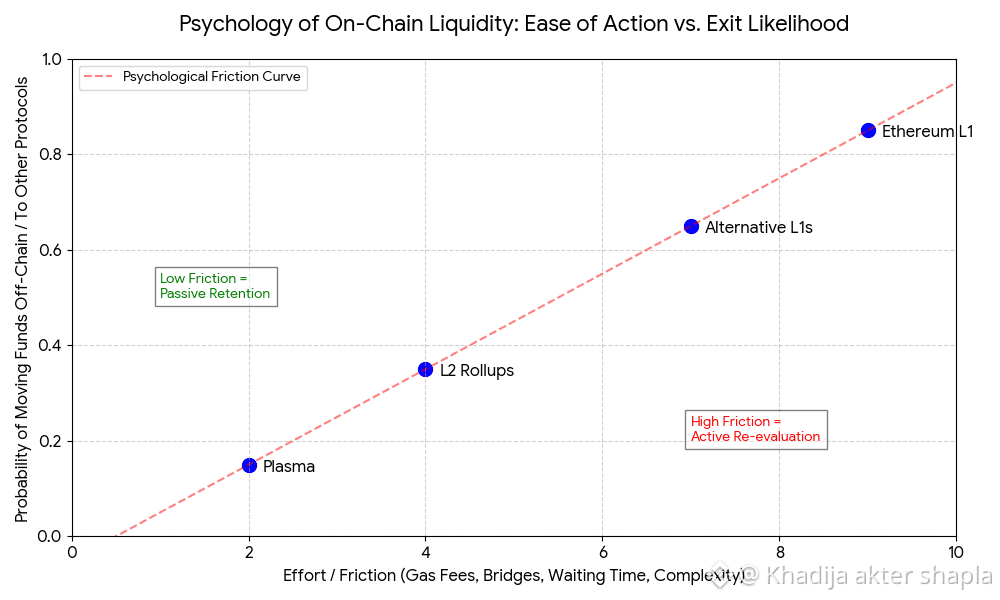


I used to believe I was very rational with capital. I’d chase yields, rebalance often, and tell myself that moving funds was just “good management.” But recently I noticed something uncomfortable: once my money enters Plasma, I hesitate to move it again.
At first, I thought it was laziness. Then I realized it’s something deeper.
On most chains, every action feels like a small tax on attention. Check gas. Check bridges. Check finality. Even when yields are higher elsewhere, there’s a constant background anxiety: what if something gets stuck? what if timing is bad?
On Plasma, that noise fades. Gasless USDT transfers remove the first friction. Stablecoin-first design removes the second. Execution-first architecture means transactions don’t pile up behind each other. Things settle quickly, quietly, predictably. Nothing dramatic happens — and that’s exactly the point.
I started noticing a pattern. Instead of planning exits, I planned next actions inside the same environment. Swap here. LP there. Hedge risk nearby. Everything feels close, reachable, and safe enough to postpone leaving.
That’s when it clicked: Plasma isn’t competing on yields alone. It’s competing on mental comfort.
Bitcoin-anchored security adds a background sense of neutrality. Sub-second finality reduces waiting. Predictable gas removes surprise. Over time, the cost of leaving starts to feel higher than the benefit of chasing a slightly better APY elsewhere.
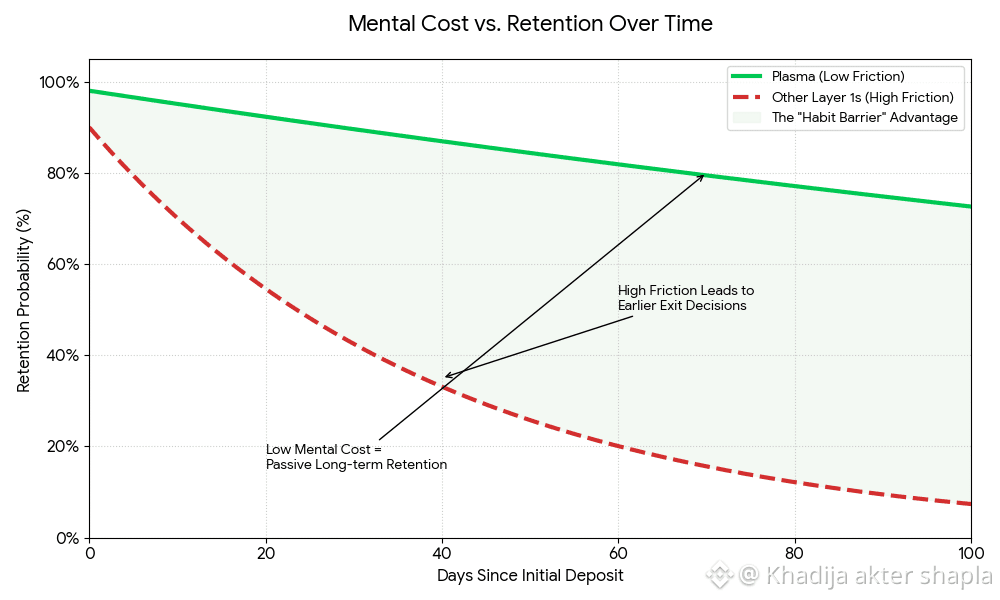
This isn’t hype. It’s habit formation.
In crypto, funds that stay because of belief leave quickly when narratives break. Funds that stay because moving feels unnecessary are far more stable. Plasma seems to understand this very well.
Maybe that’s why, even while prices move slowly, I find myself hesitating to exit. Not because I’m bullish — but because everything already works where it is.
That might be the quietest and strongest form of lock-in I’ve seen so far.