I want to explain this the same way I understood it myself, slowly and honestly, without hype. I remember the first time I watched a real user leave a Web3 app right in front of me. Nothing dramatic happened. The wallet connected. The transaction worked. The blockchain was fine. But an image inside the app did not load. The screen stayed blank. The user waited a few seconds, refreshed once, then closed the tab and never came back. That moment stayed with me. It taught me that most users do not leave because they hate crypto or dislike decentralization. They leave because the product feels unreliable. When something simple breaks, trust breaks with it.
Over time, I started to notice this pattern everywhere. Users do not argue about gas fees or tokenomics. They do not read roadmaps. If an app feels fragile, they leave quietly. Retention dies long before ideology does. In Web3 we talk a lot about ownership and freedom, but users are still humans. If something feels broken, they move on. That is the mindset I had when I started researching Walrus.
I do not look at Walrus as just another decentralized storage project. In my search, I started to know about it as a data layer focused on dependability. Not the exciting kind that makes headlines, but the boring kind that decides whether an app feels alive or abandoned. Walrus went live on mainnet in late March 2025. What exists today is not an idea or a test. It is a working production network with decentralized storage nodes holding real data that applications rely on.
At its core, @Walrus 🦭/acc stores blobs. That word sounds technical, but it simply means large pieces of data like images, videos, PDFs, game files, and datasets. These are the things users actually see. If they do not load, the app might as well be offline. What stood out to me is that Walrus does not treat storage as something separate from the app logic. The data layer is coordinated with onchain state alongside Sui. That means the app knows who owns the data, how long it should exist, and who is responsible for keeping it available.
The WAL token plays a real role here. Staking and committee selection are powered by WAL. This matters because it decides which nodes are responsible for storing and serving the data. In simple terms, people who help keep the data alive are economically incentivized to do their job properly. That is one of those details that does not sound exciting but makes a big difference in practice.
As I researched more, I noticed something important. Walrus does not try to do everything. It focuses on storing large data objects in a way that apps can actually trust. Coordination happens onchain. Storage happens through nodes that are rewarded for behaving correctly. This may sound obvious, but many systems fall apart right here. The difference between a demo and real infrastructure is whether developers are comfortable building products that users depend on every day.
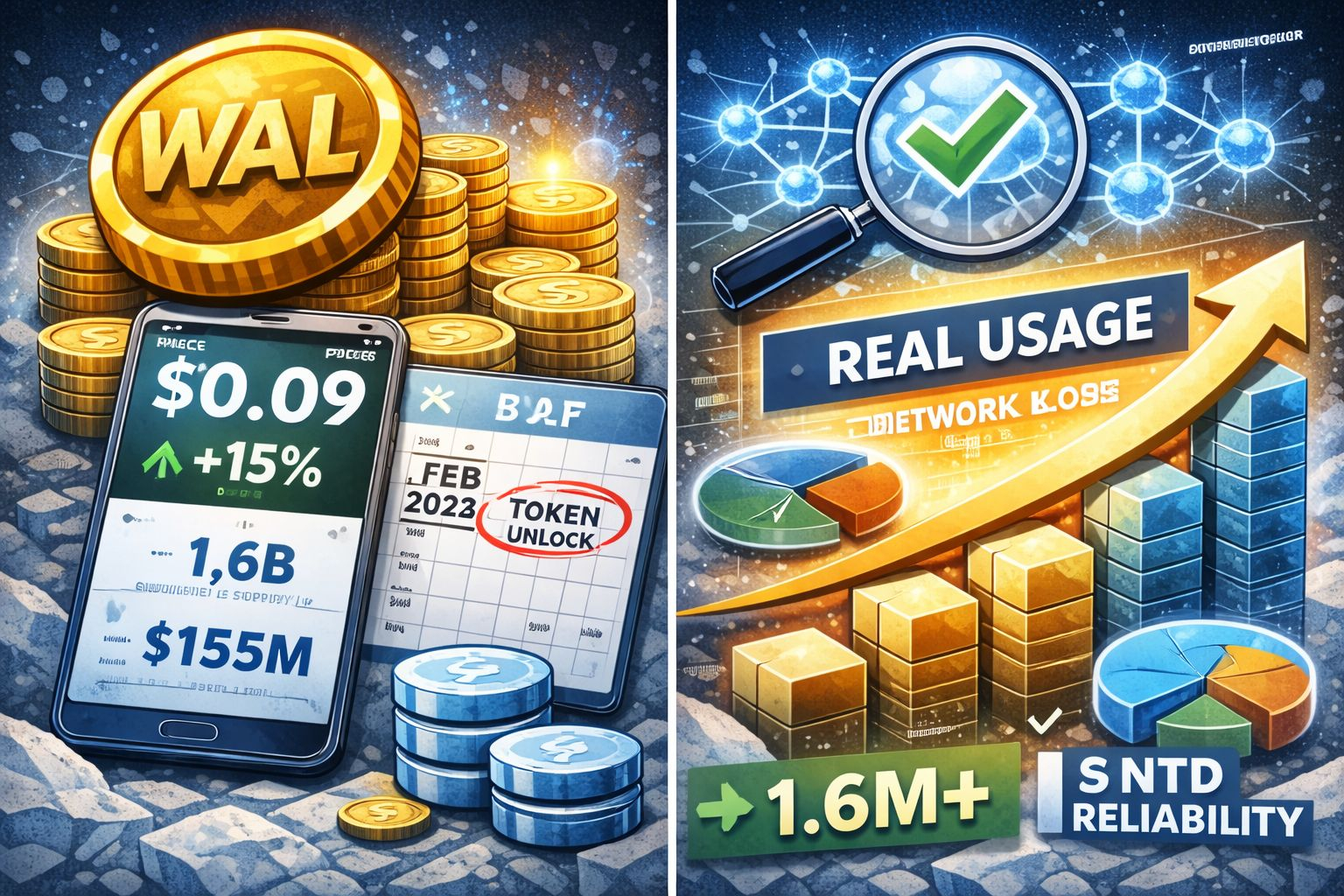
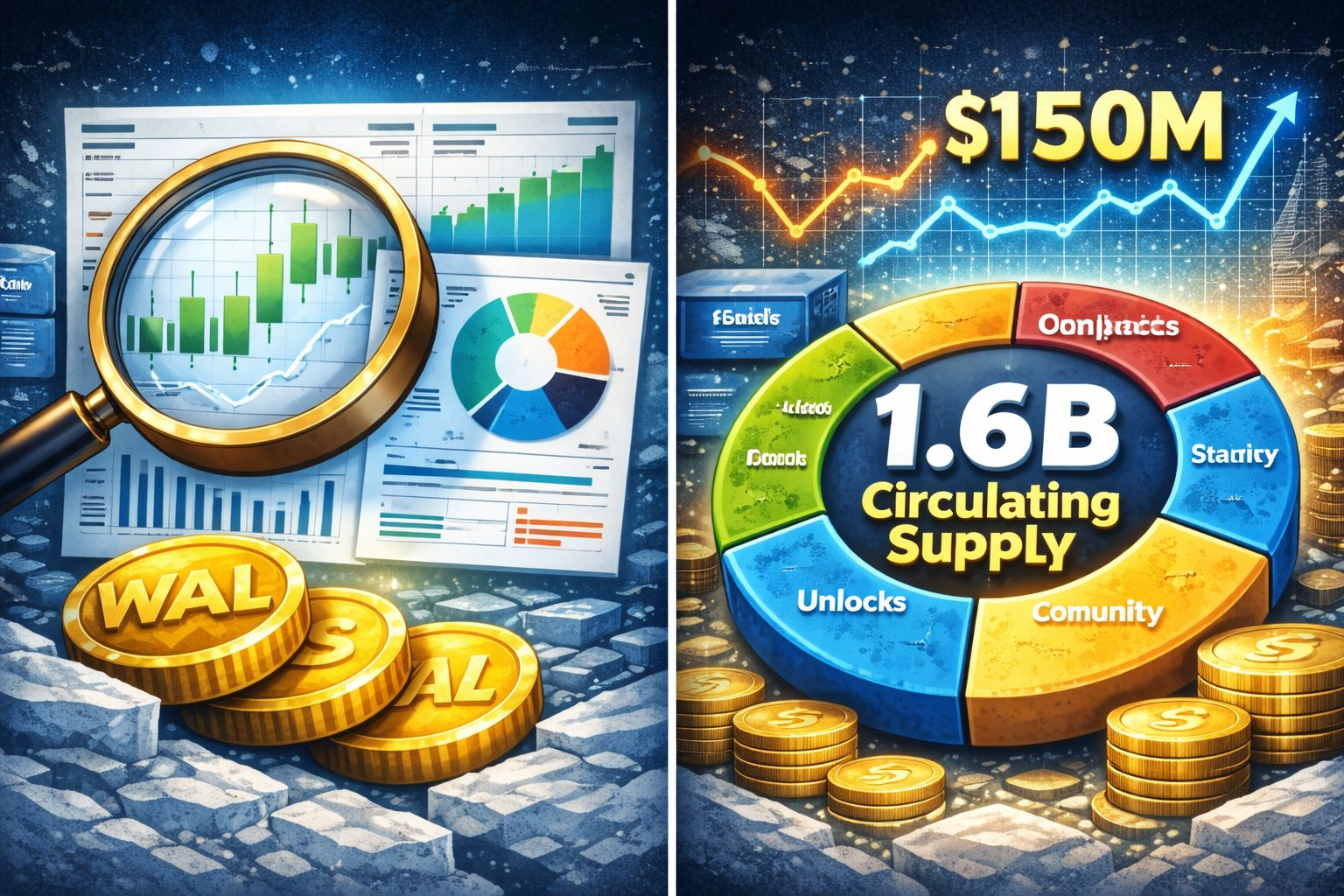
I also looked at the market side, not to guess price, but to understand behavior. Around early February 2026, WAL was trading around nine to ten cents. Circulating supply was roughly one point six billion tokens, with a maximum supply of five billion. Market cap was sitting in the low to mid one hundred fifty million dollar range, and daily trading volume was healthy enough to show liquidity. I noticed token unlocks as well. None of this tells me where price will go. It just tells me how crowded the trade is and how supply changes can affect short term sentiment.
What really changed how I viewed Walrus was how it handles data internally. The network uses a system called Red Stuff, which is a two dimensional erasure coding method. Instead of copying the same data again and again in a simple way, Walrus spreads it across the network with about four and a half times replication overhead. I learned that this number matters. Too little redundancy means data can disappear. Too much means the system becomes expensive and inefficient. This design sits in the middle.
Red Stuff is built to handle node churn, which is a polite way of saying nodes can fail, disconnect, or behave badly. The system can still recover data without needing every piece to be present all the time. Compared to simple replication, this approach is more resilient. Compared to fragile systems that break when assumptions fail, it is more forgiving. For real users, that forgiveness shows up as fewer broken images and fewer silent failures.
Another thing I found important is programmability. In Walrus, storage and blobs exist as onchain objects. That means ownership, access rules, duration, and payments can all be handled inside smart contracts. Data is not just uploaded and forgotten. It becomes part of the app state. When data becomes state, developers can reason about it. Users can trust it. Apps can enforce rules without relying on offchain promises.
This matters more than people realize. Games need assets to load every time. AI agents depend on datasets being available and verifiable. Compliance documents need to exist years later, not just until a company shuts down. Model datasets need stable access without links expiring. When storage is composable and aware of the blockchain, these use cases stop feeling fragile and start feeling normal.
I have seen centralized storage fail quietly many times. A startup shuts down and forgets to pay for storage. A policy changes and access gets restricted. A link expires. Onchain everything still looks fine. The contracts exist. The tokens are there. But to the user, the app is dead. This is how products lose users without anyone noticing. Retention is not usually killed by big outages. It is killed by small signals that the product is no longer cared for.
Of course, Walrus is not without risk. It is closely tied to the Sui ecosystem, and that dependency matters. If Sui struggles to grow, Walrus feels that pressure. Decentralized storage is also a competitive space with many teams chasing similar goals. Decentralization itself is not automatic. Stake concentration and node clustering are real risks that need monitoring. Token supply is another factor. With a five billion maximum supply, unlocks and emissions matter for long term holders.
When I talk to people who care about fundamentals, I do not give them price targets. I tell them to verify things themselves. Read the mainnet announcements. Look through the design documents. Actually store data and retrieve it. Watch how the system behaves, not how it is marketed. Track token unlocks, but also track usage. See if real apps are trusting the network with real data.
In the end, infrastructure either becomes quietly valuable or slowly fades away. The dividing line is almost always retention. If users stay because products feel dependable, value compounds over time. If users leave because small things keep breaking, no story can save it. Walrus, to me, is a bet on the idea that data reliability is not a feature you advertise. It is the backbone that decides whether users stay or close the tab the next time an image fails to load.