
I want to talk about something that sounds administrative until you realize it may decide whether a robot economy becomes real or stays theatrical.
Not the robots.
Not the payments.
Not the chips.
Identity.
More specifically, what happens when a machine acts in public but the system around it cannot answer a very simple question afterward:
which machine was that, exactly?
There is a tendency in robotics coverage to treat identity as paperwork. Something you attach later, once the interesting part is finished. The interesting part, in that telling, is the movement. The navigation. The dexterity. The intelligence. A machine picks, sorts, welds, carries, inspects, delivers. That is where the excitement lives, so that is where the attention goes. Identity gets pushed into the background and starts sounding like a compliance feature.
Fabric does not seem to think identity belongs in the background.
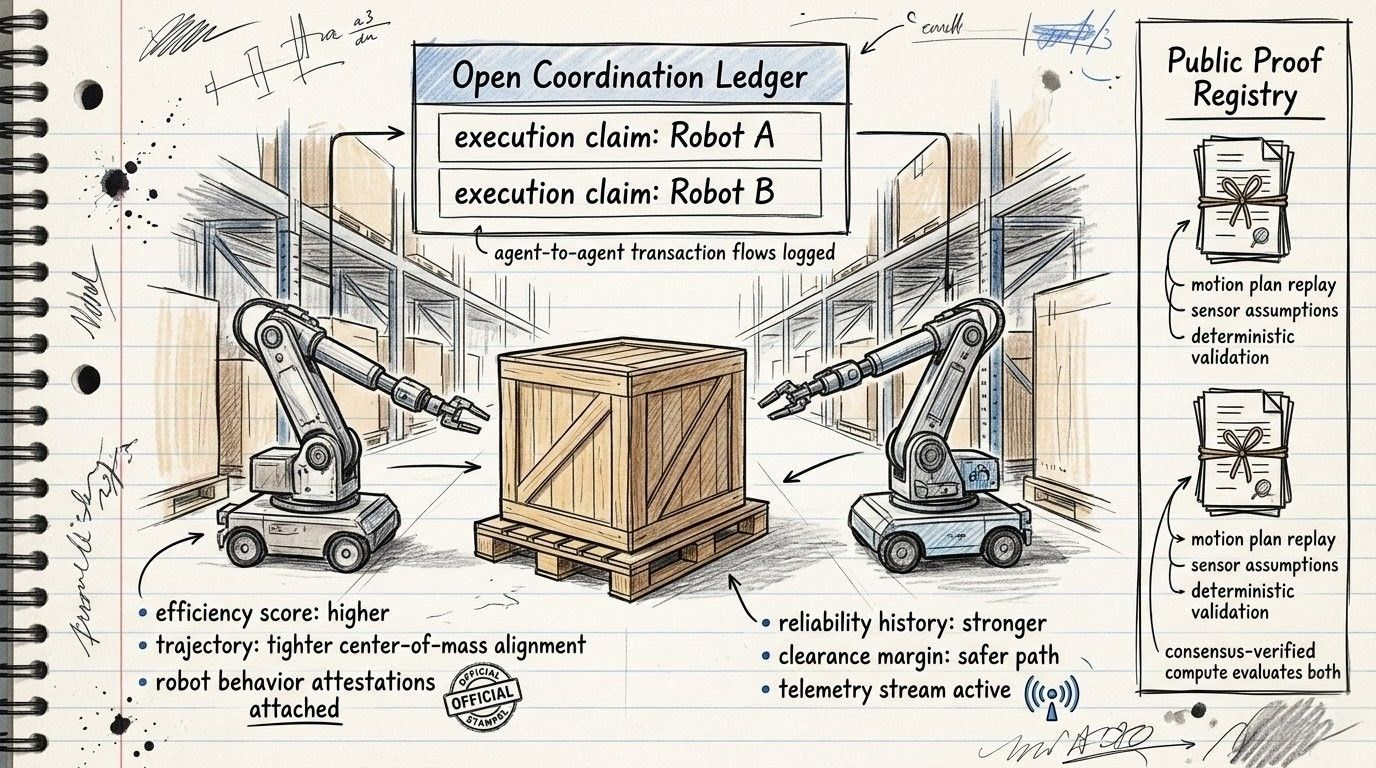
That is one of the reasons the project feels more serious than most things being discussed around autonomous agents right now. It keeps returning to a harder premise: machine action only becomes economically and politically meaningful once the actor can be pinned down in a way that survives conflict. Until then, a robot may still be useful, but it is operating inside what is basically a fog of plausible deniability.
That sounds harsher than people usually like.
It is also closer to the real problem.
A machine that does work without a durable public identity can still perform tasks. It can still be paid. It can still generate value for whoever controls it. What it cannot do, at least not in a strong sense, is enter a shared system where accountability has to travel with the action. The moment a robot moves from being a private tool to being a participant in a broader economy, identity stops being a convenience and starts becoming infrastructure.
This is where I think Fabric is making a deeper bet than people may realize.
Most discussions of “machine identity” are really just discussions of access. Can the robot authenticate? Can it open the door, call the service, receive the payment, sign the request? Fabric seems to be reaching for something heavier. Not identity as access credential. Identity as public continuity. A machine acts here, gets paid there, is governed somewhere else, and the record has to remain coherent enough that third parties can still reason about what happened.
That is not a glamorous problem.
It is a foundational one.
Without continuity, every machine event risks becoming an isolated anecdote. A robot completes a task. Fine. But if the identity surrounding that task can be cheaply reset, masked, fragmented, rented, or abandoned, the meaning of the task starts thinning out. Reputation becomes soft. Compliance becomes selective. Responsibility becomes negotiable. The machine still acts, but the public system around it begins losing confidence in what action means.
This is why I think “identity” is actually too small a word for what Fabric is trying to build.
What the protocol seems to want is something closer to machine personhood without the metaphysics. Not rights. Not consciousness. Not any of the overblown language people like to reach for when they want to sound visionary. Something narrower and more practical: a durable public handle through which machine actions, proofs, payments, and governance consequences can accumulate without constantly dissolving back into operator narrative.
That is a strange thing to build.
It is also one of the few ways a robot economy could become larger than a collection of vendor dashboards.
This brings me to the question: what kind of world does Fabric seem to believe is coming?
Not just one where robots do work.
One where machines have to become legible participants in shared systems.
That is a much bigger claim.
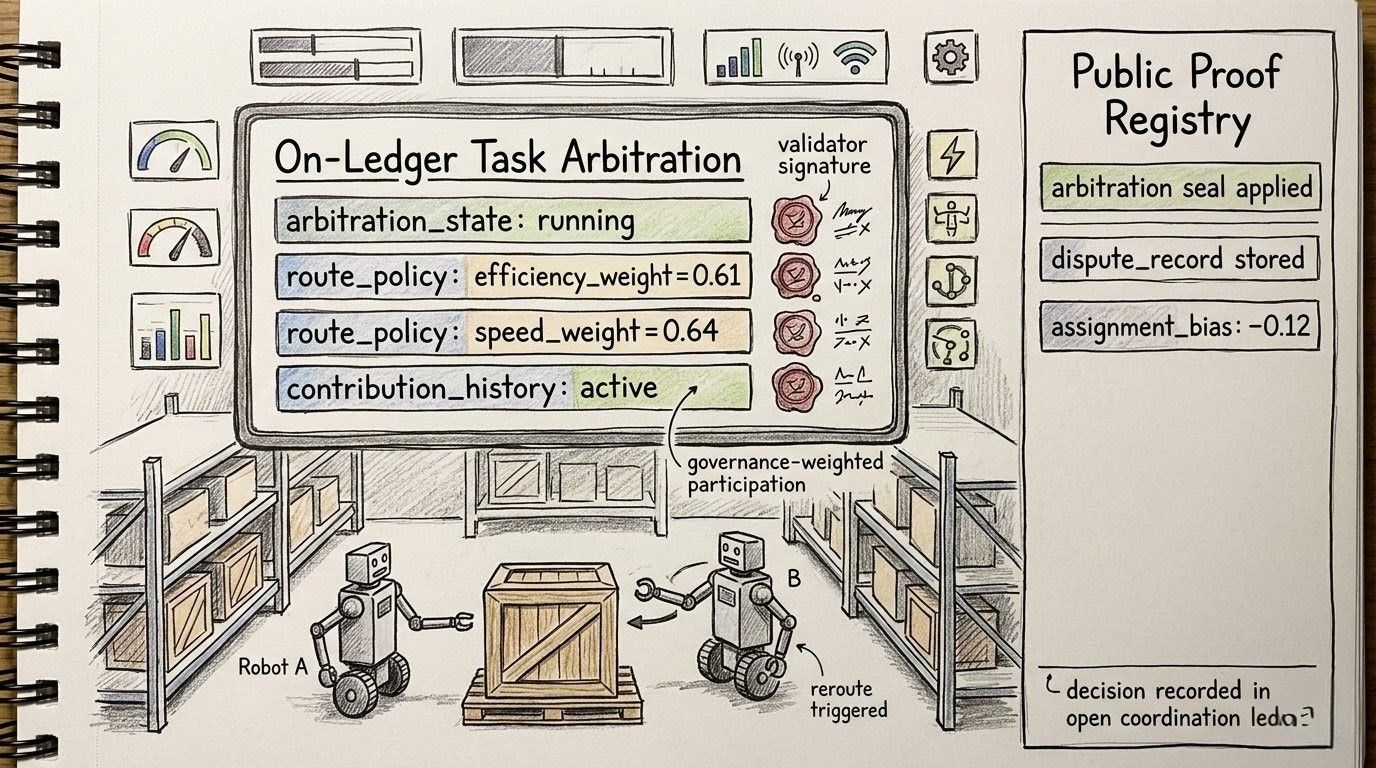
It means the protocol is not only trying to make machines useful. It is trying to make them governable without collapsing them back into pure human proxy. If every economically meaningful machine action can only really be understood by the company operating the robot, then the future of robotics looks less like open infrastructure and more like a set of private empires with hardware attached. Fabric appears to be resisting that outcome by insisting that machine identity, proof, and settlement be tied together on public rails.
This is also where the economics stop looking like ordinary “tokenomics,” which is a word that usually manages to shrink every serious design question into some combination of emissions, demand, and incentives. That is not quite the right frame here. ROBO matters because the network is trying to coordinate identity, participation, settlement, and governance around machine activity in one place. The token is not interesting because it exists. It is interesting if and only if the protocol succeeds at making machine action durable enough that value can accumulate around public evidence instead of private assertion.
That distinction matters more than people think.
If machine identities are durable, reputation can become costly to lose. If reputation becomes costly to lose, governance can begin to work with more than speculation. If governance can work with more than speculation, then settlement, arbitration, and access do not have to float entirely on trust in the operator. In other words, identity is not sitting beside the economy. It is helping determine whether the economy can become public in the first place.
Of course, none of this guarantees success.
That is another place where Fabric feels more interesting than the average project in this category. Its architecture reads less like a victory speech and more like a system being built against a set of anticipated failures. Identity fraud. Credential drift. incentive gaming. compliance theater. machines doing work that no one can cheaply verify or attribute in a way that holds up later. The protocol looks like it assumes those things are not exceptions. They are the default pressure any serious machine economy will eventually face.
Whether Fabric has chosen the right answers is something we cannot know yet.
And maybe that is the most adult part of the whole project.
A lot of systems are introduced as if architecture were destiny. Fabric reads more like a structured wager. If autonomous machines are going to coordinate, settle, and be governed in public, then identity cannot remain light, disposable, or purely local. It has to become durable enough to carry memory. The network is being built on the assumption that this memory will matter more over time, not less.
That assumption could be early.
It could also be exactly right.
The history of infrastructure is full of cases where the least exciting layer turned out to be the one everything else quietly depended on. Identity has that kind of feel here. Nobody is going to make a viral demo out of a durable machine credential. Nobody is going to point to an agent registry and say that this is the magic. But when the first large-scale disputes arrive, over payments, over behavior, over compliance, over who did what and under whose authority, it is very possible that the systems with the strongest identities will be the only ones that still look coherent.
That is the part I keep coming back to.
A lot of projects in this space are still trying to make robots impressive.
Fabric seems more interested in making them countable.
That sounds colder.
It may turn out to be the more important ambition.