
SIGN feels like one of those ideas that shouldn’t be interesting, but somehow is. I’ve spent enough time in this space to see how messy things get the moment tokens start moving, and I keep coming back to the same problem we never really solved. Distribution looks simple until it actually happens. Then it turns into a game of who can exploit the system fastest. Watching that repeat over and over makes something like this harder to ignore.
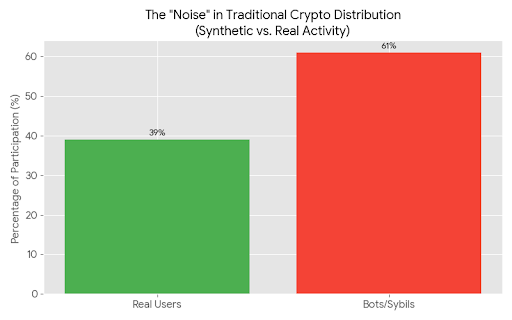
What it’s trying to do isn’t flashy. It’s not promising a new chain, or a new narrative, or some massive shift in how everything works. It’s just sitting in the middle of a very real gap, where identity is weak, credentials are fragmented, and rewards don’t always reach the people they’re meant for. Wallets are still treated like people, even though everyone knows they’re not. That disconnect has been quietly shaping the entire market, and not in a good way.
I’ve seen projects celebrate huge participation numbers that don’t mean anything. Thousands of wallets, millions of interactions, and then when it’s time to distribute value, it becomes obvious how much of that activity was synthetic. Bots, farmers, opportunists, all blending in with actual users. It creates this illusion of growth that disappears the moment incentives change. That pattern has played out so many times it’s hard to take new launches seriously anymore.
SIGN seems to be pushing against that, trying to make credentials something that can actually be verified without turning the whole system into surveillance. That balance is tricky. The moment you push too hard on verification, you risk losing the openness that made this space work in the first place. But if you don’t push at all, you end up with systems that can’t tell the difference between real participation and noise.
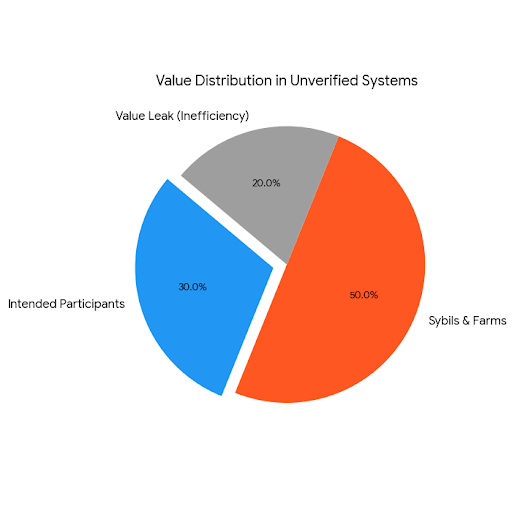
What keeps me cautious is that defining “real” in crypto has never been straightforward. People behave differently depending on incentives, and any system that tries to formalize that will eventually run into situations it didn’t expect. Someone legitimate gets excluded, someone opportunistic finds a loophole. It’s not a clean problem, and I don’t think there’s a clean solution.
There’s also the question of whether projects will actually use something like this in a meaningful way. It’s easy to say distribution should be better, but when it comes time to implement it, most teams default to what’s simple and familiar. Integrating a credential layer requires effort, and in a market that moves this fast, effort often gets skipped in favor of speed.
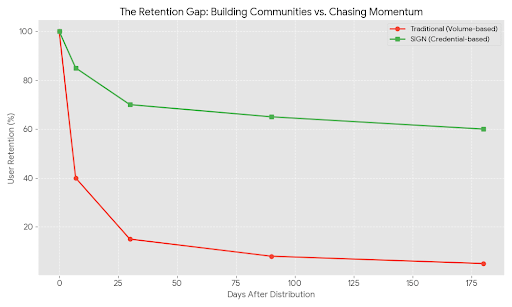
At the same time, it’s getting harder to ignore how much value leaks through bad distribution. It doesn’t just affect token prices, it affects trust. Communities lose confidence, governance gets skewed, and long-term participants get diluted by short-term actors. If SIGN can reduce even a small part of that, it becomes more important than it looks on the surface.
Still, I don’t see it as something that suddenly changes everything. It feels more like a tool that might quietly become necessary over time, assuming the ecosystem matures enough to care about these details. Right now, most of the attention is still on momentum, not mechanics. People chase movement, not structure.
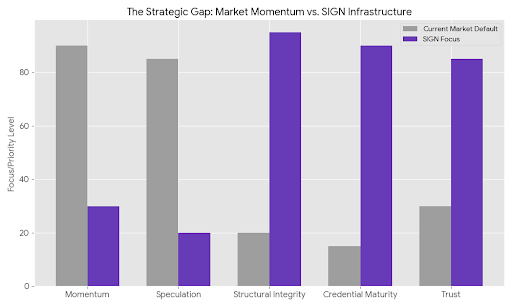
So I’m left somewhere in between. It doesn’t feel like noise, but it doesn’t feel proven either. It’s one of those projects that sits in the background, potentially useful, potentially ignored, depending on how the rest of the market evolves. And I’ve learned not to assume the market will choose the better option just because it exists.