

As I noted in today’s Nikkei, the deterioration in the Iran situation is driving a non-traditional market reaction. Over the past 30 days, equities declined (S&P 500 -3.46%, Nikkei -3.88%) while VIX rose +18.8%, signaling rising uncertainty. At the same time, USD strength and a +26bp rise in the U.S. 10-year yield point to tightening financial conditions.
The key anomaly is gold. Despite geopolitical risk, gold fell -3.19%. It had already shown signs of overheating in recent months, making it vulnerable to profit-taking. More importantly, this crisis triggered an inflation shock via energy supply risks, pushing yields higher. As a non-yielding asset, gold faced pressure from both rising rates and a stronger dollar.
Bitcoin, meanwhile, showed relative strength (+6.34%), but not as a safe haven. Its positive correlation with equities (+0.70) and negative correlation with VIX (-0.63) confirm it still behaves as a risk asset. The early surge reflects event-driven flows rather than structural demand.
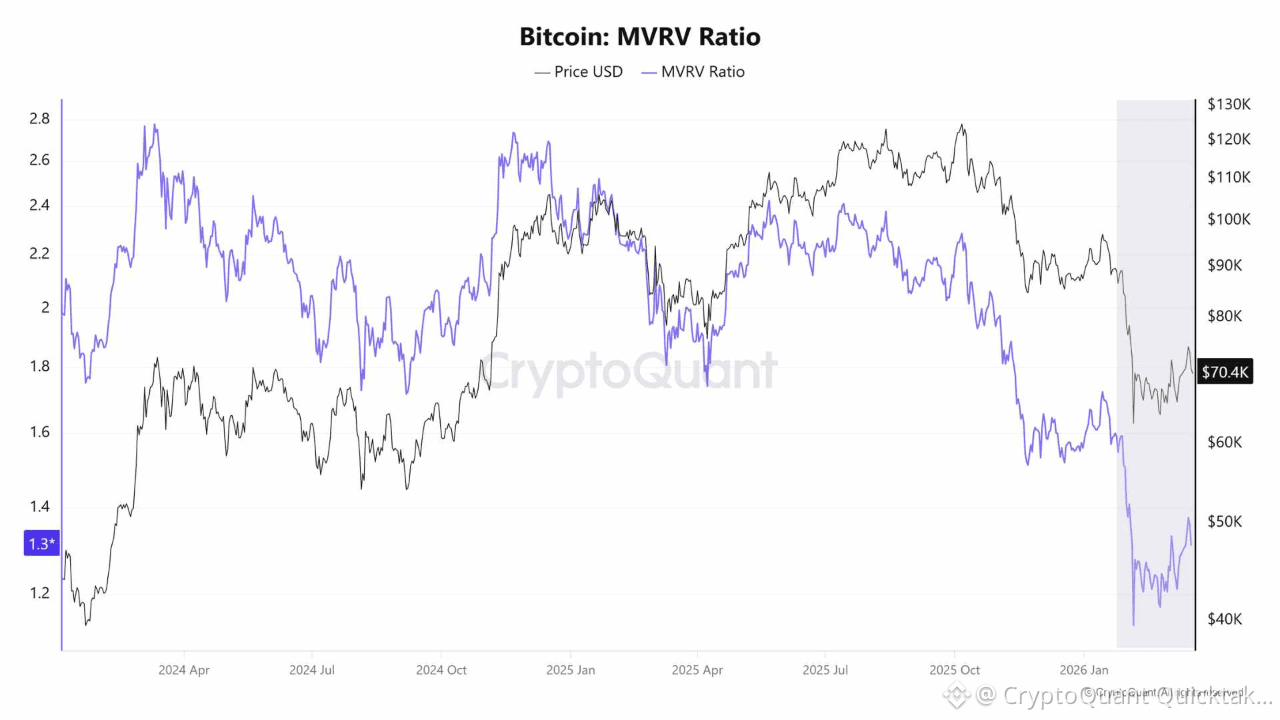
On-chain data provides context. MVRV around 1.3 suggests a neutral to slightly undervalued state, indicating no excessive overheating. Combined with stable long-term holder behavior, current selling pressure likely comes from short-term participants.
Overall, the market is being redefined by inflation, rates, and liquidity. This is not a collapse, but a repricing phase.
Written by XWIN Research Japan