

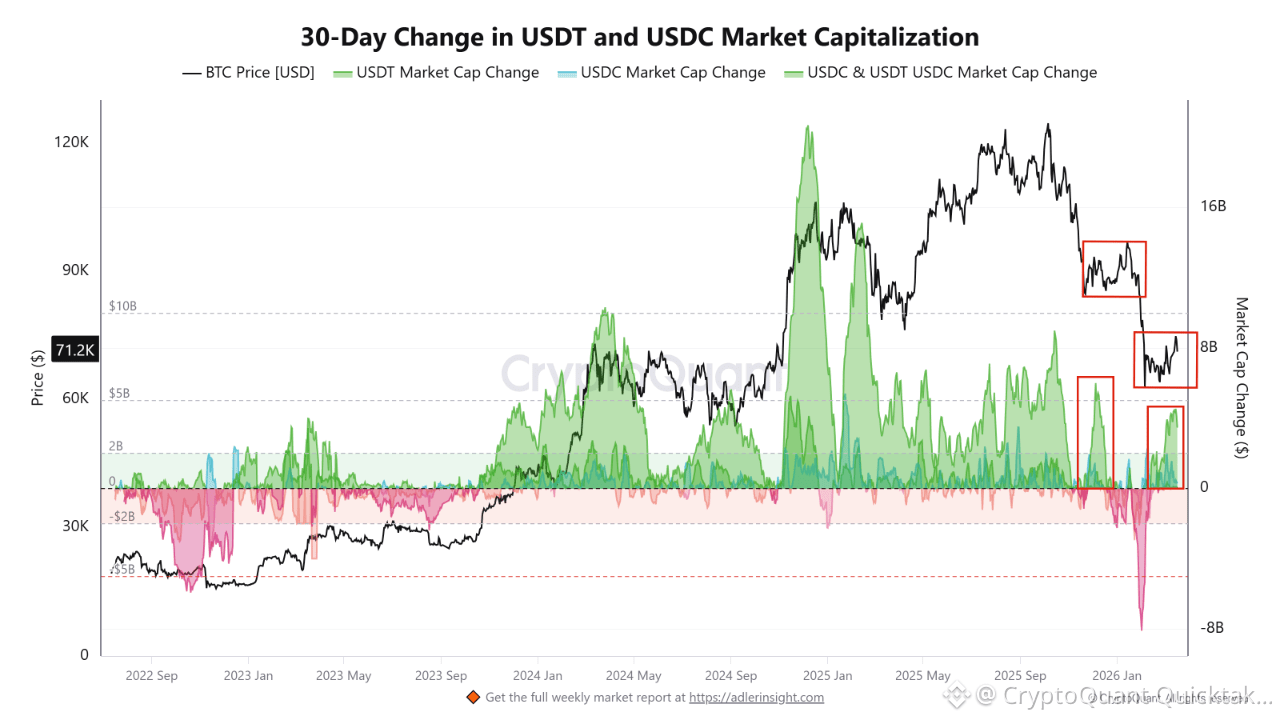
The latest 30 day flow data highlights a clear divergence between USDT and USDC as BTC begins to lose its clean directional trend. USDT continues to record relatively stable inflows, indicating that liquidity is still entering the market, but in a more selective and cautious manner rather than aggressive expansion.
In contrast, USDC is showing sharper and more persistent outflows, including a recent notable contraction. This kind of movement often reflects institutional rebalancing, regional liquidity preferences, or sensitivity to regulatory conditions. When two dominant stablecoins move out of sync, it signals fragmentation in liquidity rather than a unified risk-on environment.
From a broader macro perspective, this pattern typically emerges during a transition phase. Liquidity is not leaving the system entirely, but it rotates unevenly across different instruments. This reduces overall conviction and makes price action more dependent on short term flows instead of sustained capital deployment.
BTC price behavior aligns with this shift. After a strong rally, the market has moved into a more volatile and less decisive range. When stablecoin flows lose synchronization, follow through weakens, and price becomes more reactive than directional, increasing the likelihood of choppy conditions.
In this context, a further corrective leg becomes a reasonable scenario rather than an immediate continuation. If the pullback happens while USDT inflows remain stable and USDC outflows begin to stabilize, it would suggest capital is still present and simply repositioning. Until liquidity flows resynchronize, the current structure supports the view of a market in transition, where another adjustment phase may be needed before a clearer trend can re emerge.
Written by CryptoZeno