
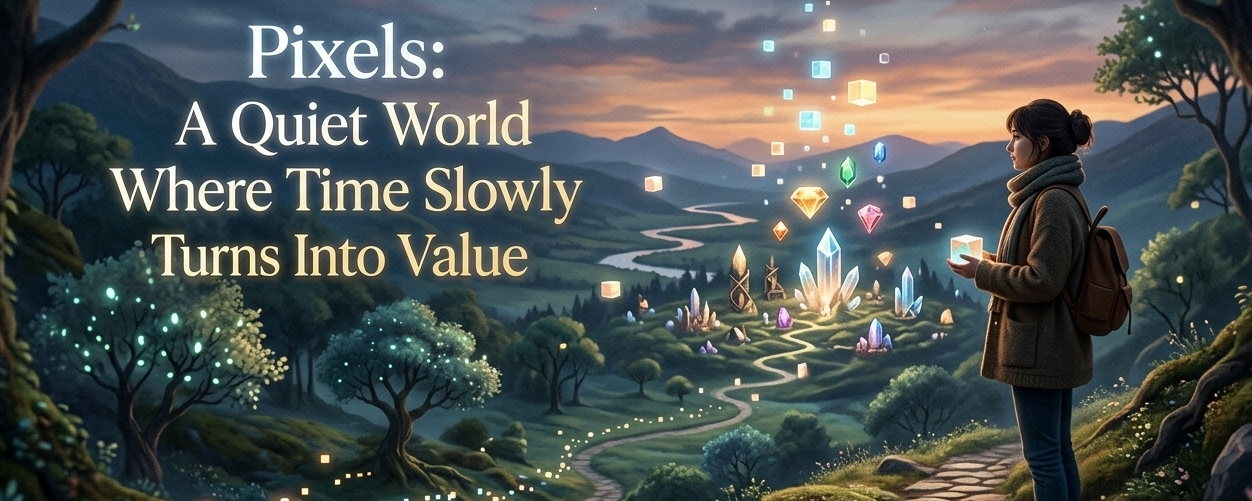
Pixels does not rush to impress you. It feels more like walking into a quiet village than opening a game. At first, nothing looks urgent. A small patch of land, a few tools, and a simple task—plant something, wait, come back. It sounds ordinary, and in a way, it is. But that is exactly where its strength begins.
This is a social, casual Web3 game built on the Ronin Network, yet it does not throw technical words at you. You do not need to understand blockchain to start playing. You just move, farm, explore, and slowly realize that your time and effort have meaning beyond the screen.
I remember the first time I watered a crop in Pixels. It was late evening, maybe around 9:30, and I almost logged off because it felt too simple. But then I came back later and saw the change. That small moment waiting and returning explains the whole game better than any feature list.
Pixels is built around three quiet ideas: farming, exploration, and creation. But these are not just activities. They are habits. Farming teaches patience. Exploration rewards curiosity. Creation gives a sense of ownership, even if what you build is small.
And yes, it is slow. Sometimes almost too slow.
That slowness is not an accident. In most games today, everything is designed to grab attention quickly. Pixels does the opposite. It lets you settle in. You don’t chase constant rewards. You build a routine instead. For some players, this feels refreshing. For others, it feels boring. Both reactions are valid.
The Web3 layer sits underneath all of this. The PIXEL token and in game assets are not just decorations they connect your time in the game to real value. Land, items, and progress can have economic meaning. But interestingly, the game does not push this aggressively. It lets players discover it naturally.
That quiet approach has shaped its community. Instead of loud hype, you often see players sharing small wins harvests, builds, discoveries. There is a kind of calm energy around it. Not perfect, but steady.
From a broader view, Pixels reflects a shift in Web3 gaming. Earlier projects focused heavily on earning first, gameplay second. That model struggled. Pixels leans the other way. It builds a playable world first, then layers value on top. Developers keep updating systems, balancing rewards, and adjusting how the token fits into the economy. You can see active work happening, not just promises.
Still, it is not flawless. The economy needs careful balance, and long-term engagement depends on how well new content arrives. A slow game must keep growing, or it risks becoming empty.
There are moments when the game feels almost too quiet, like something is missing but you can’t name it.
And then you log in again.
You water crops, walk a little further than before, maybe meet another player doing the same thing. Nothing dramatic happens. But something builds, slowly and almost invisibly.
Pixels does not try to be everything. It just tries to be a place where time matters in a gentle way. And strangely, that is what makes it stand out.
