
Refunds are regarded as a secondary thing in most payment systems. The emphasis is made on the direction of money flow, whereas the reversals are processed inconsistently or manually and even not at all. This is only effective when the volume of transaction is small. Immediately the volume of commerce increases, refunds are one of the weakest links in the system, revealing the faults that were not originally intended to provide the service in real life situations.
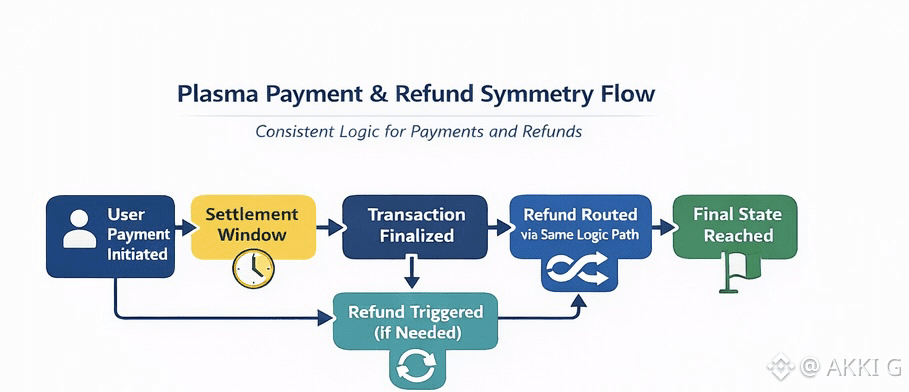
Plasma approaches Money back system is not an exception, but a fundamental element in payment infrastructure. In actual trade, reability is not a failure. They can be anticipated results of returns, disputes, cancellations, and services adjustments. Systems that fail to consider this fact cause tension to businesses and irritation to users.
Plasma is structured in such a way that there has to be a refund provided in the same logical structure as the payment made in the first place. The reversal of the transaction is not made individually. Rather, it is correlative, dated and carried out under the same regulated order that settles. This symmetry is important in that it maintains clarity. Records remain clean. The entries on the books go well together. The compliance teams are able to see the entire lifecycle of a transaction without time consuming re assembling of events.
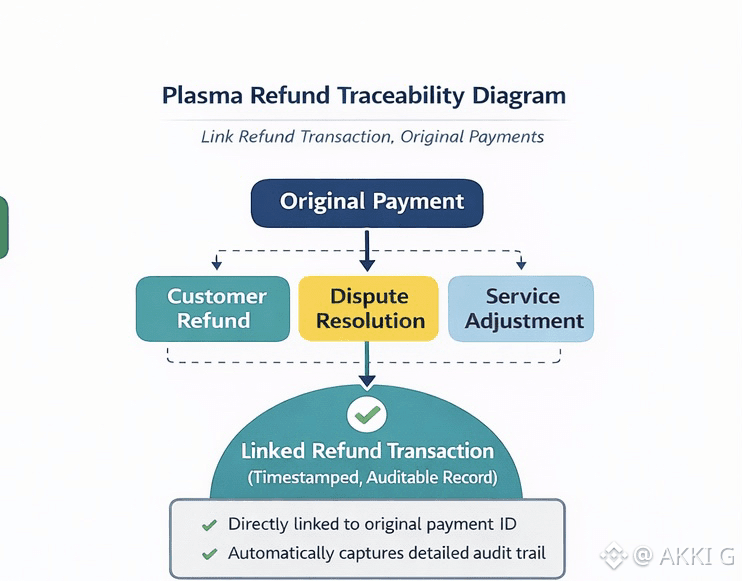
Besides, trust is directly influenced by the logic of refund. A predictability of reversal will make the customers feel safer during their transactions. Merchants also do business with greater confidence since they will not receive refunds as an unexpected hit on their cash flow. The platforms lower the support overhead when the disputes are solved with the help of structured procedures instead of improvisation. Plasma makes this complexity absorbed at the infrastructure level in such a way that businesses can concentrate on the service aspect and not on exception handling.
The difference between the approach of Plasma is that it does not consider refunds as the damage control. Rather, refunding is programmed as the normal operation of the system. This is a sign of an adult awareness of business, in which reversibility does not signify vulnerability, but stability. Systems are stable when subjected to pressure when they look ahead.
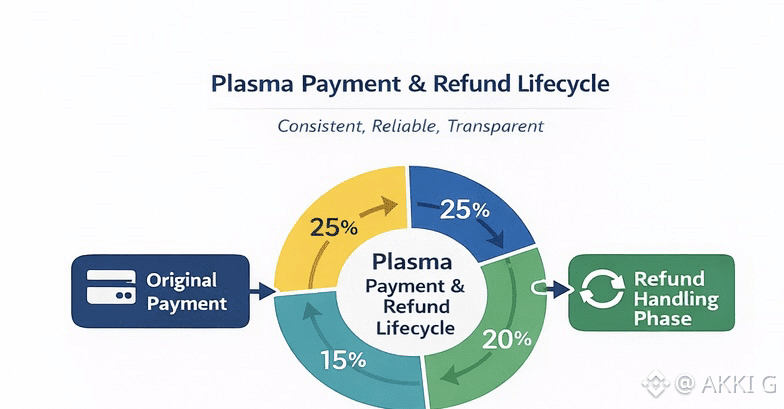
In my opinion, the design of a refund is among the most obvious indications of a payment system that recognizes the use in the real world. The focus on symmetry, traceability and predictability reflected in plasma depicts long term thinking. A system with graceful handling of the refunds does not gain the trust by its perfection, but rather by its readiness.

