
The state changes, and nothing reacts.
On Dusk Foundation (#Dusk ), the transaction reaches finality the same way it always does. Clean. Deterministic. No alert rises to meet it. No message asks for acknowledgment. The interface updates and then becomes ordinary again.
I look at it longer than necessary.
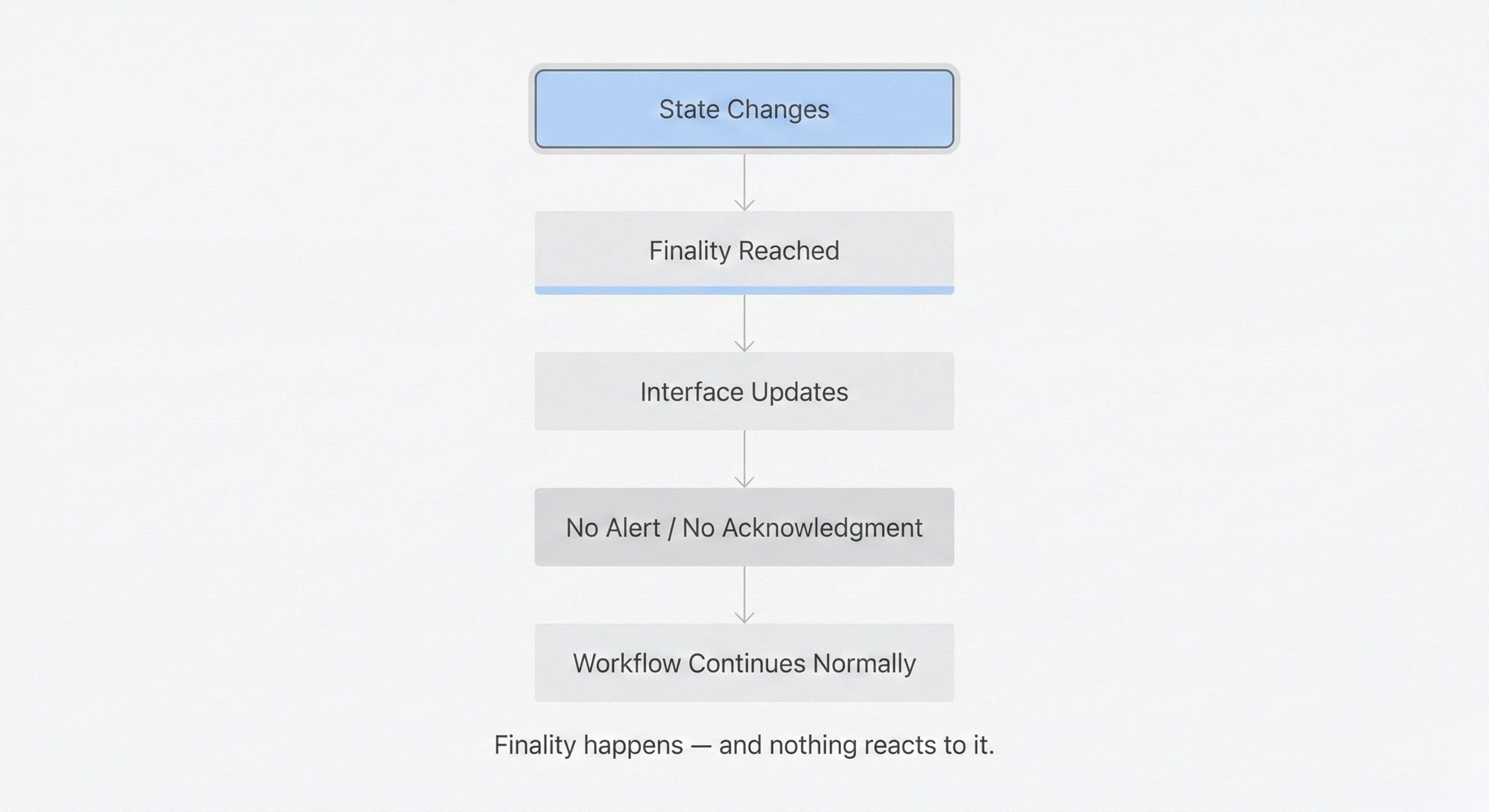
There’s no thrill attached to the moment. No signal telling me this is where attention should go. The confirmation doesn’t try to be seen. It just sits there, complete, as if that were enough.
Usually, completion brings noise. A confirmation banner. A follow-up step lighting up. Some cue that tells everyone else it’s safe to move. Here, nothing asks for that. The system has finished, and it doesn’t wait for recognition.
I refresh once. Not because I doubt it, but because the absence of reaction feels unusual. Same state. Same timestamp. Final.
On Dusk, this kind of finality is routine. It doesn’t reward observation. It doesn’t punish distraction. It simply holds. The result doesn’t decay while you look away, and it doesn’t change when you look back.
I notice how that affects behavior.
No one rushes in after the fact. No one stacks actions on top of the completion to reclaim momentum. The workflow doesn’t surge forward to compensate for the quiet ending. It just continues, one step at a time, as if nothing special happened.
The lack of feedback is deliberate. Reliability replaces reassurance. The system doesn’t confirm itself twice. It assumes the state speaks for itself.
I check the details again. Everything aligns. No loose ends. No follow-up required. The finality isn’t provisional. It isn’t waiting to be interpreted. It’s already settled.
That’s when it feels heavier than expected.
Without spectacle, trust becomes private. You either accept that the state has changed, or you keep checking until you’re satisfied. There’s no external moment that tells you when to stop.
I realize how often confidence is borrowed from noise. A sound. A signal. A shared acknowledgment that marks completion as real. On Dusk, that marker doesn’t exist. Finality arrives without asking anyone to notice.
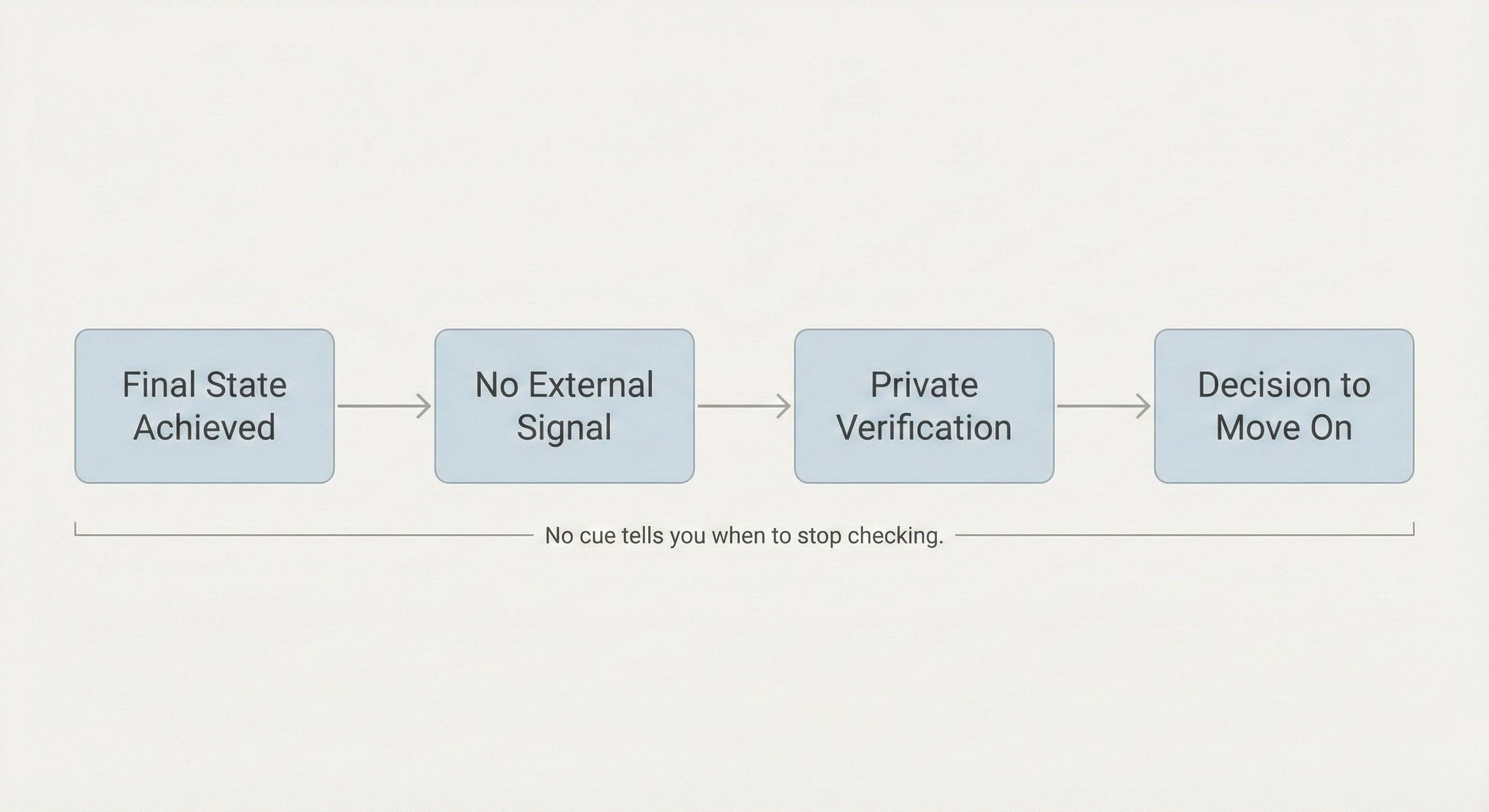
The process doesn’t slow down because of this. It also doesn’t speed up. It remains indifferent to how the result is received.
I move on, but not immediately.
I check once more, even though nothing suggests I should.
Not because I expect it to change.
Because I want to be sure I’m comfortable treating something as finished when it doesn’t announce itself.
