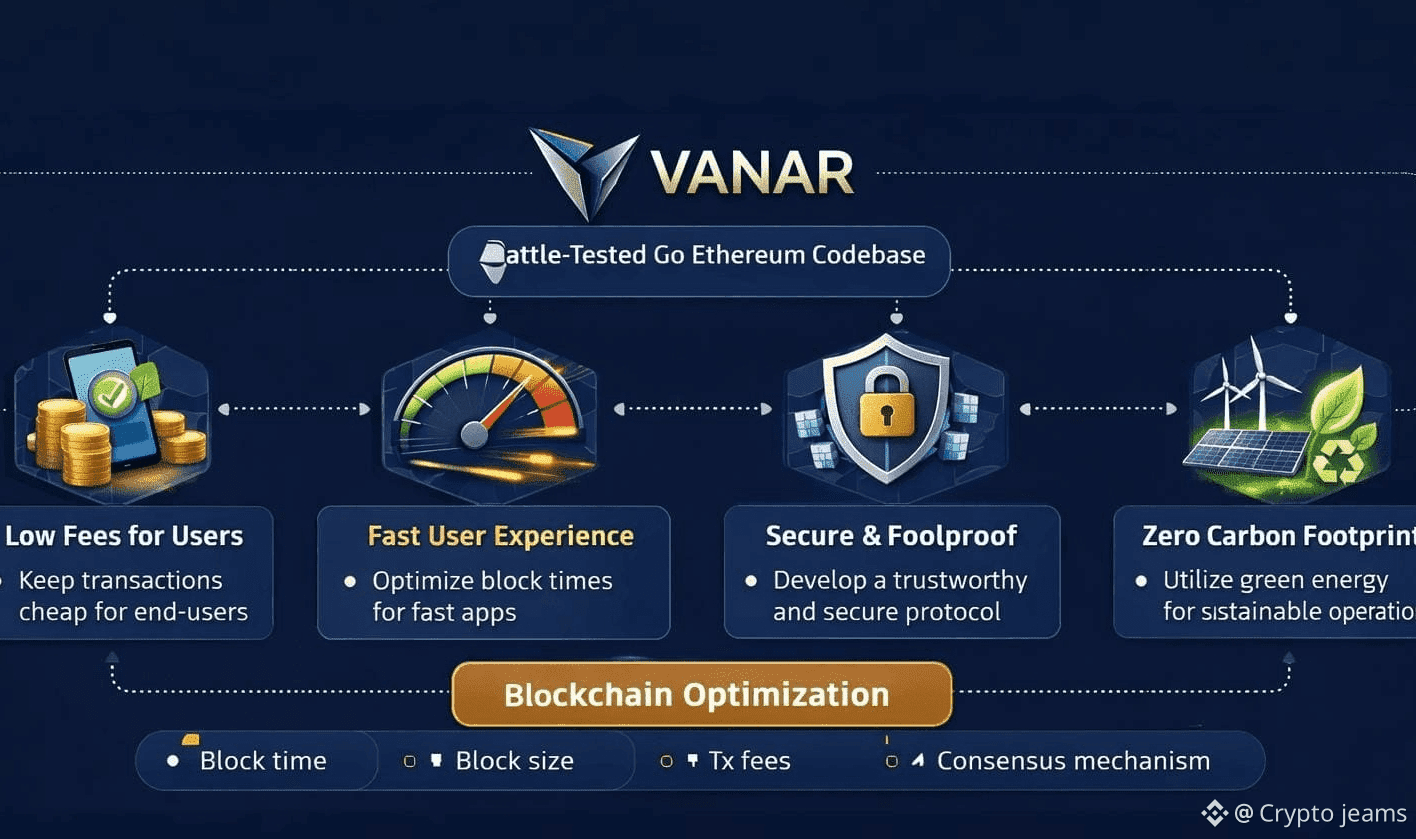
There's something almost poetic about naming a blockchain after Vanar, the monkey god from Hindu mythology who could change shape and leap between worlds. Because that's exactly what Vanar Chain is trying to do—transform how we think about blockchain technology and bridge the gap between Web2's familiar comfort and Web3's decentralized promise.
Beyond the Buzzwords
Let's be honest: the blockchain world has a credibility problem. For every genuine innovation, there are a dozen projects drowning in jargon, promising to revolutionize everything while delivering little more than hype and speculation. So when another blockchain platform emerges, skepticism is the healthy response.
But Vanar Chain caught my attention for a different reason. Instead of shouting about being the fastest or the most decentralized or the blockchain to end all blockchains, it's focused on something more fundamental: making blockchain technology actually usable for the businesses and creators who've been watching from the sidelines.
The Speed Question
Here's where things get technical, but stick with me because it matters. Vanar Chain claims transaction speeds of up to 30,000 per second with near-instant finality—meaning transactions are confirmed in about a second. For context, that's roughly the speed you'd need to run something like a global gaming platform or a busy e-commerce marketplace.
The magic happens through something called a Directed Acyclic Graph (DAG) architecture combined with proof-of-stake validation. Think of it less like a single-file line of blocks and more like a web of interconnected transactions that can be processed simultaneously. It's blockchain technology that's shed some of the original constraints that made earlier systems slow and expensive to use.
The Real-World Angle
What makes Vanar interesting isn't just the technology—it's what they're building on top of it. The platform has partnerships with Google Cloud and includes something called the Virtua metaverse, a virtual world where brands can create experiences without needing a PhD in blockchain engineering.
Imagine a fashion brand wanting to launch digital wearables, or a musician creating exclusive content for fans, or a game developer building a play-and-earn experience. Traditionally, they'd need blockchain developers, smart contract auditors, wallet integrations, and a tolerance for technical headaches. Vanar is betting that lowering these barriers—making blockchain feel as simple as launching a website—will finally bring mainstream adoption.
The Carbon Conversation
Here's something that doesn't get talked about enough: blockchain's environmental footprint. Bitcoin and early Ethereum consumed absurd amounts of electricity, drawing legitimate criticism. Vanar Chain markets itself as carbon-neutral, using proof-of-stake consensus that requires a fraction of the energy of proof-of-work systems.
Whether this makes it genuinely "green" is debatable—carbon neutrality often involves offsets rather than elimination—but at least the conversation is happening. The blockchain space is slowly recognizing that burning small countries' worth of electricity isn't sustainable, ethically or practically.
The Skeptic's Corner
Full transparency: I approach new blockchain projects with healthy skepticism. The space has seen too many grand promises evaporate, too many roadmaps that led nowhere, too many communities left holding worthless tokens.
Vanar Chain is still relatively young. High transaction speeds in controlled environments don't always translate to real-world performance under stress. Partnerships with big names sound impressive until you read the fine print and realize they're often just infrastructure agreements, not endorsements. And the metaverse space—well, let's just say it's had a rough couple of years meeting expectations.
The question isn't whether the technology works in theory. It's whether Vanar can build a genuine ecosystem—developers creating applications, users finding value, businesses solving real problems—rather than just another speculative playground.
What Success Would Look Like
If Vanar Chain succeeds, you probably won't know you're using it. That's the point. Success means the blockchain fades into the background while experiences come to the foreground. You'd buy a concert ticket that happens to be an NFT without caring about the underlying technology. You'd play a game that rewards you with tradeable items without thinking about smart contracts. You'd verify your identity without manually managing cryptographic keys.
The vision is blockchain as infrastructure, not as an identity. The internet works because most people never think about TCP/IP protocols or DNS servers. Blockchain needs that same invisible reliability.
The Bigger Picture
Vanar Chain exists in a crowded landscape. Ethereum, Solana, Polygon, Avalanche, and dozens of others are all competing for developer attention and user adoption. Each has different trade-offs between speed, security, and decentralization. Each promises to be the platform where Web3 finally clicks.
What intrigues me about Vanar is the focus on the translation layer—that space between what blockchain can do technically and what regular humans actually need. The monkey god Vanar could traverse realms and take many forms. Maybe that's exactly what blockchain needs: the flexibility to meet people where they are rather than demanding they cross a chasm of technical complexity.
The Honest Assessment
Will Vanar Chain revolutionize blockchain? Probably not—revolutions are rare, and evolution is more common. But could it carve out a meaningful role in bringing blockchain tools to creators and businesses who've been curious but hesitant? Maybe.
The technology seems solid. The partnerships are real, if not as transformative as headlines suggest. The vision is clearer than most blockchain projects' vague promises. Whether execution matches ambition remains the question that only time—and actual user adoption—can answer.
We're still in the early chapters of blockchain's story. Projects like Vanar Chain are experiments in what this technology might become when it grows up and gets serious about solving real problems instead of just impressing other technologists.
The monkey god could leap between worlds. Whether this blockchain named in his honor can bridge the gap between Web2 and Web3 is a story still being written—one transaction, one application, one user at a time.@Vanarchain #vanar $VANRY