
There's a particular expression a walrus makes when it's content—eyes half-closed, whiskers twitching slightly, body sprawled across ice or rock with the boneless abandon of a creature that has exactly zero concerns about appearances. It's the face of an animal that knows something we don't, some secret about the art of simply being.
We don't talk about walruses enough. They live in the shadow of charismatic polar bears and graceful whales, dismissed as blubbery oddities with ridiculous tusks. But spend any time learning about these animals, and you'll discover creatures of surprising depth, complexity, and—dare I say it—wisdom.
The Anatomy of Wonderful Weirdness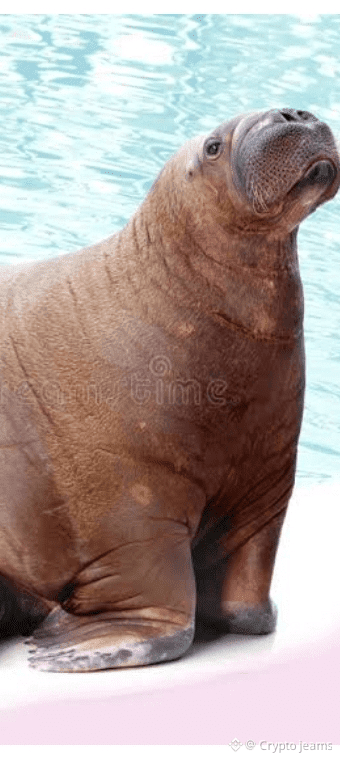
Let's start with the obvious: walruses look absurd. Those tusks—actually elongated canine teeth—can grow over three feet long. Their bodies can weigh up to 4,000 pounds of muscle wrapped in blubber and covered in wrinkled, whiskered skin that ranges from cinnamon brown to pale pink depending on water temperature. They have nearly 700 whiskers, each one a sensitive instrument capable of detecting clams buried in murky seafloor sediment.
But here's what gets me: that seemingly awkward body is a masterpiece of Arctic engineering. Those tusks aren't just for show—walruses use them as ice picks, hauling their massive bodies onto ice floes in a move that would make any rock climber jealous. They use them to create breathing holes in ice, as weapons when necessary, and as displays of status within their complex social hierarchies.
The whiskers? They're so sensitive that walruses can identify individual clam species by touch alone in complete darkness, fifty feet underwater. Imagine navigating your world primarily through your mustache—that's the walrus reality.
The Dive Masters
Walruses can hold their breath for up to thirty minutes and dive as deep as 300 feet, searching for the mollusks and soft-bodied invertebrates that make up their diet. A single walrus might eat 3,000 to 6,000 clams in one feeding session, using those whiskers to root them out and powerful suction to extract the soft meat while spitting out the shells.
Think about that for a moment. They're performing delicate surgical extractions in near-freezing water, in the dark, using only touch and suction. Each dive is a feat of breath control that would make a pearl diver weep with envy.
And when they surface? They can slow their heart rate to continue conserving oxygen, a physiological trick that allows them to rest while still processing their massive meals. Their bodies are tuned to an environment that would kill us in minutes.
The Social Network
Here's where walruses get really interesting. They're intensely social animals, gathering in groups called "haul-outs" that can number in the thousands. These aren't random aggregations—there are hierarchies, relationships, politics.
Young males practice sparring with those impressive tusks, learning the ritualized combat that will determine their social standing as adults. Females form tight bonds, often returning to the same haul-out sites year after year, teaching their calves where to feed and how to survive. Mothers nurse their young for up to two years, one of the longest nursing periods of any seal or sea lion.
They communicate through an astonishing variety of sounds—barks, whistles, tooth-clacking, bell-like calls. Males sing underwater courting songs, elaborate vocalizations that can last for hours. Yes, walruses serenade each other. The ocean holds underwater concerts we're only beginning to understand.
The Climate Refugees
But here's where the story turns bittersweet. Walruses depend on sea ice—as platforms for resting between dives, as protection from predators, as nurseries for their young. And Arctic sea ice is disappearing at a rate that still shocks scientists who've been tracking it for decades.
In recent years, we've seen haul-outs of unprecedented size as walruses crowd onto beaches because there's simply not enough ice. In 2019, over 20,000 walruses gathered on a single beach in Russia. It sounds impressive until you understand it's a sign of desperation, not abundance.
Packed onto land in these massive numbers, walruses—especially calves—can be crushed in stampedes triggered by polar bears, aircraft, or even nearby human activity. It's heartbreaking and preventable, a crisis unfolding in slow motion at the top of the world.
The Intelligence Question
We're only beginning to understand walrus cognition, but early signs suggest we've underestimated them. Walruses in human care have demonstrated problem-solving abilities, memory, and even play behavior. They're curious, investigating new objects with those sensitive whiskers and manipulating things with surprising dexterity.
In the wild, they navigate vast stretches of Arctic ocean, returning to specific feeding grounds and haul-out sites across seasons and years. They recognize individual walruses and maintain social bonds over time. They adapt feeding strategies based on local conditions and learned knowledge passed between generations.
This isn't simple instinct. This is intelligence shaped by one of Earth's harshest environments, where survival requires both physical resilience and cognitive flexibility.
What Walruses Teach Us
There's something profound about an animal that seems designed by committee—tusked and whiskered, blubbery and powerful, ungainly on land but graceful underwater. Walruses exist in contradictions, thriving in an environment that appears hostile to complex life.
They remind us that beauty and functionality don't always align with our aesthetics. That social bonds matter across species. That adapting to your environment doesn't mean conquering it, but finding your particular way of belonging within it.
When I see footage of walruses now—whether hauled out in rumbling, snorting masses or gliding ghost-like through Arctic waters—I see resilience. I see millions of years of evolution creating something perfectly suited to a world we're only beginning to understand.
The Future We Choose
Walruses have survived ice ages and interglacial periods, migrating with the shifting ice over millennia. But climate change is happening faster than evolution can adapt, faster than these long-lived animals can shift their ranges or adjust their behaviors.
The question isn't whether walruses are charismatic enough to deserve protection—though honestly, once you've watched a walrus calf learning to swim or heard an underwater mating call, the charisma question answers itself. The question is whether we value the wild, weird diversity of life on Earth enough to preserve the conditions that allow it to exist.
Walruses didn't ask to become symbols of climate change. They're just trying to live—diving for clams, raising their young, hauling out to rest under the midnight sun. But their fate is tied to choices we're making right now about the kind of planet we'll leave behind.
So maybe it's time we paid more attention to these whiskered philosophers of the Arctic. They've figured out how to thrive in one of Earth's most extreme environments. The least we can do is learn from their example—and protect the ice they need to survive.
Because a world with walruses in it is richer, stranger, and more wonderful than one without them. And we're all better off in a world that makes room for the beautifully bizarre.#walrus @Walrus 🦭/acc $WAL

