
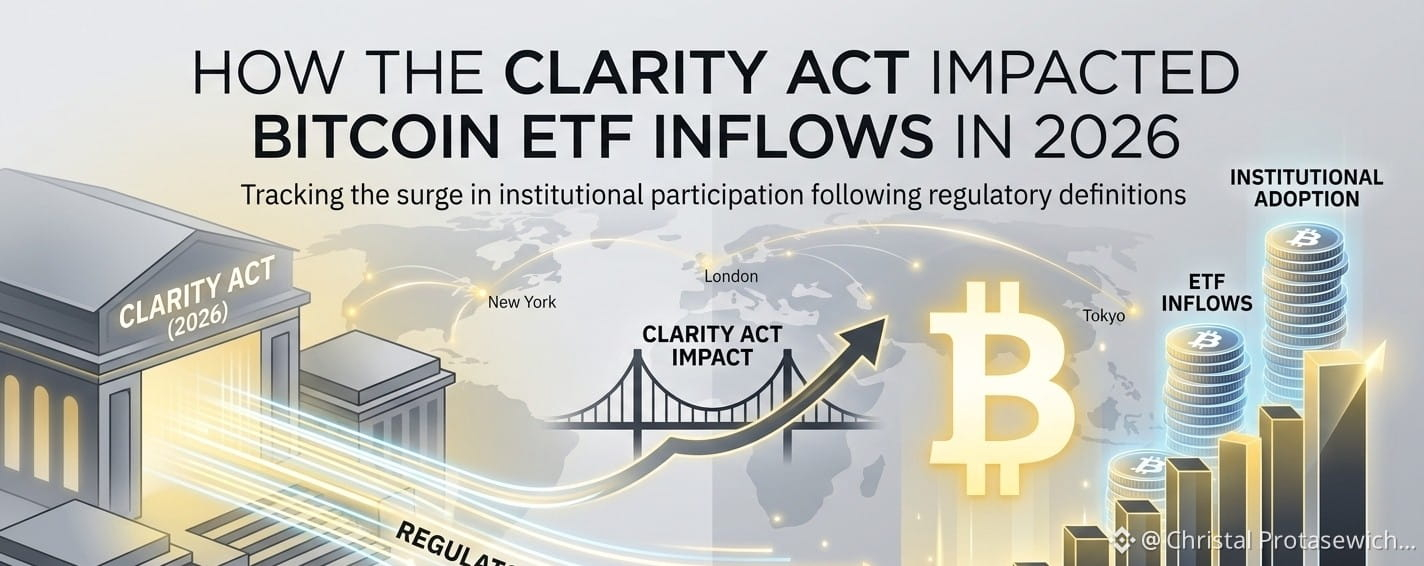
Lanskap investasi aset digital di Amerika Serikat mengalami perubahan besar pada awal 2026. Selama bertahun-tahun, modal institusional hanya mengamati dari pinggir, terhambat oleh model "regulasi melalui penegakan" yang membuat manajer dana berjuang di lautan hukum yang keruh. Semuanya berubah dengan diperkenalkannya dan momentum selanjutnya dari Undang-Undang KETERANGAN Pasar Aset Digital.
Legislasi bersejarah ini tidak hanya memberikan definisi; ia telah bertindak sebagai bahan bakar beroktan tinggi untuk ETF Bitcoin Spot, yang mengarah pada arus masuk yang memecahkan rekor dan restrukturisasi fundamental likuiditas pasar.
Terobosan Regulasi: Apa itu Undang-Undang CLARITY?
Undang-Undang CLARITY (H.R. 3633) berhasil di mana upaya legislatif sebelumnya gagal dengan menetapkan "garis terang" yang jelas antara yurisdiksi SEC dan CFTC.
Dengan mengklasifikasikan Bitcoin secara tegas sebagai Komoditas Digital, undang-undang ini menghapus stigma "sekuritas" yang telah lama memperumit kerangka kepatuhan dari perusahaan-perusahaan besar. Selain itu, pencabutan SAB 121—aturan akuntansi yang membatasi yang sebelumnya membuatnya sangat mahal bagi bank untuk menyimpan aset digital—membuka pintu lebar bagi raksasa perbankan tradisional untuk mengintegrasikan Bitcoin ke dalam penawaran inti mereka.
Dampak pada Arus Masuk ETF Bitcoin: Lonjakan 2026
Pada Maret 2026, pasar menyaksikan rekor terpanjang arus net inflow sejak awal ETF spot, dengan lebih dari $1,16 miliar ditambahkan hanya dalam tujuh hari. Lonjakan ini berkorelasi langsung dengan kepastian hukum yang diberikan oleh kemajuan Undang-Undang ini melalui Komite Perbankan Senat.
#CryptoRegulation #InstitutionalInvesting #BinanceInsights #BTC202 #FintechLaw