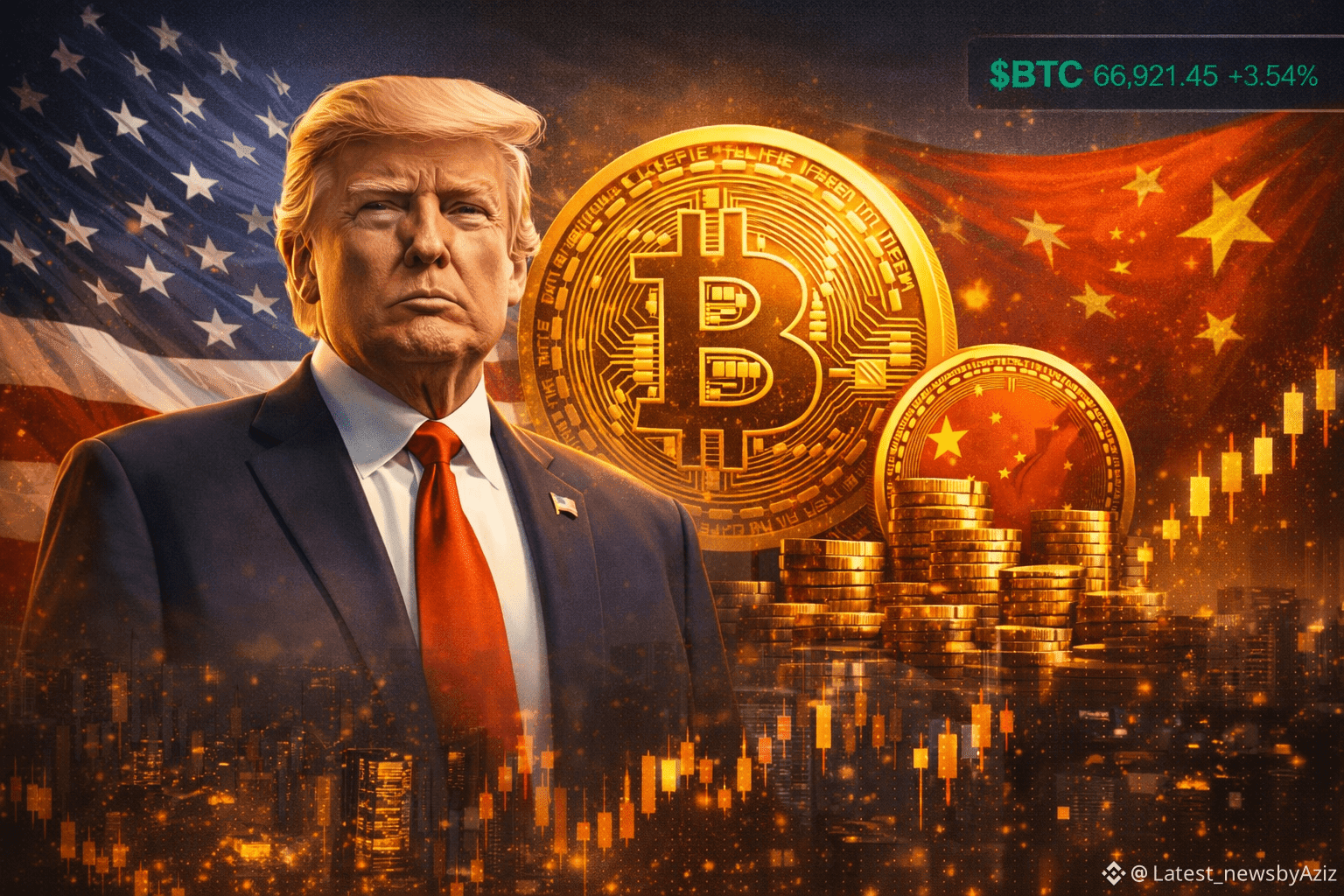
#TrumpTariffs and Crypto: Why Markets Are Watching $BTC Closely
The return of #TrumpTariffs to global headlines has once again stirred uncertainty across financial markets. Whenever trade policies tighten and economic pressure rises, investors begin searching for assets that can protect value — and this is where crypto, especially Bitcoin enters the conversation.
What Are Trump Tariffs?
Donald Trump’s tariff policies focus on imposing higher import taxes on foreign goods to protect domestic industries. While supporters argue that tariffs strengthen local manufacturing, critics warn they can increase inflation, disrupt global supply chains, and trigger trade wars.
Markets generally dislike uncertainty. When tariffs are announced or expanded, stocks often react negatively, currencies become volatile, and capital starts flowing into alternative assets.
Why Tariffs Matter to Crypto
Tariffs don’t directly target crypto, but their economic impact does. Higher tariffs can:
Increase inflationary pressure
Weaken fiat purchasing power
Create instability in traditional markets
In such environments, decentralized assets like $BTC gain attention as a hedge against policy‑driven risk. Bitcoin’s fixed supply and borderless nature make it attractive when governments tighten economic controls.
Bitcoin as a Hedge Against Trade Uncertainty
Historically, Bitcoin tends to attract interest during periods of geopolitical or macroeconomic stress. While it remains volatile, many investors now view $BTC as a form of digital insurance — not controlled by any single country or trade policy.
If Trump‑era tariffs expand or return aggressively, risk‑off sentiment could grow, potentially pushing more capital toward Bitcoin and other major crypto assets.
Market Sentiment: Caution, Not Panic
It’s important to note that crypto does not move on tariffs alone. Interest rates, regulations, and overall liquidity still play major roles. However, tariffs add another layer of uncertainty — and uncertainty often fuels Bitcoin narratives.
For traders and long‑term holders alike, the key is watching how traditional markets react first. Crypto usually follows macro trends with a delay, not instantly.
Final Thoughts
Trump tariffs are more than political headlines — they are economic signals. As global trade tensions resurface, assets like Bitcoin remain in focus as alternatives outside traditional systems.
Whether Bitcoin becomes a direct beneficiary or simply a conversation point, one thing is clear: macro policy decisions continue to shape crypto narratives.
Disclaimer: This content is for informational purposes only and does not constitute financial advice.