ETF
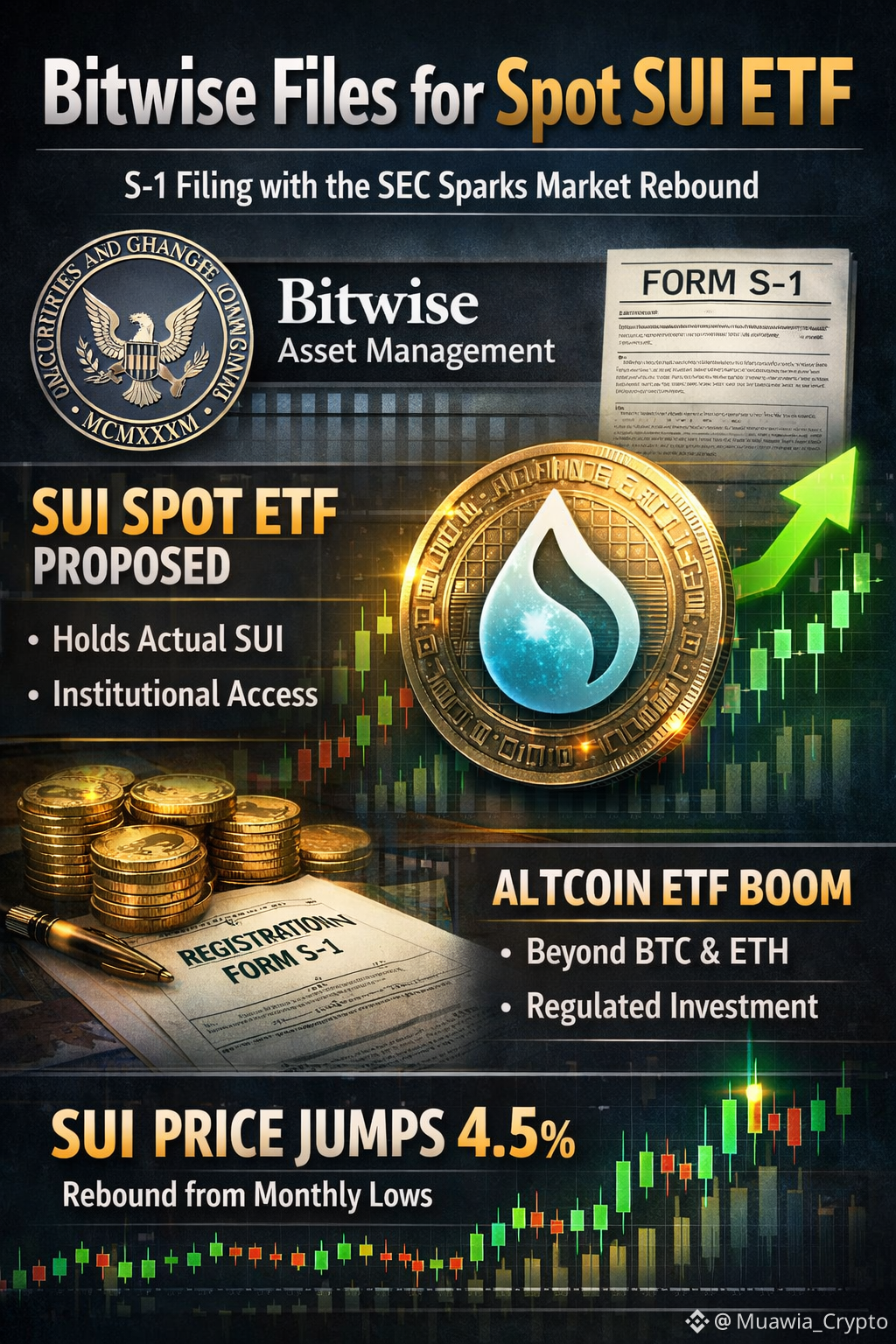
After weeks of persistent downside pressure, SUI finally caught a bid, rebounding roughly 4.5% from its monthly lows. On the surface, the move looked technical. Underneath, however, the catalyst was far more structural — and potentially far more important.
Bitwise Asset Management has officially filed a Form S-1 with the U.S. Securities and Exchange Commission for a spot SUI exchange-traded fund.
This is not a rumor.
This is not a concept paper.
This is the first formal regulatory filing required to bring a spot SUI ETF to market.
Why this filing actually matters
An S-1 filing signals intent. It means legal work is done, custodial arrangements are being defined, and regulators are now part of the conversation. Historically, this is the stage where assets move from “crypto-native speculation” into institutional due-diligence territory.
The proposed product — tentatively named the Bitwise Sui ETF — is designed to hold spot SUI directly, not futures or synthetic exposure. That distinction is critical.
Spot ETFs: • Require real token acquisition
• Introduce structural demand
• Reduce friction for traditional capital
• Bypass wallets, private keys, and on-chain complexity
In other words, this is infrastructure, not hype.
Context matters: SUI wasn’t rallying before this
Leading into the filing, SUI had been under steady pressure, drifting lower alongside broader altcoin weakness. There was no momentum narrative, no breakout structure, and no speculative frenzy pricing this in.
That’s what makes the reaction important.
As the filing became public, selling pressure stalled, price stabilized, and buyers stepped in — reversing part of the recent downtrend almost immediately. This wasn’t euphoria. It was repricing.
The bigger picture: altcoin ETFs are no longer theoretical
This filing doesn’t exist in isolation. It comes amid a broader wave of ETF exploration across the altcoin landscape, as asset managers look beyond Bitcoin and Ethereum toward high-throughput, next-generation networks.
For institutions, the appeal is obvious: • Exposure via regulated wrappers
• No custody risk on balance sheets
• Clear compliance pathways
• Portfolio diversification beyond BTC/ETH
SUI’s inclusion in this conversation signals that it’s being evaluated not just as a token — but as an investable network.
What to watch next
An S-1 filing does not mean approval is guaranteed, and timelines can stretch. But markets don’t wait for final approval — they move on trajectory.
Key things to monitor going forward: • SEC feedback and amendments
• Custodian disclosures
• Authorized participant structure
• Broader risk-on sentiment in altcoins
For now, one thing is clear:
SUI is no longer trading solely on narratives — it’s entering the regulatory arena.
And that changes how serious capital looks at it.
---