Patience, Process, and the Power of Staying Disciplined
Trading is often misunderstood. Many people see the profits, the numbers, the screenshots, and they assume the journey is easy. What they don’t see are the hours of observation, the missed trades, the emotional battles, and the discipline required to follow a plan even when the market tempts you to break it. This post is not about hype or excitement. It’s about the mindset that creates consistency.
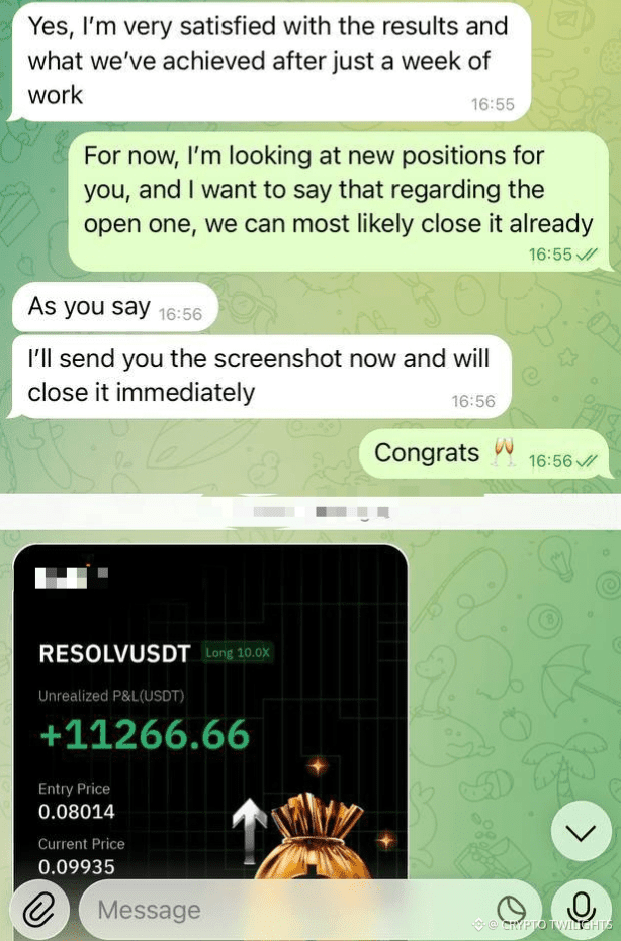
The conversation in the image reflects something very important: trust in the process. When someone says they are satisfied after just a week, it doesn’t mean the market was generous. It means the approach was correct. Markets reward structure, not emotions. A calm, rule-based strategy will always outperform impulsive decisions in the long run.
One of the biggest mistakes traders make is focusing only on outcomes. Profit feels good, loss feels bad—but both are incomplete stories. The real question is always the same: Did you follow your plan? If the answer is yes, then you are growing, regardless of the result. If the answer is no, then even a profitable trade can be dangerous because it reinforces bad habits.
Patience is a skill most people underestimate. Waiting for the right setup is harder than entering a random trade. Doing nothing feels unproductive, but in trading, patience is often the most profitable action. The market will always give opportunities. Your job is not to catch every move, but to catch the right ones.
Risk management is another silent hero behind every successful trade. Protecting capital is more important than increasing it. A trader who survives bad days stays in the game long enough to benefit from good ones. Small, controlled risk keeps emotions stable and decisions clear. Once emotions take control, logic leaves the room.
Closing a position at the right time is also a form of discipline. Many traders give back profits because they want “just a little more.” The market doesn’t owe anyone anything. Taking what the market offers and stepping away is a sign of professionalism, not fear. Consistency comes from repeating good decisions, not from chasing perfection.
There is also a strong lesson here about clarity and communication. Whether you trade alone or with others, clarity removes doubt. When expectations are clear, execution becomes smoother. Confusion leads to hesitation, and hesitation often leads to mistakes. Simplicity is powerful.
Another important point is focus. One clean trade is often better than ten forced ones. Overtrading usually comes from boredom, impatience, or the need to feel active. Professional traders understand that capital grows when they trade less but trade better. Quality will always beat quantity.
Mindset plays a bigger role than strategy. Two traders can use the same system and get completely different results. The difference is emotional control. Fear makes people exit too early. Greed makes them stay too long. Discipline keeps both in check. A calm mind sees the market more clearly.
Losses are not the enemy. Uncontrolled losses are. Every trader takes losses—what matters is how you respond to them. Do you revenge trade, or do you step back and reassess? Growth happens when you treat losses as feedback, not as failure.
Progress in trading is not linear. Some weeks will be slow. Some days will test your patience. But consistency comes from showing up every day with the same mindset, the same rules, and the same respect for risk. Small improvements, repeated over time, create big results.
Finally, remember this: the market rewards discipline, not desperation. Stay focused on the process. Let your results be a byproduct of correct actions. You don’t need to impress anyone. You just need to protect your capital, respect your rules, and stay patient.
One good trade feels nice.
Good habits build careers.