

@Lorenzo Protocol I used to think the responsible way to be in crypto was to watch everything. A tab for yields, a tab for TVL, a tab for price alerts. If the numbers moved, I felt prepared. It took a couple of rough market weeks to admit the truth: monitoring is not the same as control. Seeing something happen is different from having a clean way to respond when it does.
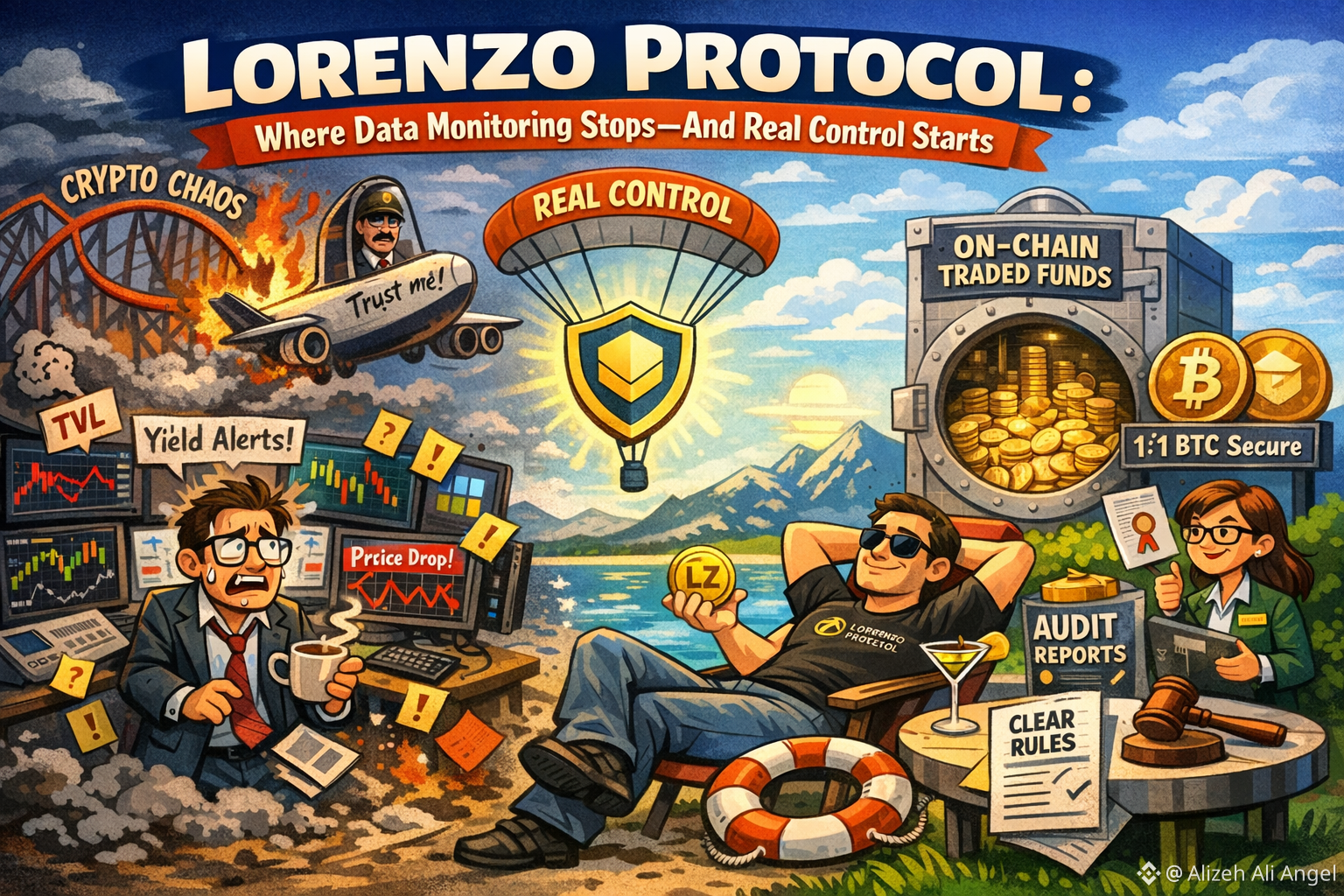
That distinction feels sharper in late 2025 because tokenization has started creeping into the boring parts of finance. UniCredit issuing a tokenized structured note isn’t a cultural flex. It’s an attempt to make issuance more digital, less manual, and cheaper to run. JPMorgan has also moved in that direction with a tokenized money-market fund, taking a familiar, regulated idea and expressing it as blockchain-native shares. Both moves are small, but they change expectations.
And that shift in expectations is exactly where Lorenzo Protocol becomes more than “another protocol people are talking about.” When tokenization moves into real finance, the standard rises. It’s no longer enough to track a position and feel informed. People want products that behave like proper financial instruments: clear ownership, predictable exits, and rules that don’t change depending on who’s holding the keys that day. Lorenzo’s relevance is that it tries to take the messy, improvised parts of on-chain investing and package them into something closer to a real structure—something you can hold, understand, and redeem without needing a private relationship with a market-maker or a fund desk.
That’s why the phrase attached to it—where data monitoring stops and real control starts—lands for a lot of adults who’ve been through at least one full cycle. Because monitoring was the crypto “grown-up move” for years. It was the discipline. But the last few cycles taught people that being early, being active, and being informed still doesn’t protect you from weak guarantees. If a strategy gates withdrawals, if valuation is opaque, if decisions are made off-chain and explained later, then the user is still basically watching the glass cockpit while someone else flies.
Lorenzo positions itself as an on-chain asset management platform that wraps investment strategies into tokenized products, including what it calls On-Chain Traded Funds. In plain language, a vault holds deposits, and you receive a token that represents your share of a strategy. On paper, that sounds simple. In practice, it matters because this token shape is what turns “I put money somewhere” into “I hold a defined claim.” A token can be transferred, collateralized, and integrated across DeFi in a way that a basic deposit receipt can’t. That portability is not a gimmick; it’s a kind of control. It gives you options.
The more important point is what Lorenzo is trying to do with clarity. Instead of asking users to trust a manager update or interpret a dashboard, the strategy is expressed as a product with a net asset value that’s meant to be visible on-chain. That’s not just nicer reporting. It’s a different attitude toward accountability. Even when strategies involve off-chain activity—something Lorenzo is open about—the attempt is to bring the results back into a structure where users can audit the shape of the outcome, not just accept the narrative.
This is where Lorenzo starts to feel especially relevant right now, not in a theoretical “future of finance” way, but in the practical mood of the market in late 2025. People are tired of cleverness. The appetite is shifting toward systems that can survive stress. That includes more mature risk conversations, more attention to audits, and a growing preference for products that don’t require constant babysitting. In other words, the market is slowly rewarding boring reliability. Lorenzo’s promise, whether it fully succeeds or not, sits inside that trend.
Control also shows up in the rights baked into the product. Can you redeem on terms that were defined upfront? Can you verify how gains and losses are counted instead of trusting a spreadsheet? Can you see who has permission to move funds, and under what constraints? Those questions aren’t philosophical. They’re what people ask after they’ve been surprised once. Lorenzo’s relevance is that it tries to make those questions answerable without back channels. Even skeptical users tend to respect that direction, because it treats investor concerns as legitimate, not as fear.
The Bitcoin side of Lorenzo is another reason it’s being watched closely. For years, BTC holders have lived with a quiet contradiction: they want to do something productive with their Bitcoin, but they don’t want to move into a different asset and call it “yield.” Lorenzo’s stBTC concept, tied to Bitcoin staking through Babylon, aims to let holders keep BTC exposure while gaining utility elsewhere. And enzoBTC, framed as a 1:1 backed wrapped token, speaks to that same desire: use the asset without mentally crossing the line into “selling.”
This matters because Bitcoin culture is conservative for a reason. It’s built around not taking unnecessary risk with the asset that already “works.” So when a protocol gets BTC holders to pay attention, it usually means it’s offering something that aligns with their identity: optionality without betrayal. That’s a strange sentence, but it’s real. And it’s why products that can bridge Bitcoin into wider capital markets—without asking users to abandon their core thesis—are trending now.
None of this removes the hard part. It would be careless to talk about “real control” without naming where it can break. Any system that depends on managers, relaxers, or custody partners introduces concentration risk. Any system that reports off-chain performance needs strong guardrails around integrity. Lorenzo’s relevance isn’t that it magically removes these issues. It’s that it sits in the zone where the industry is finally forced to face them honestly. If tokenization is going mainstream, these are the questions that won’t go away.
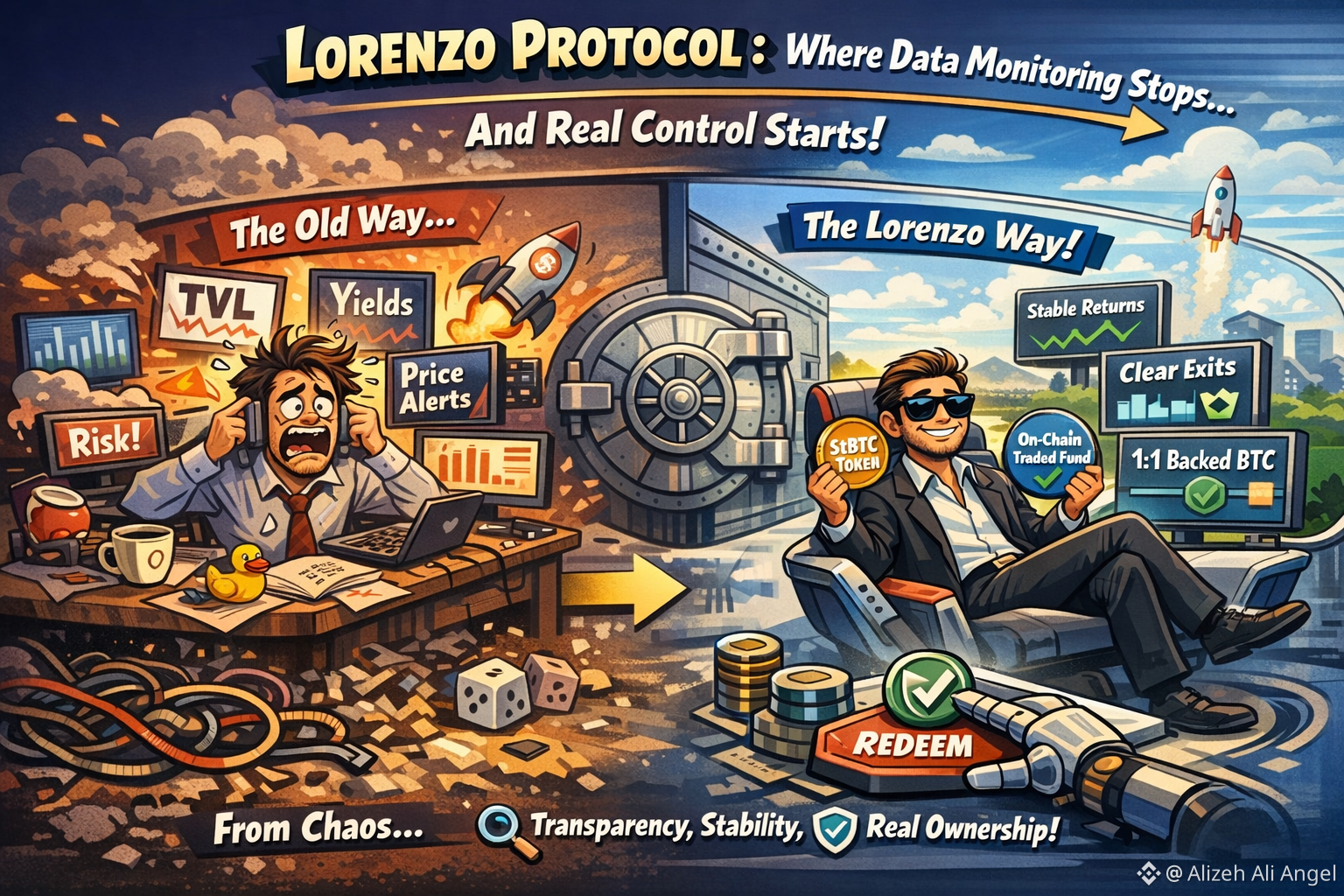
The broader world is coming to the same conclusion. Regulators and standard-setters aren’t saying “don’t tokenize.” They’re saying: be careful what you’re promising people they actually own. Tokenization can add speed and efficiency, sure—but it can also blur the line between the asset and a digital wrapper around the asset. And that’s basically Lorenzo’s pitch, just in a calmer voice: the structure isn’t a detail—it’s the product.
What makes this moment feel different from five years ago is the progress in the boring disciplines. Better audits. Cleaner product design. Fewer “trust me” bridges between what’s promised and what’s delivered. Lorenzo Protocol is relevant because it’s trying to live in that more disciplined era, where protocols are judged less on narratives and more on whether their design holds up under pressure.
If Lorenzo ends up mattering long-term, it won’t be because it gave people more data to stare at. It’ll be because it helped push the culture from observation to agency: rules you can inspect, exits you can rely on, and governance that has real meaning. That’s what control feels like when you take the romance out of it. Quiet, specific, and, in the moments that count, worth a lot.
