
Most blockchains chase spectacle. Faster TPS. Louder announcements. Bigger promises about reinventing everything at once. Fabric Protocol feels like it’s chasing something quieter the moment when machines in the real world can coordinate, transact, and prove what they’ve done without anyone clapping.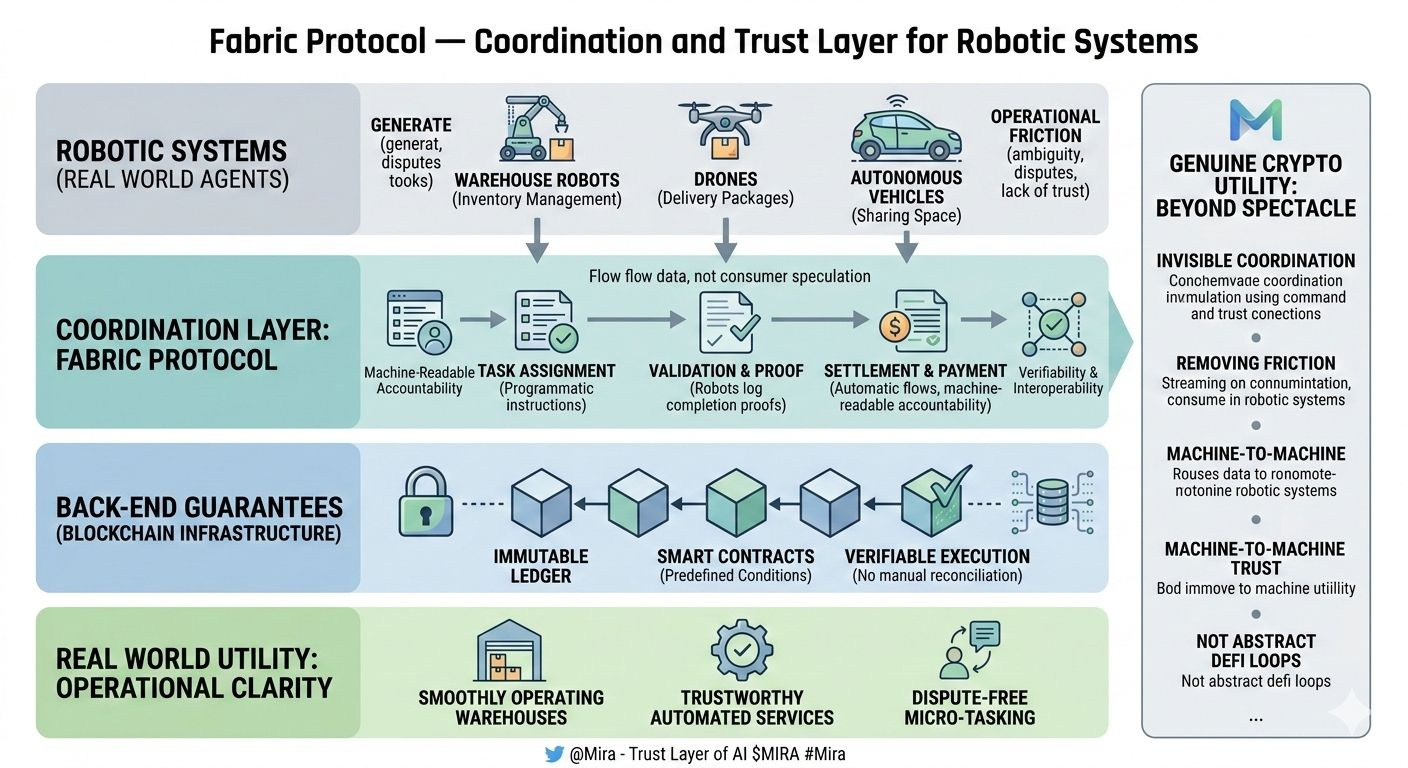
When I first started looking closely at Fabric Protocol, what stood out wasn’t grand narratives about “autonomous economies.” It was the practical question underneath: how do robots actually work together in environments where trust, verification, and payment matter?
The idea that really clicked for me was this robotics isn’t just a hardware problem. It’s a coordination problem. Drones delivering packages, warehouse robots sorting inventory, autonomous vehicles sharing space they all generate data, complete tasks, and rely on instructions from multiple parties. Fabric positions crypto not as speculation, but as infrastructure: a coordination layer where tasks can be assigned, validated, and settled programmatically.
Instead of treating blockchain as a consumer facing feature, Fabric treats it as a back end guarantee. Robots can log proofs of task completion. Service providers can verify execution without manual reconciliation. Payments can flow automatically once predefined conditions are met. It’s less about tokens on exchanges and more about machine readable accountability.
Stepping back, this is where crypto begins to demonstrate genuine utility. Not in abstract DeFi loops, but in physical systems where ambiguity costs money. If a fleet of delivery robots completes 10,000 micro tasks a day, you need a system that records outcomes without disputes. Fabric’s architecture leans into verifiability and interoperability two words that sound boring until you imagine the operational friction they remove.
Of course, there are tradeoffs. Robotics adoption is still uneven. Hardware cycles move slower than software. Integrating blockchain into mission-critical systems demands reliability that most chains historically struggled to provide. The bar here is higher than in consumer crypto apps and it should be.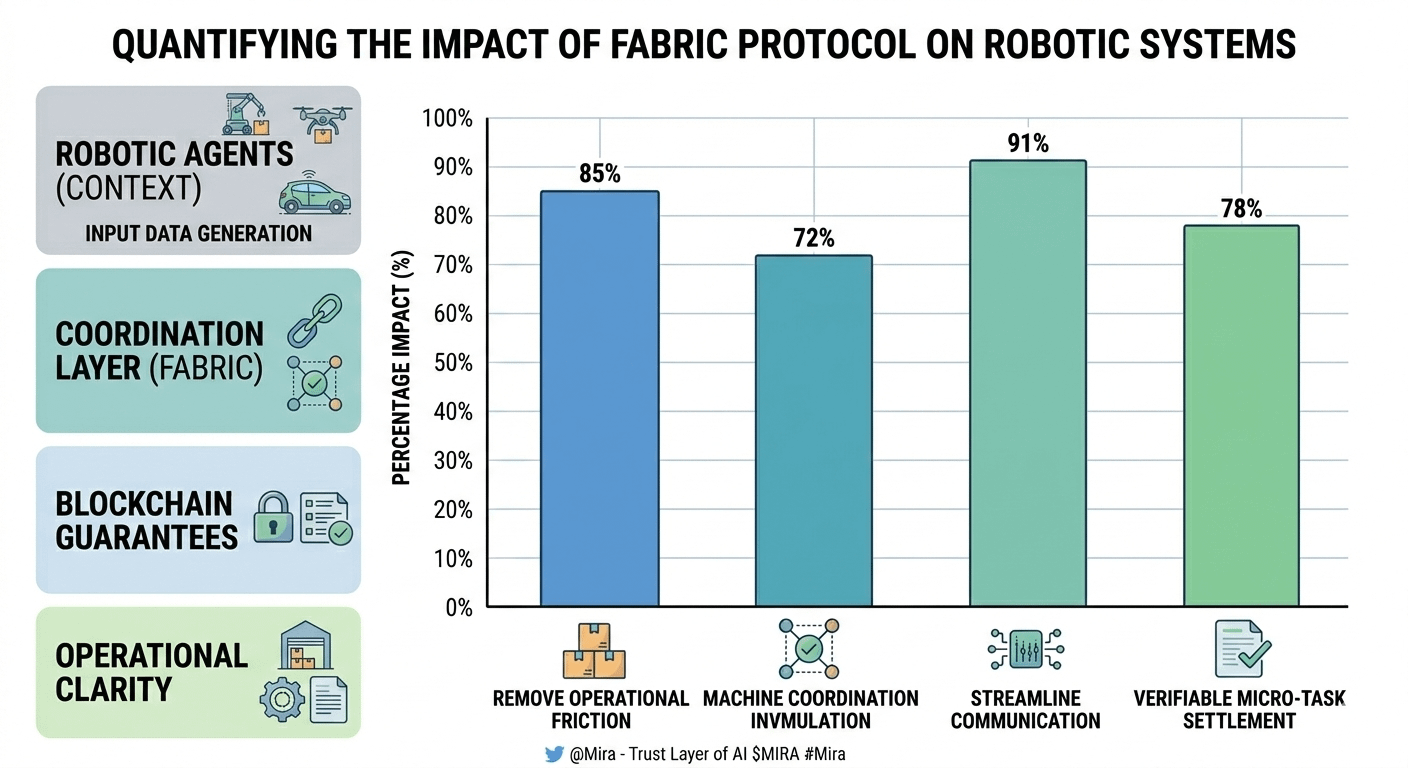
But that’s precisely why this feels meaningful. Fabric isn’t promising a cultural revolution. It’s aiming for operational clarity. If it succeeds, most people won’t know they’re interacting with blockchain at all. They’ll just receive deliveries, see warehouses operate smoothly, or trust that automated services settle fairly.
And maybe that’s the real inflection point when crypto stops asking to be noticed and starts quietly enabling coordination between machines that increasingly shape our daily lives. Invisibility, in this case, isn’t a lack of ambition. It’s proof that the system works.