
Professor Maiza Gull
777 подписок(и/а)
7.3K+ подписчиков(а)
1.3K+ понравилось
195 поделились
Все
Цитирования
Видео
Активно
PINNED
🚨 RED POCKET ALERT 🚨
They’re flying FAST — will you catch one? ⚡
To qualify:
1. Follow me🎁🎁🎁
2. Comment “I’m In!”
Fastest movers score the surprise 🎁
No luck — just speed, energy & timing. 🔥
2) Full-urgency (aggressive)🎁🎁
🔥 GRAB IT BEFORE IT’S GONE 🔥
RED POCKETS dropping NOW — only the quickest win.
Follow + comment “I’m In!” to qualify.
Move fast. Get rewarded. No luck, just speed.
3) Mysterious / Teaser🎁
Whispers of RED POCKETS… they’re disappearing fast. 👀
Want in? Follow and comment “I’m In!”
Only the swift get the surprise. Are you one of them?
4) Premium / Exclusive
Limited RED POCKET drop — for the quickest only. ✨
To qualify: follow and comment “I’m In!”
Exclusive surprises for the fastest. No raffle — just speed & energy.
5) X / Twitter-friendly (short)🎁🎁🎁
🚨 RED POCKETS — moving FAST.
Follow + comment “I’m In!” to qualify.
Fastest get the surprise — no luck, just speed. ⚡
6) Instagram Story (3 slides)
Slide 1: RED POCKET ALERT — they’re flying FAST! 🚨
Slide 2: Want one? 👉 Follow me & comment “I’m In!”
Slide 3: Surprise for the quickest — no luck, just vibes. 🎁⚡
7) Hashtag-ready
RED POCKET ALERT ✨ — They’re going FAST!
Follow + comment “I’m In!” to qualify. Surprise for the fastest. No luck — only speed & energy.
#RedPocket #Drop #Giveaway #FastHands
They’re flying FAST — will you catch one? ⚡
To qualify:
1. Follow me🎁🎁🎁
2. Comment “I’m In!”
Fastest movers score the surprise 🎁
No luck — just speed, energy & timing. 🔥
2) Full-urgency (aggressive)🎁🎁
🔥 GRAB IT BEFORE IT’S GONE 🔥
RED POCKETS dropping NOW — only the quickest win.
Follow + comment “I’m In!” to qualify.
Move fast. Get rewarded. No luck, just speed.
3) Mysterious / Teaser🎁
Whispers of RED POCKETS… they’re disappearing fast. 👀
Want in? Follow and comment “I’m In!”
Only the swift get the surprise. Are you one of them?
4) Premium / Exclusive
Limited RED POCKET drop — for the quickest only. ✨
To qualify: follow and comment “I’m In!”
Exclusive surprises for the fastest. No raffle — just speed & energy.
5) X / Twitter-friendly (short)🎁🎁🎁
🚨 RED POCKETS — moving FAST.
Follow + comment “I’m In!” to qualify.
Fastest get the surprise — no luck, just speed. ⚡
6) Instagram Story (3 slides)
Slide 1: RED POCKET ALERT — they’re flying FAST! 🚨
Slide 2: Want one? 👉 Follow me & comment “I’m In!”
Slide 3: Surprise for the quickest — no luck, just vibes. 🎁⚡
7) Hashtag-ready
RED POCKET ALERT ✨ — They’re going FAST!
Follow + comment “I’m In!” to qualify. Surprise for the fastest. No luck — only speed & energy.
#RedPocket #Drop #Giveaway #FastHands
$GIGGLE
GIGGLE is trading like a premium asset — high price, controlled movement, and strong confidence from holders. This is not retail panic behavior.
Support is firm near 70–71, with deeper strength around 66. Resistance stands at 75, followed by 82.
The next move could be a steady grind higher rather than explosive volatility.
Trade targets reflect structure. TG1 at 75, range high. TG2 at 82, breakout continuation. TG3 at 95, trend extension zone.
Short term, GIGGLE remains stable. Mid term, sustained confidence could drive a higher valuation band.
Pro tip: Expensive coins aren’t overbought — weak coins are undervalued for a reason.
$GIGGLE
GIGGLE is trading like a premium asset — high price, controlled movement, and strong confidence from holders. This is not retail panic behavior.
Support is firm near 70–71, with deeper strength around 66. Resistance stands at 75, followed by 82.
The next move could be a steady grind higher rather than explosive volatility.
Trade targets reflect structure. TG1 at 75, range high. TG2 at 82, breakout continuation. TG3 at 95, trend extension zone.
Short term, GIGGLE remains stable. Mid term, sustained confidence could drive a higher valuation band.
Pro tip: Expensive coins aren’t overbought — weak coins are undervalued for a reason.
$GIGGLE
$KITE
KITE is one of the strongest performers in this list, showing active buying interest and momentum expansion. This is what early trend initiation looks like.
Support is holding near 0.082–0.084, with buyers aggressively stepping in. Resistance is light near 0.092, then opens toward 0.105.
The next move favors continuation as long as volume remains elevated.
Trade targets are aggressive but realistic. TG1 at 0.092, quick profit zone. TG2 at 0.105, breakout extension. TG3 at 0.125, momentum exhaustion level.
Short term, KITE is bullish. Mid term, this coin could surprise if volume sustains.
Pro tip: Strength attracts strength — ride leaders, not laggards.
$KITE
KITE is one of the strongest performers in this list, showing active buying interest and momentum expansion. This is what early trend initiation looks like.
Support is holding near 0.082–0.084, with buyers aggressively stepping in. Resistance is light near 0.092, then opens toward 0.105.
The next move favors continuation as long as volume remains elevated.
Trade targets are aggressive but realistic. TG1 at 0.092, quick profit zone. TG2 at 0.105, breakout extension. TG3 at 0.125, momentum exhaustion level.
Short term, KITE is bullish. Mid term, this coin could surprise if volume sustains.
Pro tip: Strength attracts strength — ride leaders, not laggards.
$KITE
$SAPIEN
SAPIEN is showing early signs of accumulation, with higher lows forming under the radar. Price is respecting structure, which is a bullish tell in new or emerging assets.
Support is clear around 0.140, with stronger defense near 0.132. Resistance appears at 0.155, then opens up toward 0.172.
The next move is likely a range breakout if buyers step in with volume.
Trade targets are straightforward. TG1 at 0.155, quick momentum scalp. TG2 at 0.172, breakout zone. TG3 at 0.198, where momentum accelerates.
Short term, SAPIEN is quietly bullish. Mid term, a close above 0.172 could trigger trend traders.
Pro tip: Accumulation phases feel boring — that’s how you know they’re real.
$SAPIEN
SAPIEN is showing early signs of accumulation, with higher lows forming under the radar. Price is respecting structure, which is a bullish tell in new or emerging assets.
Support is clear around 0.140, with stronger defense near 0.132. Resistance appears at 0.155, then opens up toward 0.172.
The next move is likely a range breakout if buyers step in with volume.
Trade targets are straightforward. TG1 at 0.155, quick momentum scalp. TG2 at 0.172, breakout zone. TG3 at 0.198, where momentum accelerates.
Short term, SAPIEN is quietly bullish. Mid term, a close above 0.172 could trigger trend traders.
Pro tip: Accumulation phases feel boring — that’s how you know they’re real.
$SAPIEN
$ALLO
ALLO is grinding upward with low volatility, which is exactly how sustainable trends begin. No explosive pumps, no panic drops — just quiet strength.
Support is solid near 0.115–0.117, with buyers clearly defending that zone. Resistance sits at 0.128, followed by a higher ceiling near 0.145.
The next move is likely a slow breakout rather than a spike. This favors swing traders more than scalpers.
Trade targets unfold naturally. TG1 at 0.128, first resistance test. TG2 at 0.145, trend continuation. TG3 at 0.168, where long-term holders start distributing.
Short term, ALLO is stable and constructive. Mid term, higher highs become probable if volume increases gradually.
Pro tip: Coins that move slowly often outperform those that pump too fast.
$ALLO
ALLO is grinding upward with low volatility, which is exactly how sustainable trends begin. No explosive pumps, no panic drops — just quiet strength.
Support is solid near 0.115–0.117, with buyers clearly defending that zone. Resistance sits at 0.128, followed by a higher ceiling near 0.145.
The next move is likely a slow breakout rather than a spike. This favors swing traders more than scalpers.
Trade targets unfold naturally. TG1 at 0.128, first resistance test. TG2 at 0.145, trend continuation. TG3 at 0.168, where long-term holders start distributing.
Short term, ALLO is stable and constructive. Mid term, higher highs become probable if volume increases gradually.
Pro tip: Coins that move slowly often outperform those that pump too fast.
$ALLO
$MET
MET is under short-term pressure, but this drop looks more like controlled distribution than a collapse. Volume is declining during the selloff, which often hints that sellers are losing strength.
Support is forming around 0.235–0.240. If this zone breaks, the next major demand sits near 0.220. Resistance remains heavy near 0.260, with stronger rejection likely at 0.285.
The next move is decision-based. Either MET reclaims 0.260 and traps shorts, or it sweeps liquidity lower before reversing.
Trade targets depend on confirmation. TG1 at 0.260, the recovery level. TG2 at 0.285, momentum continuation. TG3 at 0.315, full trend reversal territory.
Short term, MET is risky but tradable on confirmation. Mid term, reclaiming 0.285 would flip the entire structure bullish.
Pro tip: Weak coins become strong very fast once volume flips — wait for that flip.
$MET
MET is under short-term pressure, but this drop looks more like controlled distribution than a collapse. Volume is declining during the selloff, which often hints that sellers are losing strength.
Support is forming around 0.235–0.240. If this zone breaks, the next major demand sits near 0.220. Resistance remains heavy near 0.260, with stronger rejection likely at 0.285.
The next move is decision-based. Either MET reclaims 0.260 and traps shorts, or it sweeps liquidity lower before reversing.
Trade targets depend on confirmation. TG1 at 0.260, the recovery level. TG2 at 0.285, momentum continuation. TG3 at 0.315, full trend reversal territory.
Short term, MET is risky but tradable on confirmation. Mid term, reclaiming 0.285 would flip the entire structure bullish.
Pro tip: Weak coins become strong very fast once volume flips — wait for that flip.
$MET
$BANK (Lorenzo Protocol)
BANK is quietly outperforming the local market, printing green while others hesitate. This is classic accumulation behavior — small gains, tight candles, and no panic on pullbacks. Smart money loves these conditions.
Strong support sits around 0.038–0.039, a key demand zone backed by recent volume. If volatility spikes, a deeper safety net exists near 0.035. Resistance is clearly visible near 0.042, followed by a psychological barrier at 0.048.
The next move is likely a volatility expansion. BANK doesn’t move loudly — it moves suddenly after long compression.
Trade targets are clean and realistic. TG1 at 0.042, the first liquidity grab. TG2 at 0.048, where breakout traders enter. TG3 at 0.056, the zone where parabolic moves often stall.
Short term, BANK remains bullish above 0.038. Mid term, sustained veBANK participation and TVL growth can support a trend re-rating.
Pro tip: Coins with real yield infrastructure move slower — but when they move, they don’t look back.
$BANK
BANK is quietly outperforming the local market, printing green while others hesitate. This is classic accumulation behavior — small gains, tight candles, and no panic on pullbacks. Smart money loves these conditions.
Strong support sits around 0.038–0.039, a key demand zone backed by recent volume. If volatility spikes, a deeper safety net exists near 0.035. Resistance is clearly visible near 0.042, followed by a psychological barrier at 0.048.
The next move is likely a volatility expansion. BANK doesn’t move loudly — it moves suddenly after long compression.
Trade targets are clean and realistic. TG1 at 0.042, the first liquidity grab. TG2 at 0.048, where breakout traders enter. TG3 at 0.056, the zone where parabolic moves often stall.
Short term, BANK remains bullish above 0.038. Mid term, sustained veBANK participation and TVL growth can support a trend re-rating.
Pro tip: Coins with real yield infrastructure move slower — but when they move, they don’t look back.
$BANK
$AT (AT Coin)
AT is currently cooling off after a minor rejection, showing controlled weakness rather than panic selling. The structure still looks healthy as sellers are failing to gain dominance, which often hints at a continuation setup once pressure fades.
Key support is holding near 0.088–0.089, a zone where buyers have repeatedly stepped in. Below that, deeper protection sits around 0.083. On the upside, immediate resistance is stacked near 0.095, followed by a stronger supply wall around 0.102.
The next move depends on how price reacts at support. A clean hold and bounce can trigger a momentum push toward higher liquidity zones.
Trade targets align naturally with structure. TG1 at 0.095, where partial profits make sense. TG2 at 0.102, the breakout confirmation level. TG3 at 0.112, where momentum traders usually unload aggressively.
Short term, AT is neutral-to-bullish as long as it holds above support. Mid term, a break above 0.102 could unlock a trend expansion phase.
Pro tip: Don’t chase AT green candles. This coin rewards patience near support more than emotional entries.$AT
AT is currently cooling off after a minor rejection, showing controlled weakness rather than panic selling. The structure still looks healthy as sellers are failing to gain dominance, which often hints at a continuation setup once pressure fades.
Key support is holding near 0.088–0.089, a zone where buyers have repeatedly stepped in. Below that, deeper protection sits around 0.083. On the upside, immediate resistance is stacked near 0.095, followed by a stronger supply wall around 0.102.
The next move depends on how price reacts at support. A clean hold and bounce can trigger a momentum push toward higher liquidity zones.
Trade targets align naturally with structure. TG1 at 0.095, where partial profits make sense. TG2 at 0.102, the breakout confirmation level. TG3 at 0.112, where momentum traders usually unload aggressively.
Short term, AT is neutral-to-bullish as long as it holds above support. Mid term, a break above 0.102 could unlock a trend expansion phase.
Pro tip: Don’t chase AT green candles. This coin rewards patience near support more than emotional entries.$AT
BANK (Lorenzo Protocol) — When Wall Street Logic Meets On-Chain Precision
#lorenzoprotocol @Lorenzo Protocol $BANK
There is a quiet intensity building around BANK, the native token of #lorenzoprotocol , and seasoned traders can feel it in the tape. This is not the chaotic, hype-driven movement that defines most speculative cycles; this is the slow, deliberate rhythm of capital positioning itself ahead of something structurally important. Lorenzo Protocol is not trying to reinvent finance with slogans—it is methodically transplanting proven traditional financial strategies onto the blockchain, wrapping them in transparent, tokenized structures that behave like living, breathing on-chain funds. In a market that has matured beyond memes and narratives, this kind of infrastructure is where smart money begins to linger.
At the heart of #lorenzo lies the concept of On-Chain Traded Funds, or OTFs, a deceptively simple idea with enormous implications. These products mirror traditional fund structures but operate entirely on-chain, allowing capital to flow into quantitative strategies, managed futures, volatility plays, and structured yield systems without custodial risk or opaque decision-making. For traders who understand how capital rotates during late accumulation and early expansion phases, this is the kind of protocol that tends to be ignored… until it suddenly isn’t. BANK is not just a utility token sitting on the sidelines; it is the governance key, the incentive engine, and the participation layer that aligns users, strategists, and liquidity under one economic roof.
From a market structure perspective, BANK has been behaving exactly how a long-term accumulation asset should. Price action compresses, volatility dries up, and every impulsive spike is met with controlled pullbacks rather than panic selling. This is a classic sign that weak hands are being filtered out while stronger participants absorb supply. Instead of emotional wicks and erratic volume, BANK has been carving out a base that feels intentional, almost engineered, as if the market itself is waiting for validation before allowing expansion. Pro traders recognize this environment instantly—it’s the phase where patience is rewarded and overtrading is punished.
What makes BANK particularly compelling is how its fundamentals naturally reinforce this technical behavior. As more capital flows into Lorenzo’s vaults, and as OTFs gain traction among users seeking strategy-based exposure rather than raw speculation, the relevance of BANK increases organically. Governance becomes meaningful, incentives become attractive, and participation evolves from passive holding into active capital deployment. This is the kind of feedback loop that doesn’t explode overnight but compounds quietly, tightening supply dynamics while demand grows steadily beneath the surface.
Short-term traders will notice that BANK respects structure with unusual discipline. Support zones tend to hold with confidence, rebounds show intent rather than desperation, and momentum shifts feel calculated instead of reactive. When BANK pushes upward, it does so without excessive volume spikes, suggesting controlled accumulation rather than retail-driven euphoria. In the near term, this often precedes a volatility expansion phase where price escapes its compression range and begins repricing the asset based on future expectations rather than current participation.
From a mid-term perspective, $BANK fits perfectly into the emerging narrative of “financialized DeFi.” As the market moves away from unsustainable yields and toward strategy-driven returns, protocols like Lorenzo stand to benefit disproportionately. BANK is essentially a leveraged expression of that shift. It represents confidence in structured on-chain asset management, in transparent strategy execution, and in a future where DeFi doesn’t gamble—it allocates. When this narrative catches fire, assets positioned early tend to move fast, leaving little room for late entries.
The emotional edge for traders here lies in restraint. BANK does not scream for attention; it whispers to those who understand structure, timing, and patience. It rewards traders who can sit through consolidation, who respect the process of accumulation, and who know that the biggest moves are born in silence. This is not a coin you chase—it’s one you stalk, waiting for confirmation while understanding that the real opportunity is formed long before the breakout candle appears.
There is a quiet intensity building around BANK, the native token of #lorenzoprotocol , and seasoned traders can feel it in the tape. This is not the chaotic, hype-driven movement that defines most speculative cycles; this is the slow, deliberate rhythm of capital positioning itself ahead of something structurally important. Lorenzo Protocol is not trying to reinvent finance with slogans—it is methodically transplanting proven traditional financial strategies onto the blockchain, wrapping them in transparent, tokenized structures that behave like living, breathing on-chain funds. In a market that has matured beyond memes and narratives, this kind of infrastructure is where smart money begins to linger.
At the heart of #lorenzo lies the concept of On-Chain Traded Funds, or OTFs, a deceptively simple idea with enormous implications. These products mirror traditional fund structures but operate entirely on-chain, allowing capital to flow into quantitative strategies, managed futures, volatility plays, and structured yield systems without custodial risk or opaque decision-making. For traders who understand how capital rotates during late accumulation and early expansion phases, this is the kind of protocol that tends to be ignored… until it suddenly isn’t. BANK is not just a utility token sitting on the sidelines; it is the governance key, the incentive engine, and the participation layer that aligns users, strategists, and liquidity under one economic roof.
From a market structure perspective, BANK has been behaving exactly how a long-term accumulation asset should. Price action compresses, volatility dries up, and every impulsive spike is met with controlled pullbacks rather than panic selling. This is a classic sign that weak hands are being filtered out while stronger participants absorb supply. Instead of emotional wicks and erratic volume, BANK has been carving out a base that feels intentional, almost engineered, as if the market itself is waiting for validation before allowing expansion. Pro traders recognize this environment instantly—it’s the phase where patience is rewarded and overtrading is punished.
What makes BANK particularly compelling is how its fundamentals naturally reinforce this technical behavior. As more capital flows into Lorenzo’s vaults, and as OTFs gain traction among users seeking strategy-based exposure rather than raw speculation, the relevance of BANK increases organically. Governance becomes meaningful, incentives become attractive, and participation evolves from passive holding into active capital deployment. This is the kind of feedback loop that doesn’t explode overnight but compounds quietly, tightening supply dynamics while demand grows steadily beneath the surface.
Short-term traders will notice that BANK respects structure with unusual discipline. Support zones tend to hold with confidence, rebounds show intent rather than desperation, and momentum shifts feel calculated instead of reactive. When BANK pushes upward, it does so without excessive volume spikes, suggesting controlled accumulation rather than retail-driven euphoria. In the near term, this often precedes a volatility expansion phase where price escapes its compression range and begins repricing the asset based on future expectations rather than current participation.
From a mid-term perspective, $BANK fits perfectly into the emerging narrative of “financialized DeFi.” As the market moves away from unsustainable yields and toward strategy-driven returns, protocols like Lorenzo stand to benefit disproportionately. BANK is essentially a leveraged expression of that shift. It represents confidence in structured on-chain asset management, in transparent strategy execution, and in a future where DeFi doesn’t gamble—it allocates. When this narrative catches fire, assets positioned early tend to move fast, leaving little room for late entries.
The emotional edge for traders here lies in restraint. BANK does not scream for attention; it whispers to those who understand structure, timing, and patience. It rewards traders who can sit through consolidation, who respect the process of accumulation, and who know that the biggest moves are born in silence. This is not a coin you chase—it’s one you stalk, waiting for confirmation while understanding that the real opportunity is formed long before the breakout candle appears.
Yield Guild Games (YGG) — When Smart Money Returns to Web3 Gaming
@Yield Guild Games $YGG #YieldGuildGames
There are moments in the market when a chart stops being just a chart and starts telling a story, and #YieldGuildGames is quietly entering one of those moments. YGG is not just another gaming token drifting in the wake of hype cycles; it is the backbone of a fully operational Web3 gaming economy, a decentralized organization that once stood at the center of the play-to-earn revolution and survived its collapse. Today, as capital slowly rotates back into utility-driven narratives, YGG is beginning to feel like a coiled spring rather than a forgotten relic.
At its core, Yield Guild Games is a DAO designed to acquire, manage, and deploy NFT assets across multiple blockchain-based games and virtual worlds. During the peak of the NFT gaming boom, YGG became synonymous with scale, onboarding thousands of players globally and creating real digital livelihoods. When the broader market crashed, speculative froth vanished, weak projects disappeared, and gaming tokens were punished relentlessly. Yet YGG did not break. It consolidated, restructured, and evolved, quietly shifting from raw expansion to sustainable infrastructure through Vaults, SubDAOs, and a more disciplined capital allocation model.
From a market structure perspective, YGG’s price action reflects classic long-term accumulation behavior. After its brutal drawdown from all-time highs, the token entered a wide base-building phase where volatility compressed and impulsive moves were sold into. This is often where impatient traders exit and patient capital steps in. On Binance, volume profiles suggest that sell pressure has been gradually absorbed over time, not in dramatic spikes but through consistent demand at key zones. This type of behavior rarely belongs to hype traders; it usually signals strategic positioning.
The strength of YGG lies in its evolving utility. The token is not simply a governance badge; it functions as a connective layer across the YGG ecosystem. Through YGG Vaults, participants can stake and deploy capital into curated strategies tied to blockchain games, while SubDAOs allow specialized communities to operate semi-independently, focusing on specific titles or regions. This modular structure mirrors how professional asset managers operate in traditional finance, but translated fully on-chain. As blockchain gaming slowly shifts away from unsustainable reward emissions and toward real player economies, YGG’s model becomes increasingly relevant.
Emotionally, this is where the narrative deepens. Web3 gaming is no longer about explosive promises; it is about rebuilding trust, gameplay quality, and economic balance. YGG sits directly at this intersection. It is positioned not as a single-game bet, but as an index-like exposure to the broader gaming metaverse. When one ecosystem struggles, others compensate. This diversification is subtle, often overlooked, but incredibly powerful during market recoveries. Traders who understand this are not chasing candles; they are preparing for rotation.
Technically, YGG’s behavior suggests that downside risk is becoming more defined while upside potential remains asymmetric. Price has spent enough time stabilizing that sellers appear increasingly exhausted. Each attempt to push lower meets quicker reactions, and rebounds are becoming cleaner, less chaotic. This transition from panic-driven volatility to controlled movement is a hallmark of trend reversals, especially in mid-cap tokens that were previously market darlings. Momentum indicators, while not screaming euphoria, are quietly resetting, creating room for expansion rather than exhaustion.
Mid-term, $YGG ’s outlook is closely tied to sentiment in gaming and NFTs, but also to broader risk appetite in crypto. If Bitcoin remains stable and capital begins seeking narratives beyond memes and short-term speculation, gaming infrastructure tokens are natural beneficiaries. YGG, with its established brand, DAO structure, and multi-game exposure, stands ahead of most competitors who are still fighting for relevance. This does not mean a straight line upward; it means volatility with intent, pullbacks that invite accumulation rather than fear.
In the short term, YGG behaves like a patience test. It rewards traders who wait for confirmation and punishes those who chase green candles without context. In the longer arc, however, it represents something rarer in crypto: a project that has already experienced mass adoption, survived a full market cycle, and emerged leaner and more focused. That combination often precedes powerful repricing when conditions align.
@Yield Guild Games is no longer shouting for attention, and that may be its greatest strength. In a market slowly rediscovering fundamentals, YGG feels less like a gamble and more like a calculated position. For traders who understand cycles, psychology, and the value of infrastructure over noise, this is the kind of chart and narrative that deserves quiet respect rather than loud speculation.
There are moments in the market when a chart stops being just a chart and starts telling a story, and #YieldGuildGames is quietly entering one of those moments. YGG is not just another gaming token drifting in the wake of hype cycles; it is the backbone of a fully operational Web3 gaming economy, a decentralized organization that once stood at the center of the play-to-earn revolution and survived its collapse. Today, as capital slowly rotates back into utility-driven narratives, YGG is beginning to feel like a coiled spring rather than a forgotten relic.
At its core, Yield Guild Games is a DAO designed to acquire, manage, and deploy NFT assets across multiple blockchain-based games and virtual worlds. During the peak of the NFT gaming boom, YGG became synonymous with scale, onboarding thousands of players globally and creating real digital livelihoods. When the broader market crashed, speculative froth vanished, weak projects disappeared, and gaming tokens were punished relentlessly. Yet YGG did not break. It consolidated, restructured, and evolved, quietly shifting from raw expansion to sustainable infrastructure through Vaults, SubDAOs, and a more disciplined capital allocation model.
From a market structure perspective, YGG’s price action reflects classic long-term accumulation behavior. After its brutal drawdown from all-time highs, the token entered a wide base-building phase where volatility compressed and impulsive moves were sold into. This is often where impatient traders exit and patient capital steps in. On Binance, volume profiles suggest that sell pressure has been gradually absorbed over time, not in dramatic spikes but through consistent demand at key zones. This type of behavior rarely belongs to hype traders; it usually signals strategic positioning.
The strength of YGG lies in its evolving utility. The token is not simply a governance badge; it functions as a connective layer across the YGG ecosystem. Through YGG Vaults, participants can stake and deploy capital into curated strategies tied to blockchain games, while SubDAOs allow specialized communities to operate semi-independently, focusing on specific titles or regions. This modular structure mirrors how professional asset managers operate in traditional finance, but translated fully on-chain. As blockchain gaming slowly shifts away from unsustainable reward emissions and toward real player economies, YGG’s model becomes increasingly relevant.
Emotionally, this is where the narrative deepens. Web3 gaming is no longer about explosive promises; it is about rebuilding trust, gameplay quality, and economic balance. YGG sits directly at this intersection. It is positioned not as a single-game bet, but as an index-like exposure to the broader gaming metaverse. When one ecosystem struggles, others compensate. This diversification is subtle, often overlooked, but incredibly powerful during market recoveries. Traders who understand this are not chasing candles; they are preparing for rotation.
Technically, YGG’s behavior suggests that downside risk is becoming more defined while upside potential remains asymmetric. Price has spent enough time stabilizing that sellers appear increasingly exhausted. Each attempt to push lower meets quicker reactions, and rebounds are becoming cleaner, less chaotic. This transition from panic-driven volatility to controlled movement is a hallmark of trend reversals, especially in mid-cap tokens that were previously market darlings. Momentum indicators, while not screaming euphoria, are quietly resetting, creating room for expansion rather than exhaustion.
Mid-term, $YGG ’s outlook is closely tied to sentiment in gaming and NFTs, but also to broader risk appetite in crypto. If Bitcoin remains stable and capital begins seeking narratives beyond memes and short-term speculation, gaming infrastructure tokens are natural beneficiaries. YGG, with its established brand, DAO structure, and multi-game exposure, stands ahead of most competitors who are still fighting for relevance. This does not mean a straight line upward; it means volatility with intent, pullbacks that invite accumulation rather than fear.
In the short term, YGG behaves like a patience test. It rewards traders who wait for confirmation and punishes those who chase green candles without context. In the longer arc, however, it represents something rarer in crypto: a project that has already experienced mass adoption, survived a full market cycle, and emerged leaner and more focused. That combination often precedes powerful repricing when conditions align.
@Yield Guild Games is no longer shouting for attention, and that may be its greatest strength. In a market slowly rediscovering fundamentals, YGG feels less like a gamble and more like a calculated position. For traders who understand cycles, psychology, and the value of infrastructure over noise, this is the kind of chart and narrative that deserves quiet respect rather than loud speculation.
BANK (Lorenzo Protocol) — When Wall Street DNA Meets On-Chain Precision
@Lorenzo Protocol $BANK #lorenzoprotocol
There are moments in a market cycle when price action goes quiet, volatility compresses, and the crowd loses interest — and it is precisely in those moments that professionals lean forward. BANK, the native token of Lorenzo Protocol, sits at that intersection where silence hides structure and patience is rewarded with asymmetric opportunity. While most traders chase narratives built on hype, BANK is quietly building something far more durable: a fully on-chain asset management framework that mirrors the sophistication of traditional finance while preserving the transparency and programmability of crypto.
#Lorenzo Protocol is not designed for the dopamine-driven retail flow; it is engineered for capital that thinks in strategies, risk buckets, and time horizons. The introduction of On-Chain Traded Funds is a subtle but powerful evolution. These OTFs are not speculative gimmicks — they are tokenized fund structures that give on-chain participants exposure to quantitative trading systems, managed futures logic, volatility harvesting, and structured yield strategies that were once locked behind institutional walls. This is where the narrative deepens, because BANK is not just a governance token floating above the protocol; it is the control layer that governs how capital behaves inside this machine.
From a market structure perspective, BANK trades like a classic accumulation asset. Volume expands on green candles and fades on pullbacks, a telltale signature of informed positioning rather than emotional speculation. Each retracement feels deliberate, absorbed rather than rejected, suggesting that supply is being methodically removed from weak hands. This is the kind of chart behavior that rarely excites social media but consistently attracts patient capital. The absence of explosive pumps is not a weakness here — it is a signal that the token is being treated as an asset, not a lottery ticket.
The true gravity of BANK emerges when you factor in veBANK. Vote-escrow systems are where token economics stop being theoretical and start becoming behavioral. Locking BANK transforms it from a tradable instrument into a yield-generating, influence-bearing asset. veBANK holders shape protocol incentives, direct emissions, and influence the evolution of vault strategies. This creates a natural reduction in circulating supply while aligning long-term holders with protocol growth. In markets, scarcity combined with utility is a volatile combination — but only once demand catches up to understanding.
What makes Lorenzo different from most DeFi protocols is its architectural restraint. Simple vaults serve as clean exposure vehicles, while composed vaults layer strategies together, routing capital dynamically across multiple approaches. This is not farming for yield’s sake; it is capital orchestration. As more users allocate funds into these structures, the protocol’s relevance increases, and with it, the strategic importance of $BANK . Governance becomes meaningful only when there is something worth governing — and Lorenzo is clearly building toward that threshold.
Psychologically, BANK occupies an interesting space. It is early enough to be overlooked, yet developed enough to be taken seriously. This is the phase where valuation feels ambiguous and narratives are still forming. For professional traders, this ambiguity is not risk — it is opportunity. Price discovery tends to be violent once the market collectively realizes what it ignored. Until then, BANK behaves like a coiled instrument, moving within a controlled range while the protocol underneath continues to mature.
In the broader cycle context, assets tied to real yield, structured strategies, and capital efficiency tend to outperform once speculative excess drains from the market. BANK fits cleanly into that rotation. As liquidity shifts from meme velocity into sustainable frameworks, protocols that offer disciplined exposure to market strategies stand to benefit disproportionately. Lorenzo is positioning itself not as a casino, but as an on-chain asset manager — and BANK is the equity, the vote, and the lever all rolled into one.
This is not a token that demands immediate attention through fireworks. It rewards study, conviction, and time. BANK feels like the kind of position that professionals build quietly, size gradually, and hold through noise — not because of blind belief, but because the structure makes sense. When the market eventually pivots from speculation to strategy, assets like BANK tend to move not in steps, but in repricings.
In a space crowded with promises, Lorenzo Protocol is delivering infrastructure, and BANK is the key that unlocks its control. For traders who understand cycles, this is the kind of chart you mark, not chase — the kind of narrative you track before it becomes obvious. Sometimes the most powerful trades don’t scream for attention. They wait.
There are moments in a market cycle when price action goes quiet, volatility compresses, and the crowd loses interest — and it is precisely in those moments that professionals lean forward. BANK, the native token of Lorenzo Protocol, sits at that intersection where silence hides structure and patience is rewarded with asymmetric opportunity. While most traders chase narratives built on hype, BANK is quietly building something far more durable: a fully on-chain asset management framework that mirrors the sophistication of traditional finance while preserving the transparency and programmability of crypto.
#Lorenzo Protocol is not designed for the dopamine-driven retail flow; it is engineered for capital that thinks in strategies, risk buckets, and time horizons. The introduction of On-Chain Traded Funds is a subtle but powerful evolution. These OTFs are not speculative gimmicks — they are tokenized fund structures that give on-chain participants exposure to quantitative trading systems, managed futures logic, volatility harvesting, and structured yield strategies that were once locked behind institutional walls. This is where the narrative deepens, because BANK is not just a governance token floating above the protocol; it is the control layer that governs how capital behaves inside this machine.
From a market structure perspective, BANK trades like a classic accumulation asset. Volume expands on green candles and fades on pullbacks, a telltale signature of informed positioning rather than emotional speculation. Each retracement feels deliberate, absorbed rather than rejected, suggesting that supply is being methodically removed from weak hands. This is the kind of chart behavior that rarely excites social media but consistently attracts patient capital. The absence of explosive pumps is not a weakness here — it is a signal that the token is being treated as an asset, not a lottery ticket.
The true gravity of BANK emerges when you factor in veBANK. Vote-escrow systems are where token economics stop being theoretical and start becoming behavioral. Locking BANK transforms it from a tradable instrument into a yield-generating, influence-bearing asset. veBANK holders shape protocol incentives, direct emissions, and influence the evolution of vault strategies. This creates a natural reduction in circulating supply while aligning long-term holders with protocol growth. In markets, scarcity combined with utility is a volatile combination — but only once demand catches up to understanding.
What makes Lorenzo different from most DeFi protocols is its architectural restraint. Simple vaults serve as clean exposure vehicles, while composed vaults layer strategies together, routing capital dynamically across multiple approaches. This is not farming for yield’s sake; it is capital orchestration. As more users allocate funds into these structures, the protocol’s relevance increases, and with it, the strategic importance of $BANK . Governance becomes meaningful only when there is something worth governing — and Lorenzo is clearly building toward that threshold.
Psychologically, BANK occupies an interesting space. It is early enough to be overlooked, yet developed enough to be taken seriously. This is the phase where valuation feels ambiguous and narratives are still forming. For professional traders, this ambiguity is not risk — it is opportunity. Price discovery tends to be violent once the market collectively realizes what it ignored. Until then, BANK behaves like a coiled instrument, moving within a controlled range while the protocol underneath continues to mature.
In the broader cycle context, assets tied to real yield, structured strategies, and capital efficiency tend to outperform once speculative excess drains from the market. BANK fits cleanly into that rotation. As liquidity shifts from meme velocity into sustainable frameworks, protocols that offer disciplined exposure to market strategies stand to benefit disproportionately. Lorenzo is positioning itself not as a casino, but as an on-chain asset manager — and BANK is the equity, the vote, and the lever all rolled into one.
This is not a token that demands immediate attention through fireworks. It rewards study, conviction, and time. BANK feels like the kind of position that professionals build quietly, size gradually, and hold through noise — not because of blind belief, but because the structure makes sense. When the market eventually pivots from speculation to strategy, assets like BANK tend to move not in steps, but in repricings.
In a space crowded with promises, Lorenzo Protocol is delivering infrastructure, and BANK is the key that unlocks its control. For traders who understand cycles, this is the kind of chart you mark, not chase — the kind of narrative you track before it becomes obvious. Sometimes the most powerful trades don’t scream for attention. They wait.
Yield Guild Games (YGG): From Play-to-Earn Ashes to Smart Money Resurrection — The Sleeping Giant
#YieldGuildGames , trading on Binance as YGG, is one of those rare crypto assets that has already lived an entire market cycle and survived to tell the story. That history matters, because markets do not reward innocence, they reward resilience. YGG is no longer a hopeful Play-to-Earn experiment riding hype and narrative. It is a hardened Web3 gaming infrastructure play emerging from the wreckage of the last cycle with scars, lessons, and a radically improved foundation.
At its core, YGG operates as a decentralized autonomous organization designed to aggregate capital, deploy it into NFT-based gaming assets, and distribute yield back to its community. During the last bull run, that model exploded in popularity as Axie Infinity and similar ecosystems pulled in millions of users. Then the music stopped. Token emissions crushed prices, unsustainable reward loops collapsed, and most gaming guilds quietly faded into irrelevance. YGG did not. It contracted, restructured, and pivoted. From a trader’s perspective, that transition from expansion to survival is where long-term value is quietly built.
The $YGG token itself now sits at the intersection of governance, utility, and capital flow. It is used to vote on DAO proposals, coordinate SubDAOs, stake into vaults, and participate in yield strategies tied directly to in-game economies. Unlike its early days, where valuation was driven by speculative player growth, YGG’s current structure emphasizes capital efficiency and modular scaling. SubDAOs allow exposure to specific gaming ecosystems without bloating the core treasury, while YGG Vaults create a cleaner yield-routing mechanism that aligns incentives between players, investors, and protocol operators. This matters because markets reward clarity, especially after chaos.
From a price-action standpoint, YGG behaves like an asset that has already flushed weak hands. The long bear market carved out a deep accumulation base where volume dried up and volatility compressed, the classic signature of distribution having already occurred. When an asset trades sideways for months after a brutal drawdown, it is not boredom, it is absorption. Larger players do not chase green candles; they sit quietly while sentiment stays apathetic. YGG’s chart reflects exactly that behavior, with higher lows beginning to form while downside momentum continues to weaken.
What makes YGG compelling in the current market reset is not nostalgia for Play-to-Earn, but positioning for what comes next. Web3 gaming is shifting away from raw token farming toward sustainable in-game economies, asset ownership, and interoperable ecosystems. YGG is no longer betting on one title or one hype cycle. It is structured as an index-like exposure to multiple gaming economies, governed on-chain, with capital allocation decisions made dynamically. In a sector where most projects are still pitching whitepapers, YGG is already operating at scale.
Liquidity on Binance adds another layer of confidence for traders. This is not a thinly traded experiment vulnerable to single-wallet manipulation. YGG has deep order books, clean execution, and predictable volatility behavior, making it suitable for both swing traders and position traders. During broader market pullbacks, YGG tends to retrace into high-volume demand zones rather than free-falling, a subtle but important signal that sellers are being absorbed rather than accelerating.
Short-term, YGG thrives on patience. Rallies are often sharp and emotionally charged, followed by controlled pullbacks that reset funding and sentiment. Those pullbacks are not weakness, they are structure. Mid-term, the token benefits from any resurgence in gaming narratives, NFT liquidity, or metaverse infrastructure development, especially when capital rotates out of overcrowded Layer 1 trades and into thematic sectors with asymmetric upside. Long-term, YGG represents a bet on organized capital deployment within digital economies, a thesis that extends far beyond any single bull run.
The emotional mistake most traders make with YGG is anchoring to its all-time highs and assuming recovery must look the same. It will not. This cycle is not about explosive user counts fueled by emissions; it is about sustainable yield, governance-driven expansion, and selective exposure to profitable ecosystems. YGG does not need to relive 2021 to outperform. It simply needs to continue doing what it is already doing quietly: allocating capital efficiently while the market is still distracted.
In a space obsessed with new tokens and louder narratives, YGG sits there like a veteran who has already seen the worst and stayed standing. That kind of asset rarely announces itself before moving. By the time excitement returns to Web3 gaming, the positioning phase is already over. And in trading, that silent phase is where the real money is made
@Yield Guild Games #YieldGuildGames $YGG
At its core, YGG operates as a decentralized autonomous organization designed to aggregate capital, deploy it into NFT-based gaming assets, and distribute yield back to its community. During the last bull run, that model exploded in popularity as Axie Infinity and similar ecosystems pulled in millions of users. Then the music stopped. Token emissions crushed prices, unsustainable reward loops collapsed, and most gaming guilds quietly faded into irrelevance. YGG did not. It contracted, restructured, and pivoted. From a trader’s perspective, that transition from expansion to survival is where long-term value is quietly built.
The $YGG token itself now sits at the intersection of governance, utility, and capital flow. It is used to vote on DAO proposals, coordinate SubDAOs, stake into vaults, and participate in yield strategies tied directly to in-game economies. Unlike its early days, where valuation was driven by speculative player growth, YGG’s current structure emphasizes capital efficiency and modular scaling. SubDAOs allow exposure to specific gaming ecosystems without bloating the core treasury, while YGG Vaults create a cleaner yield-routing mechanism that aligns incentives between players, investors, and protocol operators. This matters because markets reward clarity, especially after chaos.
From a price-action standpoint, YGG behaves like an asset that has already flushed weak hands. The long bear market carved out a deep accumulation base where volume dried up and volatility compressed, the classic signature of distribution having already occurred. When an asset trades sideways for months after a brutal drawdown, it is not boredom, it is absorption. Larger players do not chase green candles; they sit quietly while sentiment stays apathetic. YGG’s chart reflects exactly that behavior, with higher lows beginning to form while downside momentum continues to weaken.
What makes YGG compelling in the current market reset is not nostalgia for Play-to-Earn, but positioning for what comes next. Web3 gaming is shifting away from raw token farming toward sustainable in-game economies, asset ownership, and interoperable ecosystems. YGG is no longer betting on one title or one hype cycle. It is structured as an index-like exposure to multiple gaming economies, governed on-chain, with capital allocation decisions made dynamically. In a sector where most projects are still pitching whitepapers, YGG is already operating at scale.
Liquidity on Binance adds another layer of confidence for traders. This is not a thinly traded experiment vulnerable to single-wallet manipulation. YGG has deep order books, clean execution, and predictable volatility behavior, making it suitable for both swing traders and position traders. During broader market pullbacks, YGG tends to retrace into high-volume demand zones rather than free-falling, a subtle but important signal that sellers are being absorbed rather than accelerating.
Short-term, YGG thrives on patience. Rallies are often sharp and emotionally charged, followed by controlled pullbacks that reset funding and sentiment. Those pullbacks are not weakness, they are structure. Mid-term, the token benefits from any resurgence in gaming narratives, NFT liquidity, or metaverse infrastructure development, especially when capital rotates out of overcrowded Layer 1 trades and into thematic sectors with asymmetric upside. Long-term, YGG represents a bet on organized capital deployment within digital economies, a thesis that extends far beyond any single bull run.
The emotional mistake most traders make with YGG is anchoring to its all-time highs and assuming recovery must look the same. It will not. This cycle is not about explosive user counts fueled by emissions; it is about sustainable yield, governance-driven expansion, and selective exposure to profitable ecosystems. YGG does not need to relive 2021 to outperform. It simply needs to continue doing what it is already doing quietly: allocating capital efficiently while the market is still distracted.
In a space obsessed with new tokens and louder narratives, YGG sits there like a veteran who has already seen the worst and stayed standing. That kind of asset rarely announces itself before moving. By the time excitement returns to Web3 gaming, the positioning phase is already over. And in trading, that silent phase is where the real money is made
@Yield Guild Games #YieldGuildGames $YGG
YGG on Binance: A High-Conviction Web3 Gaming Play as the Market Resets
@Yield Guild Games #YieldGuildGames $YGG
Yield Guild Games sits on Binance not as a loud newcomer chasing attention, but as a battle-tested survivor of one of crypto’s most dramatic narrative cycles. When the market began to reset after the collapse of speculative excess, most gaming tokens lost their voice. YGG, however, did something far more important than pumping price or promising innovation—it stayed alive, reorganized, and quietly prepared for a different future. That alone places it in a rare category that professional traders tend to respect.
The market reset stripped away illusions and forced every project to justify its existence. For YGG, this meant redefining what a gaming DAO could be. No longer centered solely on scholarship hype or short-term yield, the protocol evolved into a structured ecosystem allocator. Through vaults and SubDAOs, YGG positioned itself as a gateway to multiple gaming economies rather than a single bet on one title or trend. This transformation matters because markets eventually reward platforms that manage exposure rather than chase speculation, and price often lags behind that realization.
On the chart, this reset phase appears as long stretches of consolidation that many interpret as weakness. In reality, these zones reveal discipline. Volatility compresses, selling pressure fades, and price begins respecting clearly defined ranges. YGG’s price action reflects a market that has already processed fear. Every attempt to push lower finds less follow-through, while upside attempts grow more controlled and intentional. These are not the behaviors of a dying asset; they are the signs of reaccumulation, where informed capital builds positions without urgency or emotion.
Emotionally, YGG carries a complex narrative that works in its favor. Traders remember the heights of the play-to-earn era, but they also remember the collapse. That memory creates hesitation, and hesitation creates inefficiency. Inefficiency is opportunity. When an asset is no longer universally loved or hated, it enters a phase where price discovery becomes more honest. YGG now trades in that psychological middle ground, where belief is cautious but curiosity is returning.
Short-term price movements tend to mirror broader market sentiment, yet YGG often reacts with sharper precision. When risk appetite improves, capital flows into familiar names with proven liquidity, and YGG benefits from that recognition. These moves are rarely explosive at first; they begin with subtle higher lows, tight candles, and rising volume that only seasoned traders notice. Once momentum builds, price tends to move swiftly as sidelined participants rush to re-enter, surprised by how much ground was reclaimed quietly.
Mid-term conviction in YGG stems from its structural resilience. Governance over diversified gaming exposure gives the token a role beyond speculation. As Web3 gaming matures and capital becomes more selective, DAOs that can allocate, manage, and pivot efficiently gain relevance. YGG’s governance token embodies that flexibility, making it increasingly attractive to investors who think in cycles rather than days. This is where YGG transforms from a trade into a thesis.
What truly elevates YGG into a high-conviction category is its positioning during the reset itself. Instead of expanding recklessly or disappearing, it tightened operations and focused on sustainability. Markets have a way of rewarding such behavior later, often suddenly. When narratives rotate back toward gaming, they will not start from zero; they will anchor to names that survived and adapted.sdfs Yield Guild Games now stands at the intersection of memory and momentum. It is familiar enough to inspire confidence, scarred enough to command respect, and structured enough to support future growth. For professional traders watching the market reset into a new phase, YGG represents more than a rebound candidate—it represents a calculated opportunity born from patience, survival, and quiet accumulation.
Yield Guild Games sits on Binance not as a loud newcomer chasing attention, but as a battle-tested survivor of one of crypto’s most dramatic narrative cycles. When the market began to reset after the collapse of speculative excess, most gaming tokens lost their voice. YGG, however, did something far more important than pumping price or promising innovation—it stayed alive, reorganized, and quietly prepared for a different future. That alone places it in a rare category that professional traders tend to respect.
The market reset stripped away illusions and forced every project to justify its existence. For YGG, this meant redefining what a gaming DAO could be. No longer centered solely on scholarship hype or short-term yield, the protocol evolved into a structured ecosystem allocator. Through vaults and SubDAOs, YGG positioned itself as a gateway to multiple gaming economies rather than a single bet on one title or trend. This transformation matters because markets eventually reward platforms that manage exposure rather than chase speculation, and price often lags behind that realization.
On the chart, this reset phase appears as long stretches of consolidation that many interpret as weakness. In reality, these zones reveal discipline. Volatility compresses, selling pressure fades, and price begins respecting clearly defined ranges. YGG’s price action reflects a market that has already processed fear. Every attempt to push lower finds less follow-through, while upside attempts grow more controlled and intentional. These are not the behaviors of a dying asset; they are the signs of reaccumulation, where informed capital builds positions without urgency or emotion.
Emotionally, YGG carries a complex narrative that works in its favor. Traders remember the heights of the play-to-earn era, but they also remember the collapse. That memory creates hesitation, and hesitation creates inefficiency. Inefficiency is opportunity. When an asset is no longer universally loved or hated, it enters a phase where price discovery becomes more honest. YGG now trades in that psychological middle ground, where belief is cautious but curiosity is returning.
Short-term price movements tend to mirror broader market sentiment, yet YGG often reacts with sharper precision. When risk appetite improves, capital flows into familiar names with proven liquidity, and YGG benefits from that recognition. These moves are rarely explosive at first; they begin with subtle higher lows, tight candles, and rising volume that only seasoned traders notice. Once momentum builds, price tends to move swiftly as sidelined participants rush to re-enter, surprised by how much ground was reclaimed quietly.
Mid-term conviction in YGG stems from its structural resilience. Governance over diversified gaming exposure gives the token a role beyond speculation. As Web3 gaming matures and capital becomes more selective, DAOs that can allocate, manage, and pivot efficiently gain relevance. YGG’s governance token embodies that flexibility, making it increasingly attractive to investors who think in cycles rather than days. This is where YGG transforms from a trade into a thesis.
What truly elevates YGG into a high-conviction category is its positioning during the reset itself. Instead of expanding recklessly or disappearing, it tightened operations and focused on sustainability. Markets have a way of rewarding such behavior later, often suddenly. When narratives rotate back toward gaming, they will not start from zero; they will anchor to names that survived and adapted.sdfs Yield Guild Games now stands at the intersection of memory and momentum. It is familiar enough to inspire confidence, scarred enough to command respect, and structured enough to support future growth. For professional traders watching the market reset into a new phase, YGG represents more than a rebound candidate—it represents a calculated opportunity born from patience, survival, and quiet accumulation.
Yield Guild Games (YGG) — From Play-to-Earn Collapse to Smart Money Accumulation
@Yield Guild Games #YieldGuildGames #yields $YGG
Yield Guild Games is a name that still echoes through the halls of Web3 history, not because it avoided pain, but because it endured it. Once celebrated as the beating heart of the play-to-earn revolution, YGG became a symbol of how fast hype can inflate and how brutally markets can correct. When the speculative frenzy around blockchain gaming collapsed, many believed YGG would fade into irrelevance. Instead, what followed was something far more interesting—a quiet, disciplined transformation that only experienced traders and long-term builders tend to notice.
After the collapse, YGG entered a long phase of price compression and emotional exhaustion. This was not a period of chaos, but of slow restructuring. Volatility dried up, volume normalized, and the market stopped reacting to noise. These conditions often scare away retail participants, yet they are exactly where professional money begins to operate. Price stopped trending and began building structure, carving out a wide accumulation range that absorbed sell pressure month after month. Each dip was met with less panic than the last, revealing that the weakest holders had already exited and what remained were investors with conviction or patience.
Under the surface, the protocol itself was evolving. Yield Guild Games shifted away from a singular dependence on high-yield hype and toward a diversified DAO framework built on SubDAOs and vault-based capital deployment. This structural change altered the economic identity of YGG. The token was no longer just a speculative claim on gaming rewards; it became a governance asset tied to decision-making across multiple gaming ecosystems. For traders who understand how narratives evolve, this marked the moment when YGG stopped being a trend and started becoming infrastructure.
Technically, YGG’s chart began telling a new story. Long periods of sideways movement formed a base that traders recognize as reaccumulation rather than distribution. Wicks to the downside were consistently bought, while upside moves became increasingly controlled rather than euphoric. This is the signature of smart money positioning—slow entries, minimal slippage, and no urgency to chase price. Resistance zones formed not from fear, but from memory, where earlier buyers had once been trapped and now waited for confirmation. Each time YGG approached these levels, the reaction grew tighter, suggesting pressure building beneath the surface.
Emotion plays a powerful role here. YGG carries the emotional weight of a fallen giant, and markets have a strange way of revisiting such assets when sentiment shifts. Traders remember what it once represented, and that memory fuels interest when signs of life appear. Yet this time, the excitement is quieter, more calculated. Instead of influencers and viral promises, the focus has moved to DAO governance, treasury efficiency, and long-term ecosystem exposure. This shift in attention dramatically changes how price reacts, because belief is no longer fragile—it is informed.
In the short term, $YGG behaves like a coiled spring. Compression in price action reflects indecision on the surface but conviction underneath. When broader market momentum turns positive, YGG tends to respond quickly, often outperforming smaller gaming tokens due to its established liquidity and brand recognition. These bursts are not random; they are fueled by traders who positioned early during boredom and exit into strength when volume finally returns. For professionals, this is where execution matters more than prediction.
Mid-term, the outlook becomes even more compelling. As Web3 gaming matures, capital begins to favor platforms that offer exposure rather than dependency. YGG’s SubDAO structure provides exactly that—diversified access to multiple gaming economies without betting on a single title. This reduces narrative risk and increases resilience, qualities that institutional-minded traders quietly prioritize. Governance tokens tied to real allocation power tend to gain relevance as cycles progress, especially when speculation gives way to strategic positioning.
What makes YGG particularly intriguing is its survival. Many tokens born in the same era never recovered from the play-to-earn crash. YGG did. Survival reshapes perception, and perception shapes price. The market no longer asks whether YGG works, but whether it is undervalued relative to its role in the ecosystem. That is a fundamentally different question, and it attracts a very different type of capital.
#YieldGuildGames now sits in a phase that rarely receives attention but often precedes major moves. It is no longer fashionable, no longer loud, and no longer driven by unrealistic expectations. Instead, it is quietly accumulating belief. For traders who understand market psychology, this is where the real opportunities are born—not at the peak of excitement, but in the calm after collapse, where smart money builds positions while the crowd looks elsewhere. YGG has already fallen, already survived, and now waits patiently for the market to remember why it mattered in the first place.
Yield Guild Games is a name that still echoes through the halls of Web3 history, not because it avoided pain, but because it endured it. Once celebrated as the beating heart of the play-to-earn revolution, YGG became a symbol of how fast hype can inflate and how brutally markets can correct. When the speculative frenzy around blockchain gaming collapsed, many believed YGG would fade into irrelevance. Instead, what followed was something far more interesting—a quiet, disciplined transformation that only experienced traders and long-term builders tend to notice.
After the collapse, YGG entered a long phase of price compression and emotional exhaustion. This was not a period of chaos, but of slow restructuring. Volatility dried up, volume normalized, and the market stopped reacting to noise. These conditions often scare away retail participants, yet they are exactly where professional money begins to operate. Price stopped trending and began building structure, carving out a wide accumulation range that absorbed sell pressure month after month. Each dip was met with less panic than the last, revealing that the weakest holders had already exited and what remained were investors with conviction or patience.
Under the surface, the protocol itself was evolving. Yield Guild Games shifted away from a singular dependence on high-yield hype and toward a diversified DAO framework built on SubDAOs and vault-based capital deployment. This structural change altered the economic identity of YGG. The token was no longer just a speculative claim on gaming rewards; it became a governance asset tied to decision-making across multiple gaming ecosystems. For traders who understand how narratives evolve, this marked the moment when YGG stopped being a trend and started becoming infrastructure.
Technically, YGG’s chart began telling a new story. Long periods of sideways movement formed a base that traders recognize as reaccumulation rather than distribution. Wicks to the downside were consistently bought, while upside moves became increasingly controlled rather than euphoric. This is the signature of smart money positioning—slow entries, minimal slippage, and no urgency to chase price. Resistance zones formed not from fear, but from memory, where earlier buyers had once been trapped and now waited for confirmation. Each time YGG approached these levels, the reaction grew tighter, suggesting pressure building beneath the surface.
Emotion plays a powerful role here. YGG carries the emotional weight of a fallen giant, and markets have a strange way of revisiting such assets when sentiment shifts. Traders remember what it once represented, and that memory fuels interest when signs of life appear. Yet this time, the excitement is quieter, more calculated. Instead of influencers and viral promises, the focus has moved to DAO governance, treasury efficiency, and long-term ecosystem exposure. This shift in attention dramatically changes how price reacts, because belief is no longer fragile—it is informed.
In the short term, $YGG behaves like a coiled spring. Compression in price action reflects indecision on the surface but conviction underneath. When broader market momentum turns positive, YGG tends to respond quickly, often outperforming smaller gaming tokens due to its established liquidity and brand recognition. These bursts are not random; they are fueled by traders who positioned early during boredom and exit into strength when volume finally returns. For professionals, this is where execution matters more than prediction.
Mid-term, the outlook becomes even more compelling. As Web3 gaming matures, capital begins to favor platforms that offer exposure rather than dependency. YGG’s SubDAO structure provides exactly that—diversified access to multiple gaming economies without betting on a single title. This reduces narrative risk and increases resilience, qualities that institutional-minded traders quietly prioritize. Governance tokens tied to real allocation power tend to gain relevance as cycles progress, especially when speculation gives way to strategic positioning.
What makes YGG particularly intriguing is its survival. Many tokens born in the same era never recovered from the play-to-earn crash. YGG did. Survival reshapes perception, and perception shapes price. The market no longer asks whether YGG works, but whether it is undervalued relative to its role in the ecosystem. That is a fundamentally different question, and it attracts a very different type of capital.
#YieldGuildGames now sits in a phase that rarely receives attention but often precedes major moves. It is no longer fashionable, no longer loud, and no longer driven by unrealistic expectations. Instead, it is quietly accumulating belief. For traders who understand market psychology, this is where the real opportunities are born—not at the peak of excitement, but in the calm after collapse, where smart money builds positions while the crowd looks elsewhere. YGG has already fallen, already survived, and now waits patiently for the market to remember why it mattered in the first place.
$KITE — last seen 0.0838 (+0.60%)
KITE is quietly green in the snapshot — small accumulation vibe. Market overview: looks like a microcap slowly finding a base; volatility can be high so manage size. Support 0.07–0.075, stronger at 0.06; resistance 0.095–0.10, then 0.12–0.14. Next move: reclaim and close above 0.095–0.10 with strong candle to confirm momentum. Trade targets: TG1 0.09218 (+10%), TG2 0.10894 (+30%), TG3 0.15084 (+80%). Short term: likely range with breakout potential; watch for chunky buys on small dips. Mid term: holding above 0.10 changes the narrative to steady accumulation. Pro tip: because liquidity is thin, place limit orders to avoid slippage and use small trade sizes.
$KITE
KITE is quietly green in the snapshot — small accumulation vibe. Market overview: looks like a microcap slowly finding a base; volatility can be high so manage size. Support 0.07–0.075, stronger at 0.06; resistance 0.095–0.10, then 0.12–0.14. Next move: reclaim and close above 0.095–0.10 with strong candle to confirm momentum. Trade targets: TG1 0.09218 (+10%), TG2 0.10894 (+30%), TG3 0.15084 (+80%). Short term: likely range with breakout potential; watch for chunky buys on small dips. Mid term: holding above 0.10 changes the narrative to steady accumulation. Pro tip: because liquidity is thin, place limit orders to avoid slippage and use small trade sizes.
$KITE
$BANK last seen 0.0401
BANK is sitting low but not collapsing (small daily loss). Market overview: the price is hugging a micro-support zone — bargain hunters could sniff a bottom but liquidity is thin. Key support around 0.036–0.038, stronger support 0.03; resistance immediate at 0.045–0.048, then 0.06 on stronger conviction. Next move: a decisive close above 0.045 with follow-through would invite a breakout run; failure keeps it rangebound. Trade targets: TG1 0.04411 (+10%), TG2 0.05213 (+30%), TG3 0.07218 (+80%). Short term: choppy, watch orderbook depth — spikes can wick stops. Mid term: reclaiming 0.06 and holding it converts the narrative from “microcap wobble” to “recovery mode.” Pro tip: use staggered entries (three equal parts) — buy 1/3 on breakout confirmation, 1/3 on retest of breakout, last 1/3 above TG2.
$BANK
BANK is sitting low but not collapsing (small daily loss). Market overview: the price is hugging a micro-support zone — bargain hunters could sniff a bottom but liquidity is thin. Key support around 0.036–0.038, stronger support 0.03; resistance immediate at 0.045–0.048, then 0.06 on stronger conviction. Next move: a decisive close above 0.045 with follow-through would invite a breakout run; failure keeps it rangebound. Trade targets: TG1 0.04411 (+10%), TG2 0.05213 (+30%), TG3 0.07218 (+80%). Short term: choppy, watch orderbook depth — spikes can wick stops. Mid term: reclaiming 0.06 and holding it converts the narrative from “microcap wobble” to “recovery mode.” Pro tip: use staggered entries (three equal parts) — buy 1/3 on breakout confirmation, 1/3 on retest of breakout, last 1/3 above TG2.
$BANK
$AT last seen 0.0943
AT shows a bruised intraday tone (–6% on the snapshot) but the structure is usable for a quick mean-reversion or a swing if volume comes back. Market overview: the token has been chopping between small psychological bands; sellers stepped in near the 0.10 area and momentum cooled. Key support sits at 0.08 (first cushion) with a deeper floor at 0.06; immediate resistance is the 0.10–0.11 band, then 0.14–0.15 if buyers return. Next move: watch for a clear close above 0.10–0.11 on increasing volume — that flip signals a short squeeze to follow. Trade targets: TG1 0.10373 (≈+10%), TG2 0.12259 (≈+30%), TG3 0.16974 (≈+80%). Short term: likely range trade between 0.08–0.11 unless news/volume shifts. Mid term: if it holds 0.08 and reclaims 0.12, structural reversal becomes credible. Pro tip: set a tight stop under 0.075 for swing buys; treat entries into weakness as a scaled build, not a one-shot bet.
$AT
AT shows a bruised intraday tone (–6% on the snapshot) but the structure is usable for a quick mean-reversion or a swing if volume comes back. Market overview: the token has been chopping between small psychological bands; sellers stepped in near the 0.10 area and momentum cooled. Key support sits at 0.08 (first cushion) with a deeper floor at 0.06; immediate resistance is the 0.10–0.11 band, then 0.14–0.15 if buyers return. Next move: watch for a clear close above 0.10–0.11 on increasing volume — that flip signals a short squeeze to follow. Trade targets: TG1 0.10373 (≈+10%), TG2 0.12259 (≈+30%), TG3 0.16974 (≈+80%). Short term: likely range trade between 0.08–0.11 unless news/volume shifts. Mid term: if it holds 0.08 and reclaims 0.12, structural reversal becomes credible. Pro tip: set a tight stop under 0.075 for swing buys; treat entries into weakness as a scaled build, not a one-shot bet.
$AT
BANK (Lorenzo Protocol) — Quiet Accumulation Before the Storm
@Lorenzo Protocol $BANK #lorenzoprotocol
There are moments in the market when the loudest opportunity is the one making the least noise, and BANK from #lorenzoprotocol is living inside that exact moment right now. While traders chase volatility elsewhere, BANK is moving with restraint, almost discipline, carving out a tight price range that experienced market participants immediately recognize as accumulation territory. This is the phase where impatience leaves the chart and conviction quietly takes its place.
Zooming out to the broader market context, sentiment across mid- and small-cap altcoins has been mixed, with liquidity rotating aggressively and emotions swinging fast. In that environment, $BANK ’s behavior stands out. Instead of sharp sell-offs or emotional pumps, price has been drifting gently, absorbing sell pressure without losing its structural integrity. That alone tells a story. Sellers are present, but they are not in control. Buyers, though not aggressive yet, are consistently stepping in at key zones, creating a subtle but very real floor under price.
From a technical perspective, BANK is sitting in a classic compression range that often precedes expansion. The market has tested the lower area multiple times, each time failing to push price significantly lower. That zone around the mid-to-high 0.03 region has proven itself as a demand pocket, where dips are met with calm absorption rather than panic. Above, the overhead supply near the mid-0.04 area remains the gatekeeper. Price has respected this ceiling, but importantly, each rejection has been weaker than the last. This is how pressure builds quietly, candle by candle, until resistance eventually gives way.
Momentum indicators reflect this story perfectly. There is no overheating, no extreme readings, no signs of exhaustion. Instead, momentum is coiled, neutral, waiting. Volume, often overlooked by retail traders in such phases, is steady rather than explosive, which is exactly what long-term accumulation looks like. Big players do not announce their entries with fireworks; they blend in, allowing time to do the work.
The next decisive move for BANK will be defined by how price behaves as it approaches the upper boundary of this range. A clean break and hold above the 0.045 zone would not just be a technical breakout, but a psychological shift. That level represents the line between boredom and belief. Once crossed with confirmation, it opens the door for a rapid move toward the low 0.05 area, where early momentum traders are likely to step in, followed by a broader push toward the 0.06 region as confidence spreads.
In the short term, BANK is not a coin for adrenaline seekers. It rewards patience, not impulse. Traders who understand structure will see this as an opportunity to position during calm conditions rather than react during chaos. Short-term fluctuations will continue, but as long as the established support zone remains intact, the underlying bias stays constructive. Any brief dips into support should be viewed as tests, not threats, unless accompanied by a clear surge in selling volume.
Looking further ahead into the mid-term horizon, BANK’s appeal becomes even clearer. The protocol narrative, combined with the current technical posture, suggests that once momentum arrives, it may not be fleeting. Coins that base well tend to trend well. If BANK successfully transitions from accumulation into expansion, the market will likely reprice it quickly, leaving little time for late entries. That is how these moves usually unfold: slow when no one cares, fast when everyone suddenly does.
Emotionally, this is the kind of chart that tests traders. It challenges the need for constant action and instant gratification. Many will exit too early out of boredom, only to watch price move without them. The disciplined trader understands that this discomfort is often the entry fee for meaningful gains. $BANK does not demand excitement right now; it demands trust in structure, patience in execution, and respect for timing.
There are moments in the market when the loudest opportunity is the one making the least noise, and BANK from #lorenzoprotocol is living inside that exact moment right now. While traders chase volatility elsewhere, BANK is moving with restraint, almost discipline, carving out a tight price range that experienced market participants immediately recognize as accumulation territory. This is the phase where impatience leaves the chart and conviction quietly takes its place.
Zooming out to the broader market context, sentiment across mid- and small-cap altcoins has been mixed, with liquidity rotating aggressively and emotions swinging fast. In that environment, $BANK ’s behavior stands out. Instead of sharp sell-offs or emotional pumps, price has been drifting gently, absorbing sell pressure without losing its structural integrity. That alone tells a story. Sellers are present, but they are not in control. Buyers, though not aggressive yet, are consistently stepping in at key zones, creating a subtle but very real floor under price.
From a technical perspective, BANK is sitting in a classic compression range that often precedes expansion. The market has tested the lower area multiple times, each time failing to push price significantly lower. That zone around the mid-to-high 0.03 region has proven itself as a demand pocket, where dips are met with calm absorption rather than panic. Above, the overhead supply near the mid-0.04 area remains the gatekeeper. Price has respected this ceiling, but importantly, each rejection has been weaker than the last. This is how pressure builds quietly, candle by candle, until resistance eventually gives way.
Momentum indicators reflect this story perfectly. There is no overheating, no extreme readings, no signs of exhaustion. Instead, momentum is coiled, neutral, waiting. Volume, often overlooked by retail traders in such phases, is steady rather than explosive, which is exactly what long-term accumulation looks like. Big players do not announce their entries with fireworks; they blend in, allowing time to do the work.
The next decisive move for BANK will be defined by how price behaves as it approaches the upper boundary of this range. A clean break and hold above the 0.045 zone would not just be a technical breakout, but a psychological shift. That level represents the line between boredom and belief. Once crossed with confirmation, it opens the door for a rapid move toward the low 0.05 area, where early momentum traders are likely to step in, followed by a broader push toward the 0.06 region as confidence spreads.
In the short term, BANK is not a coin for adrenaline seekers. It rewards patience, not impulse. Traders who understand structure will see this as an opportunity to position during calm conditions rather than react during chaos. Short-term fluctuations will continue, but as long as the established support zone remains intact, the underlying bias stays constructive. Any brief dips into support should be viewed as tests, not threats, unless accompanied by a clear surge in selling volume.
Looking further ahead into the mid-term horizon, BANK’s appeal becomes even clearer. The protocol narrative, combined with the current technical posture, suggests that once momentum arrives, it may not be fleeting. Coins that base well tend to trend well. If BANK successfully transitions from accumulation into expansion, the market will likely reprice it quickly, leaving little time for late entries. That is how these moves usually unfold: slow when no one cares, fast when everyone suddenly does.
Emotionally, this is the kind of chart that tests traders. It challenges the need for constant action and instant gratification. Many will exit too early out of boredom, only to watch price move without them. The disciplined trader understands that this discomfort is often the entry fee for meaningful gains. $BANK does not demand excitement right now; it demands trust in structure, patience in execution, and respect for timing.
BANK on Binance: When Wall Street Discipline Meets On-Chain Firepower
#lorenzoprotocol $BANK @Lorenzo Protocol
There are moments in the market when a token doesn’t just trade — it announces intent. BANK, the native token of #lorenzoprotocol , is quietly stepping into that role. While the broader market chases narratives that burn fast and fade faster, BANK is building something heavier, slower, and far more dangerous to underestimate: a full-spectrum, on-chain asset management engine that mirrors the sophistication of traditional finance while operating at crypto speed. For traders who understand structure, flow, and patience, BANK is not noise — it’s signal.
At its core, Lorenzo Protocol is attempting what many DeFi platforms only gesture toward. It isn’t content with simple yield farming or single-strategy vaults. Instead, it introduces On-Chain Traded Funds, or OTFs, which feel eerily familiar to anyone who has navigated ETFs, managed funds, or structured products in traditional markets. The difference is execution. Everything lives on-chain, transparent, programmable, and composable. Capital doesn’t sit idle; it is actively routed through simple and composed vaults, dynamically feeding strategies that range from quantitative trading systems to managed futures, volatility harvesting, and structured yield plays. This is not retail DeFi — this is institutional logic translated into smart contracts.
$BAN , as the protocol’s beating heart, captures this complexity in a way the market is only beginning to price in. The token is not ornamental. Governance here actually matters. Strategy parameters, vault incentives, and protocol direction flow through BANK holders, especially those locked into the vote-escrow veBANK system. This lock-and-participate model introduces friction by design, reducing reckless sell pressure while aligning long-term actors with protocol growth. For price action, this is crucial. Tokens that demand commitment tend to move differently. They coil, compress, and then expand with violence when demand overwhelms supply.
From a market structure perspective, BANK’s behavior on Binance reflects this dual nature of patience and latent aggression. Liquidity is real, not artificial. Moves are deliberate, often grinding rather than spiking, which is exactly how accumulation phases disguise themselves. Smart money does not chase green candles; it builds positions where time does the work. BANK’s chart rhythm aligns with that psychology. Pullbacks tend to find respect where fundamentals justify holding, and rallies often stall not from weakness, but from methodical profit rotation before continuation.
What makes BANK particularly compelling in the current cycle is narrative timing. As volatility returns to crypto and correlations with traditional markets tighten, the demand for structured, strategy-driven exposure increases. Traders grow tired of binary bets. They want diversified risk, managed downside, and yield that doesn’t rely solely on emissions. #Lorenzo ’s vault architecture answers that demand, and BANK is the gateway asset that benefits from every layer of adoption. As more capital flows into OTFs, governance power becomes more valuable. As strategies outperform, incentive alignment tightens. As veBANK participation rises, liquid supply shrinks. This is reflexivity at work, slow at first, then suddenly obvious.
Emotionally, trading BANK feels different from chasing hype coins. It rewards conviction over impulse. It asks the trader to think like a portfolio manager rather than a gambler. When price dips, the question isn’t fear — it’s whether the underlying machine has changed. So far, it hasn’t. Development continues, strategy breadth expands, and the protocol’s vision remains intact. That stability creates a psychological floor that pure narrative tokens never have.
In the short term, BANK thrives in consolidation zones where impatient traders exit and committed participants absorb supply. In the mid term, expansion phases tend to align with broader DeFi rotations, especially when the market begins valuing cash-flow-like mechanics over promises. In the long term, if on-chain asset management becomes as normal as DEX trading, BANK transitions from a trade into a position — and those are the assets that rewrite portfolios.@Lorenzo Protocol
There are moments in the market when a token doesn’t just trade — it announces intent. BANK, the native token of #lorenzoprotocol , is quietly stepping into that role. While the broader market chases narratives that burn fast and fade faster, BANK is building something heavier, slower, and far more dangerous to underestimate: a full-spectrum, on-chain asset management engine that mirrors the sophistication of traditional finance while operating at crypto speed. For traders who understand structure, flow, and patience, BANK is not noise — it’s signal.
At its core, Lorenzo Protocol is attempting what many DeFi platforms only gesture toward. It isn’t content with simple yield farming or single-strategy vaults. Instead, it introduces On-Chain Traded Funds, or OTFs, which feel eerily familiar to anyone who has navigated ETFs, managed funds, or structured products in traditional markets. The difference is execution. Everything lives on-chain, transparent, programmable, and composable. Capital doesn’t sit idle; it is actively routed through simple and composed vaults, dynamically feeding strategies that range from quantitative trading systems to managed futures, volatility harvesting, and structured yield plays. This is not retail DeFi — this is institutional logic translated into smart contracts.
$BAN , as the protocol’s beating heart, captures this complexity in a way the market is only beginning to price in. The token is not ornamental. Governance here actually matters. Strategy parameters, vault incentives, and protocol direction flow through BANK holders, especially those locked into the vote-escrow veBANK system. This lock-and-participate model introduces friction by design, reducing reckless sell pressure while aligning long-term actors with protocol growth. For price action, this is crucial. Tokens that demand commitment tend to move differently. They coil, compress, and then expand with violence when demand overwhelms supply.
From a market structure perspective, BANK’s behavior on Binance reflects this dual nature of patience and latent aggression. Liquidity is real, not artificial. Moves are deliberate, often grinding rather than spiking, which is exactly how accumulation phases disguise themselves. Smart money does not chase green candles; it builds positions where time does the work. BANK’s chart rhythm aligns with that psychology. Pullbacks tend to find respect where fundamentals justify holding, and rallies often stall not from weakness, but from methodical profit rotation before continuation.
What makes BANK particularly compelling in the current cycle is narrative timing. As volatility returns to crypto and correlations with traditional markets tighten, the demand for structured, strategy-driven exposure increases. Traders grow tired of binary bets. They want diversified risk, managed downside, and yield that doesn’t rely solely on emissions. #Lorenzo ’s vault architecture answers that demand, and BANK is the gateway asset that benefits from every layer of adoption. As more capital flows into OTFs, governance power becomes more valuable. As strategies outperform, incentive alignment tightens. As veBANK participation rises, liquid supply shrinks. This is reflexivity at work, slow at first, then suddenly obvious.
Emotionally, trading BANK feels different from chasing hype coins. It rewards conviction over impulse. It asks the trader to think like a portfolio manager rather than a gambler. When price dips, the question isn’t fear — it’s whether the underlying machine has changed. So far, it hasn’t. Development continues, strategy breadth expands, and the protocol’s vision remains intact. That stability creates a psychological floor that pure narrative tokens never have.
In the short term, BANK thrives in consolidation zones where impatient traders exit and committed participants absorb supply. In the mid term, expansion phases tend to align with broader DeFi rotations, especially when the market begins valuing cash-flow-like mechanics over promises. In the long term, if on-chain asset management becomes as normal as DEX trading, BANK transitions from a trade into a position — and those are the assets that rewrite portfolios.@Lorenzo Protocol
🎙️ Market Overview!

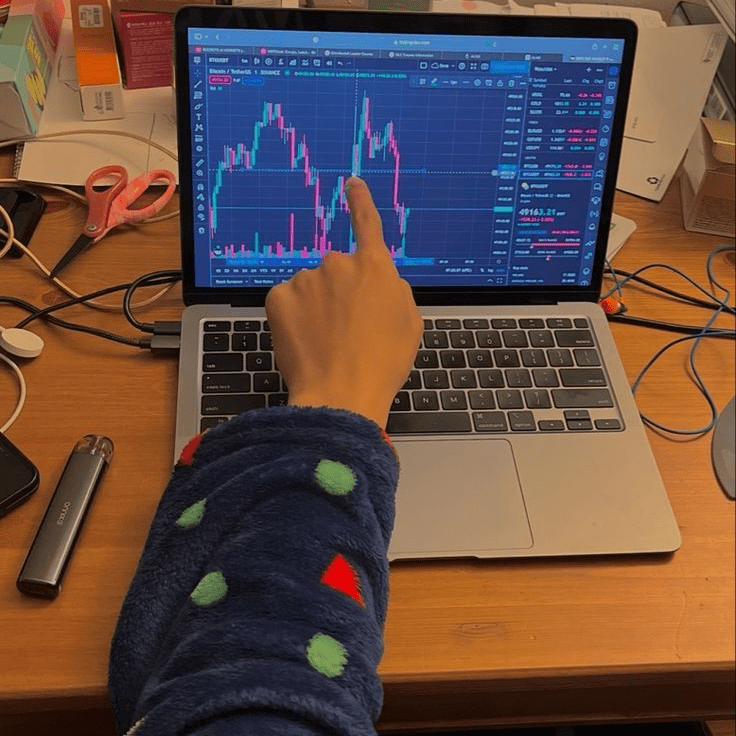
Завершено
01 ч 25 мин 11 сек
295
Войдите, чтобы посмотреть больше материала