
Following Russia's decision to stop the oil transit from Kazakhstan through the "Druzhba" pipeline, Germany is seeking alternative sources for the Schwedt refinery. It is suggested, among other things, to ramp up supplies from Poland.
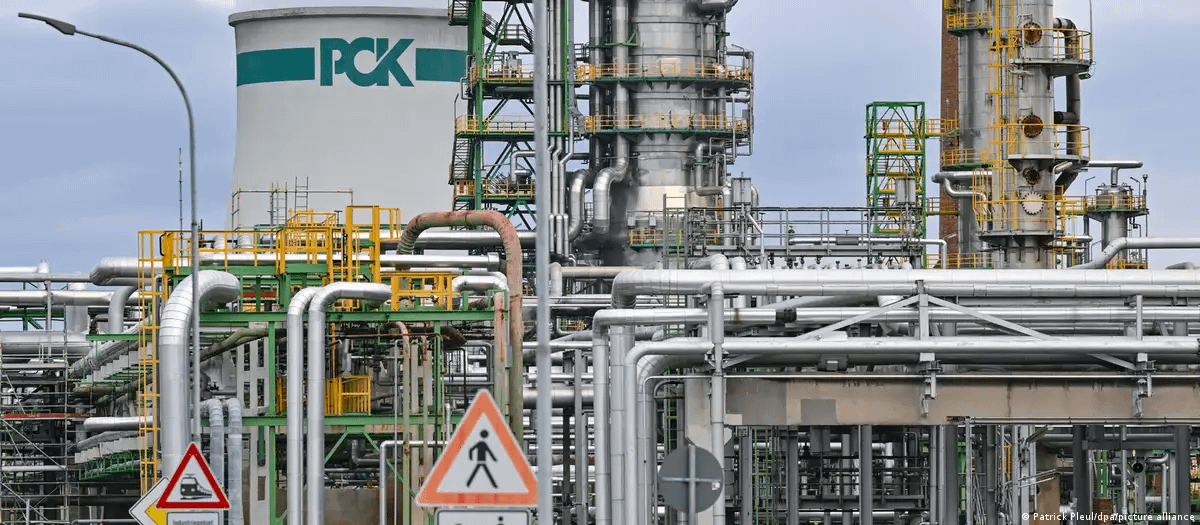
The German oil refinery PCK in the city of Schwedt (federal state of Brandenburg) is on the hunt for alternative supply sources due to the upcoming halt in oil transit from Kazakhstan via the "Druzhba" pipeline. "Recent statements from Russia have suddenly introduced new uncertainty into the company's operations. This is a tough challenge, especially now, considering the new international conflicts and instability in the energy markets," stated Brandenburg's Prime Minister Dietmar Woidke after a crisis meeting on Wednesday, April 29.
The German Ministry of Economics stated that discussions are underway regarding additional oil supplies from Poland. Specifically, the focus is on the delivery route through Gdańsk, as reported by State Secretary Frank Wetzel.
In turn, Voitke expressed confidence in the possibility of replacing Kazakh oil with other supplies. According to him, the refinery in Schwede is already receiving oil from Poland, and this cooperation will continue.
Halting the transit of oil from Kazakhstan via "Druzhba"
It was previously reported that Russia will halt the transit of Kazakh oil through its territory to the German refinery PCK starting May 1. Oil is delivered to Germany via the northern branch of the "Druzhba" pipeline, which passes through Poland. In 2025, Kazakhstan delivered 2.146 million tons of oil via this route—44 percent more than in 2024. Kazakhstan has become a crucial supplier for Germany after the country turned away from Russian energy resources due to the war between Russia and Ukraine.
Kazakhstan's Minister of Energy Yerlan Akkenzhenov confirmed the cessation of oil supplies to Germany. The German Ministry of Economics assured that the halt of Kazakh oil supplies does not pose a threat to the country's fuel supply, although the refinery in Schwede will have to operate at reduced capacity.
The refinery in Schwede supplies Berlin and northeastern Germany with diesel fuel, gasoline, kerosene, and heating oil. German subsidiaries of the largest Russian oil company, Rosneft, have been under state trust management since 2022.